HD-OPM Archive
Topics › Protein

Willett: protein source, not amount, drives health outcomes in 30-year Harvard cohorts

Louis Nervegna · Nov 12, 2026 · ♥ 2 reactions · 0 comments · original Facebook post
ProteinMeat, eggs & dairy
↻ This is a repost. The main version (highest ranked) is Willett: protein source matters more than amount, from ~300,000 people over ~30 years · Jan 12, 2026.
AI summary & key facts

Louis explains that Walter Willett's remarks come from the Nurses' Health Study and Health Professionals Follow-up Study, which tracked nearly 300,000 people for about 30 years. Total protein between about 12% and 20-25% of calories showed little relation to outcomes, but animal protein tracked with higher cardio-metabolic risk and plant protein with lower risk. Practically, shift from red meat and dairy toward nuts, legumes and soy.

(no text — see the shared post below)
Research cited

The data on protein that Walter Willett is referring to in this clip comes from both the Harvard Nurses Study and the Harvard Physicians Followup Study.

They tracked nearly 300,000 people prospectively for an average time period of 30 years, from middle age into old age.

Reference for video:

▶Video · YouTube · The Proof with Simon HillThe Longevity Nutrition Expert: You’re Focusing On The WRONG Protein Metric | Walter WilletIn this conversation, I discuss protein amount versus source with Walter Willett. Across the usual intake range studied (around 12 to 25 percent of energy), total protein or protein density shows little association with major health outcomes, while the source is strongly linked: higher animal protein, particularly from red meat (and some dairy), associates…youtu.be

Quoted:

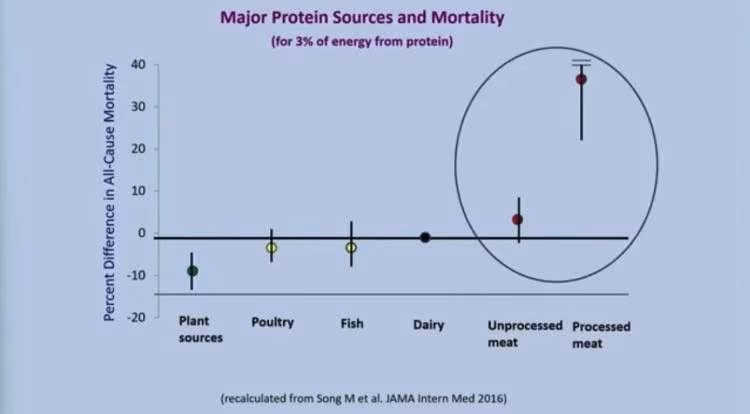
“Protein intake or density, meaning percent of calories from protein, doesn’t seem to be related to health outcomes in any substantial way, within the range that we can study in our investigations. Which is down to about 12% at the lower end, verses up to 20-25% at the higher end. We don’t see much relationship. But the source of the protein is quite strongly and clearly related to outcomes. Animal sources of protein being related to higher risk of cardio-metabolic outcome and other outcomes, and the plant sources of protein generally being related to lower risk. So in practical terms, that does mean instead of consuming red meat and a lot of protein from dairy— but especially from red meat— to shifting that toward nuts, legumes, and soy products.”

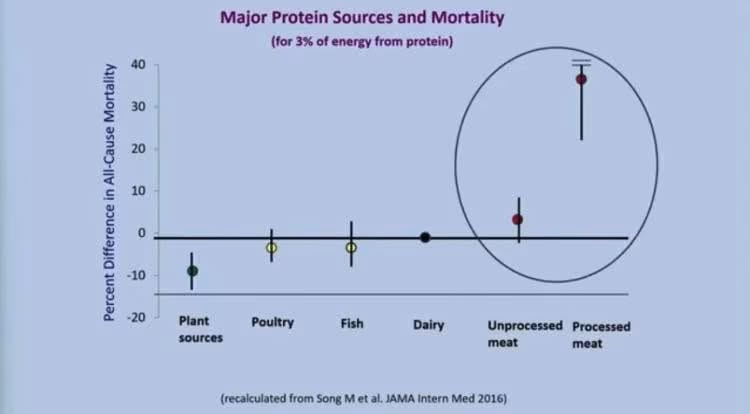
Also see this previous post, where Willett breaks down the risk for each specific source of protein, from this same set of 30 year data: facebook.com/share/v/17UG1SwoxK.

(My note: As some people in this group may know, high-quality animal protein stimulates insulin production and activates mTOR and IGF1 more strongly than lower-quality plant protein from whole food. This provides a biologically plausible explanatory mechasm for these results. You can learn more about this by searching the group for the tags #mtorHD and #igf1HD.)

#proteinHD #proteinsummaryHD #willettHD #hnsHD #hpfsHD #redmeatHD #dairyHD #nutsHD #legumesHD #soyHD #plantproteinsummaryHD #harvardHD

← newer: Meta-analysis of four Mediterranean diet RCTs: 48% fewer majolder: Six lines of evidence favor whole-food plant protein over re →