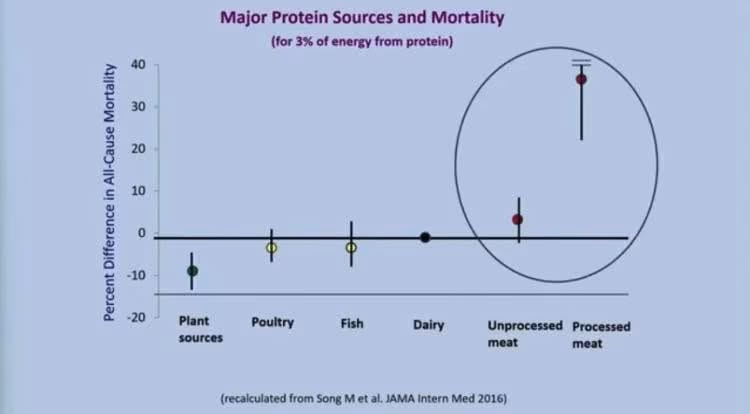
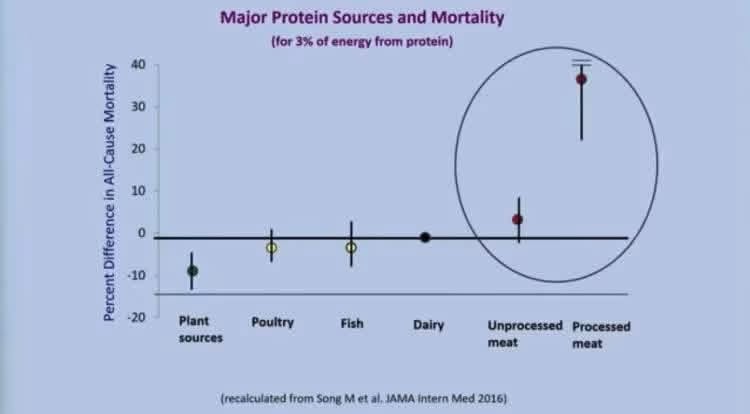
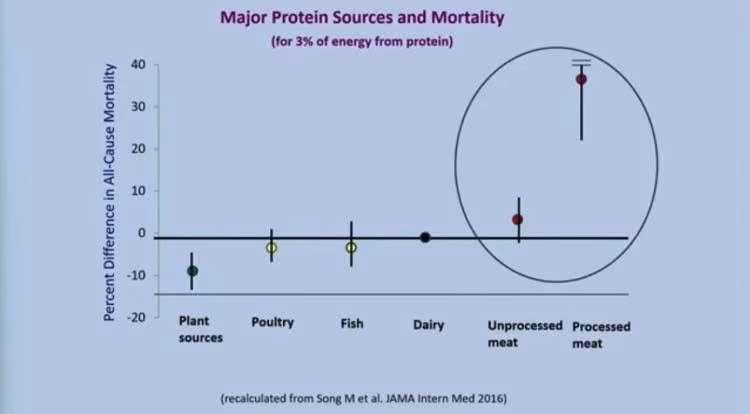
The US dietary guidelines committee is pushing for a greater emphasis on increased plant protein consumption in the upcoming 2025-2030 iteration of the dietary guidelines for Americans.

A major reason why is because of several papers published recently out of the Harvard Nurses Study— which showed that greater intake of protein in midlife decreases risk for diseases in old age— but only if the increased protein comes primarily from plants.
I posted about these studies before. See comments for links to those previous posts.
Increasing protein consumption from whole plant foods is likely one of the most important things that an adult can do in midlife to improve the chances of reaching old age in as healthy a state as possible. This doesn’t mean that you shouldn’t eat healthy animal foods. There is certainly room for both, if that is your preference. But most middle aged adults do not get enough of their daily protein from whole plant sources. It does mean that you should try to get as much protein from legumes, nuts, seeds, whole grains, etc. as you can. Hundreds of studies have associated these foods with lower risk of CVD and diabetes.
#proteinHD #plantproteinHD #hnsHD #harvardHD #agingHD #longevityHD
 ▶