HD-OPM Archive
Topics › Heart rhythm & heart failure

Atrial fibrillation overview shared from NEJM

Louis Nervegna · Jan 25, 2025 · ♥ 3 reactions · 1 comments · original Facebook post
Heart rhythm & heart failure
AI summary & key facts

A shared NEJM explainer describes atrial fibrillation as an irregular, rapid rhythm of the upper heart chambers that can cause clots in the left atrial appendage and stroke. It lists typical symptoms and the main treatments: rate and rhythm control, catheter ablation and anticoagulants.

(no text — see the shared post below)
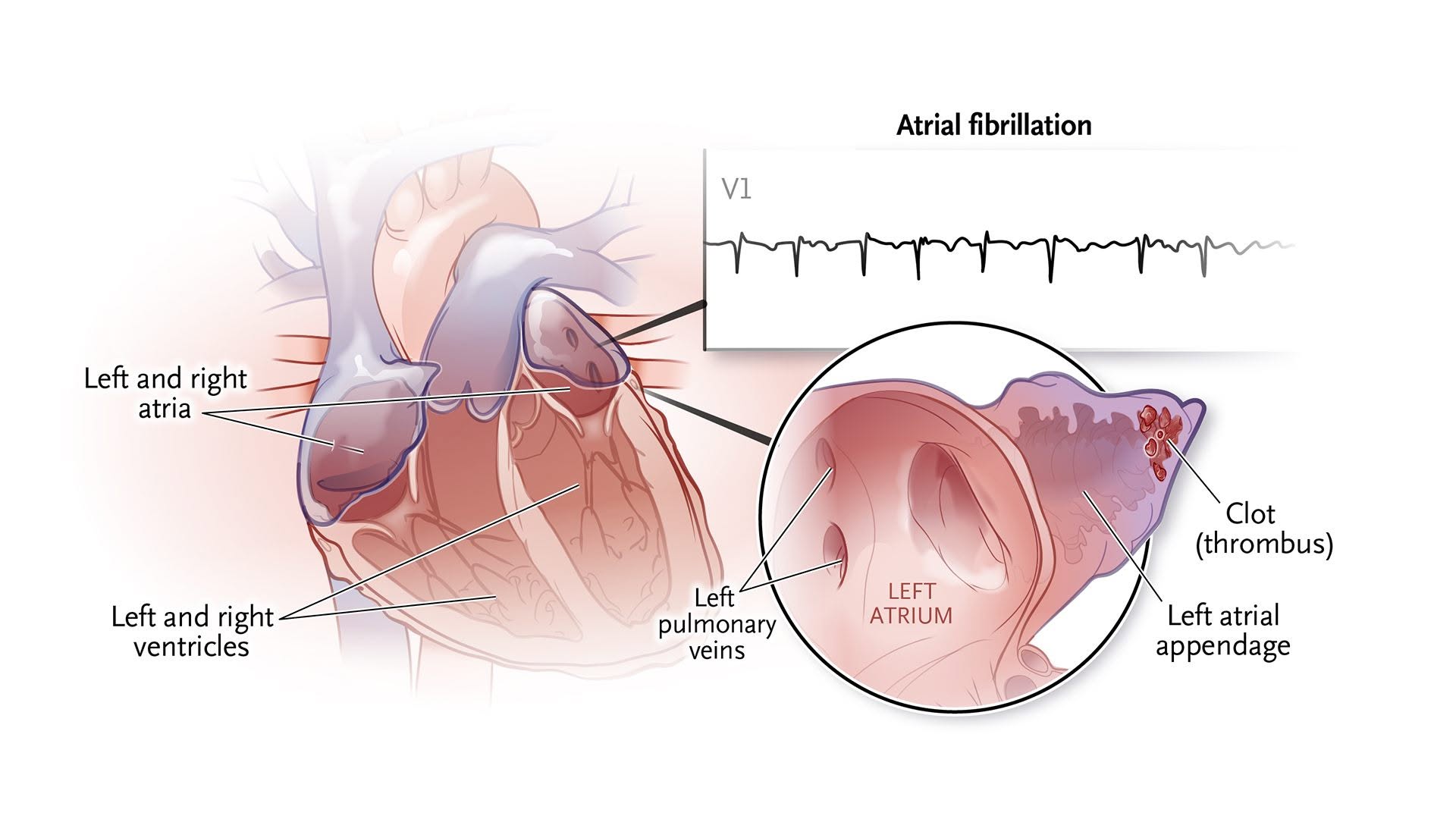
𝗔𝘁𝗿𝗶𝗮𝗹 𝗳𝗶𝗯𝗿𝗶𝗹𝗹𝗮𝘁𝗶𝗼𝗻 is common heart rhythm disorder in which the electrical signals in the heart’s upper chambers (atria) become irregular and rapid. Atrial fibrillation causes the atria to quiver irregularly and stop contracting normally, leading to inefficient blood flow and increased risk of clot formation, especially in the left atrial appendage, which can lead to stroke. Patients often have symptoms such as palpitations, chest pain, shortness of breath, dizziness, fatigue, and decreased exercise tolerance. Atrial fibrillation can be intermittent (paroxysmal), persistent (lasting more than a week), or permanent. Treatment typically includes medications, and in some cases procedures such as catheter ablation, to control heart rate and rhythm, as well as anticoagulants to reduce the risk of stroke.

Visual representation of "atrial fibrillation."
#stroke#nejm#exercise
← newer: Four long-term RCTs show the Mediterranean diet cuts CVD deaolder: Darker coffee roasts contain fewer polyphenols such as chlor →