Repatha Cuts Risk of First Heart Attack or Stroke by 25% in High-Risk Patients
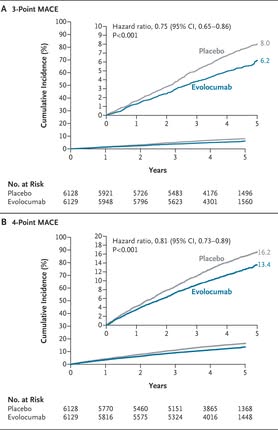
The VESALIUS-CV trial focused on a specific high-risk primary prevention population of over 12,000 patients (median age 66) who had not yet experienced a heart attack or stroke. These individuals were enrolled because they had established atherosclerosis or high-risk diabetes, and all had an LDL-C level of at least 90 mg/dL (median baseline of ~115-122 mg/dL) despite being on other lipid-lowering therapies. The trial demonstrated that adding evolocumab (Repatha) to their treatment significantly reduced the risk of a first major adverse cardiovascular event (MACE). Over a median follow-up of approximately 4.5 years, evolocumab cut the risk of the primary 3-point MACE by 25% compared to placebo (a composite of coronary heart disease death, heart attack, or ischemic stroke). This benefit was driven by a significant reduction in cholesterol, with the evolocumab group lowering LDL-C by nearly 55% to a median level of 45 mg/dL (vs 109mg/dL in controls).
References:
- VESALIUS-CV: Evolocumab vs. Placebo in Patients Without Previous MI or Stroke -… (American College of Cardiology)
- Pablo Corral MD on X (Pablo Corral MD)
- AMGEN'S REPATHA® CUTS RISK OF FIRST MAJOR ADVERSE CARDIOVASCULAR EVENTS BY 25% IN… (Amgen)
- Evolocumab in Patients without a Previous Myocardial Infarction or Stroke (N Engl J Med, 2026)