It’s not the first study to show this.
Note that the form of choline in eggs (phosphatidylcholine) does not raise levels of TMAO: ↪ Eggs and phosphatidylcholine did not raise TMAO in an RCT, unlike choline bitartrate
Louis shares a summary of a 6.7-year Journal of Nutrition study of 1,024 older adults (about 81 years) finding that eating more than one egg per week was associated with 47% lower Alzheimer's dementia risk, with choline explaining 39% of the effect. He notes the egg choline form (phosphatidylcholine) does not raise TMAO. The study is observational with self-reported diet.
It’s not the first study to show this.
Note that the form of choline in eggs (phosphatidylcholine) does not raise levels of TMAO: ↪ Eggs and phosphatidylcholine did not raise TMAO in an RCT, unlike choline bitartrate
If you have an impulse to write “correlation does not equal causation” here, well, don’t worry, I've just called attention to that for you (you’re welcome). Now let's move on.
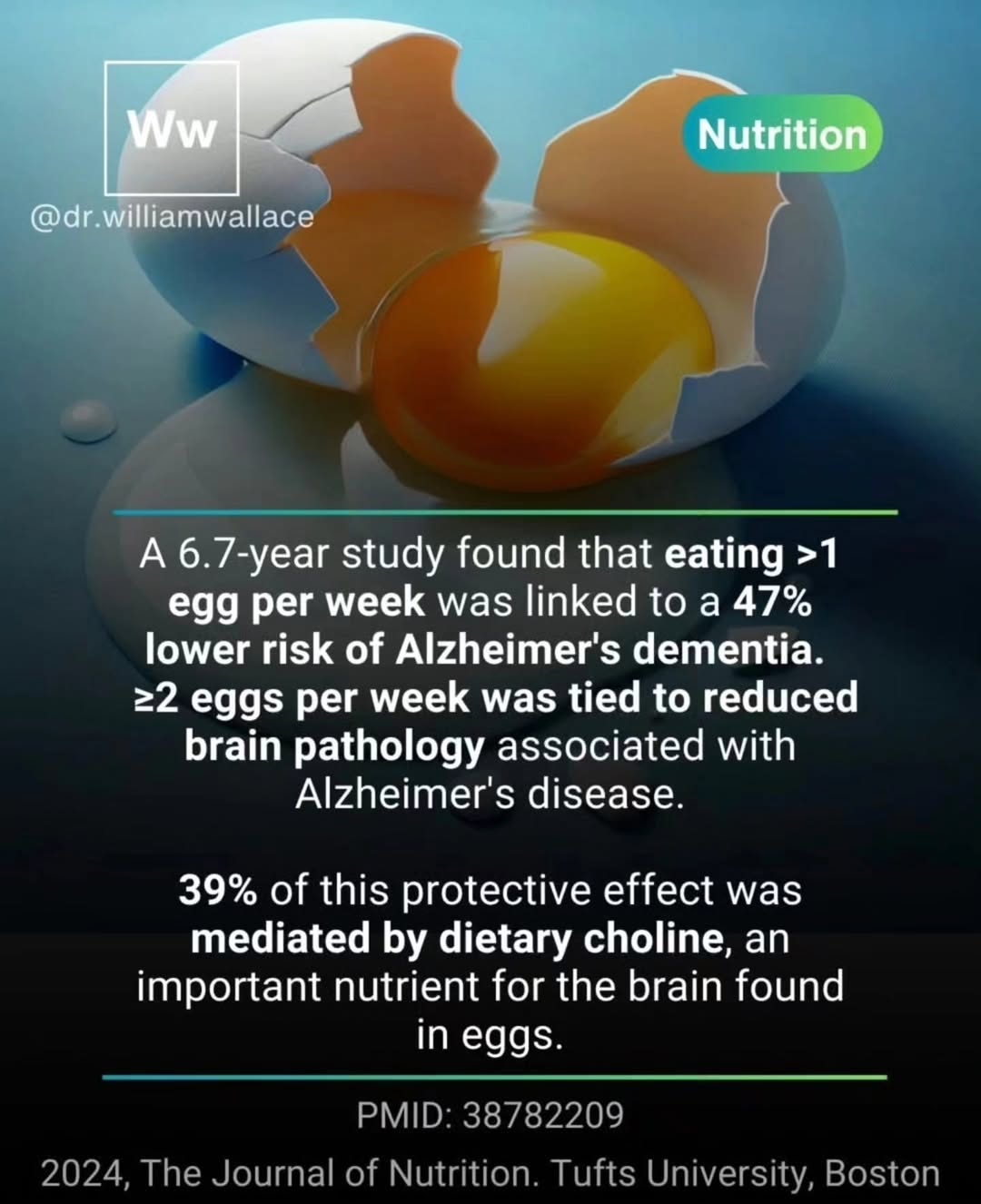
A recent 6.7-year study (PMID: 38782209) published in The Journal of Nutrition suggests that eating more than one egg per week is associated with a 47% reduced risk of developing Alzheimer’s dementia in older adults. The study included 1,024 participants (~81 years old) from the Rush Memory and Aging Project.
Findings:
✅ >1 egg per week lowered Alzheimer’s dementia risk by 47%.
✅ ≥2 eggs per week was linked to lower Alzheimer's pathology in the brain.
✅ Dietary choline accounted for 39% of the protective effect, supporting brain function.
✅ One large egg provides 150mg of choline, covering 27% of the recommended daily intake (for adult men).Limitations:
🔹 Observational study. Findings show correlation, not causation.
🔹 Self-reported dietary intake.
🔹 Population-specific—participants were older U.S. adults, limiting generalizability.
🔹 Alzheimer’s is multifactorial. Other lifestyle and genetic factors contribute to risk.Regular egg consumption may support brain health and reduce Alzheimer’s risk, with choline playing a key neuroprotective role.
A Cleveland Clinic randomized trial (not egg-industry funded, with TMAO discoverer Stanley Hazen) found choline bitartrate supplements raised TMAO and platelet reactivity, but four large eggs a day or phosphatidylcholine supplements did not.
Louis notes this is the fifth large cohort linking eggs to lower dementia risk, but the same analysis showed nuts and beans gave equally large protection. Swap eggs for red and processed meat, not for nuts or beans. The shared post says roughly 12 almonds or a third cup of lentils matched the egg effect, undermining a choline-only explanation.
Louis rebuts claims that eggs raise AFib risk via TMAO by pointing to an earlier randomized trial from the same Cleveland Clinic group. In that trial, eating eggs or taking phosphatidylcholine did not raise TMAO, whereas choline bitartrate supplements did. The trial was not funded by the egg industry.
Louis shares news of the new Adventist Health Study finding that regular egg eating in people 65+ was associated with lower Alzheimer's risk, and notes the phosphatidylcholine in eggs does not raise TMAO. It adds to earlier studies with similar signals.
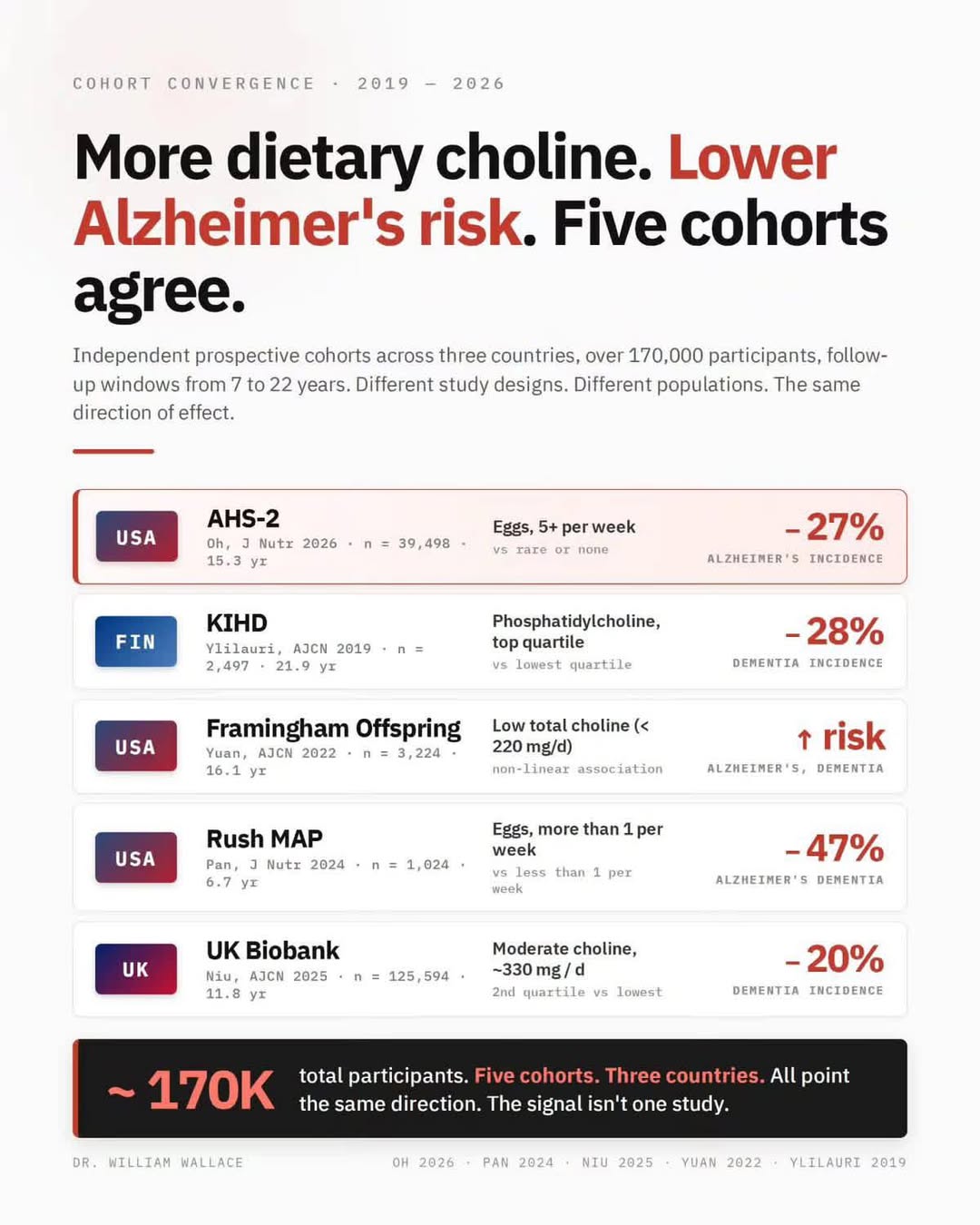
Louis notes that five large prospective cohort studies have associated egg or choline consumption with lower Alzheimer's risk, suggesting a genuine signal. The post links to an earlier discussion and gives no further detail.
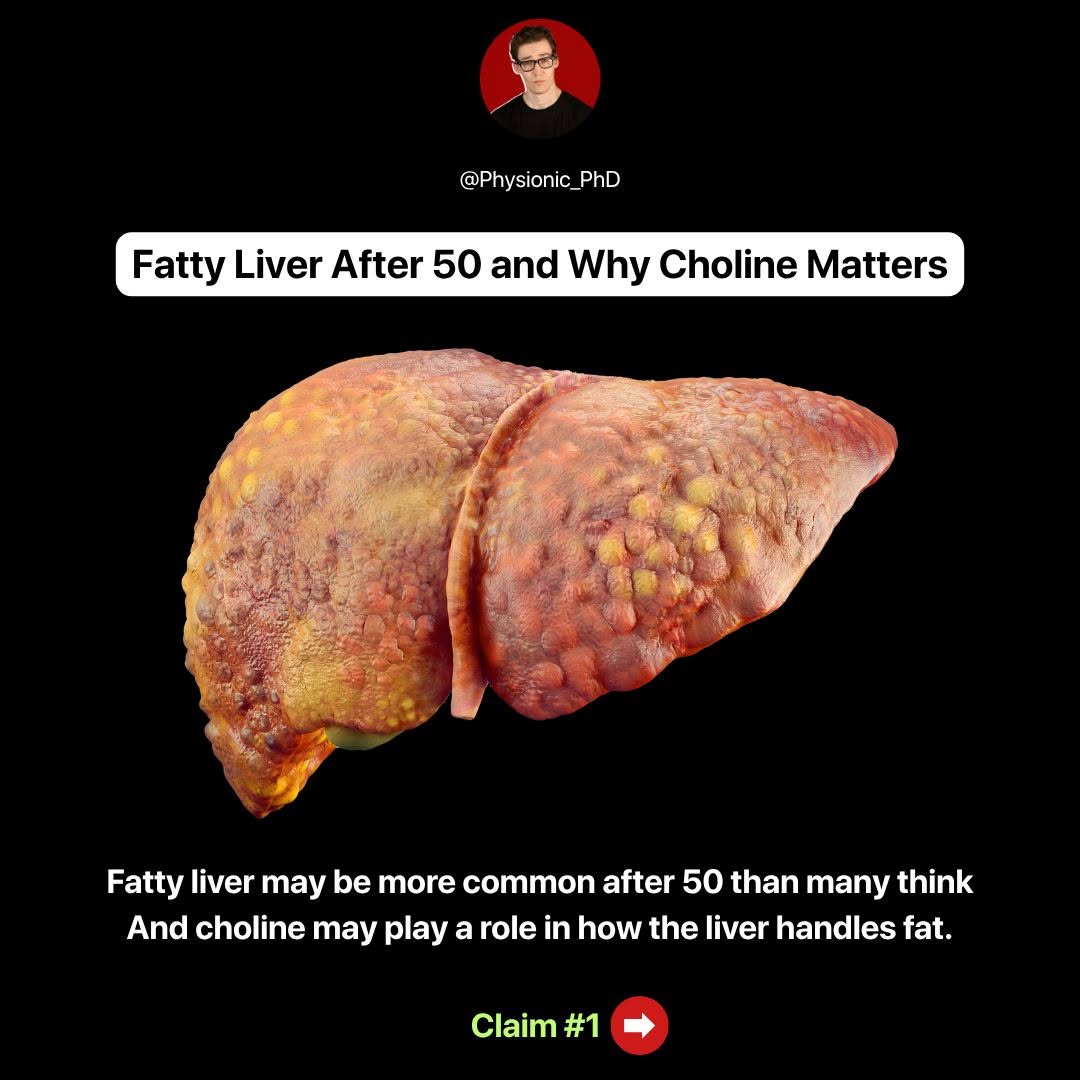
Louis shares data that fatty liver prevalence exceeds 50% in over-50s in a study of about 4,000 people, and stresses choline helps export liver fat. Phosphatidylcholine did not raise TMAO in a Cleveland Clinic RCT.