The gut microbiome is the community of trillions of bacteria living mostly in the colon. They ferment the fiber and plant compounds that we cannot digest, they make signaling molecules that enter the bloodstream, and they interact with the immune system and the gut lining. The group's posts treat this as a real but still developing part of cardiovascular risk: gut-derived molecules such as TMAO and imidazole propionate are linked to atherosclerosis, while fiber-derived short-chain fatty acids such as butyrate are linked to benefit.5910
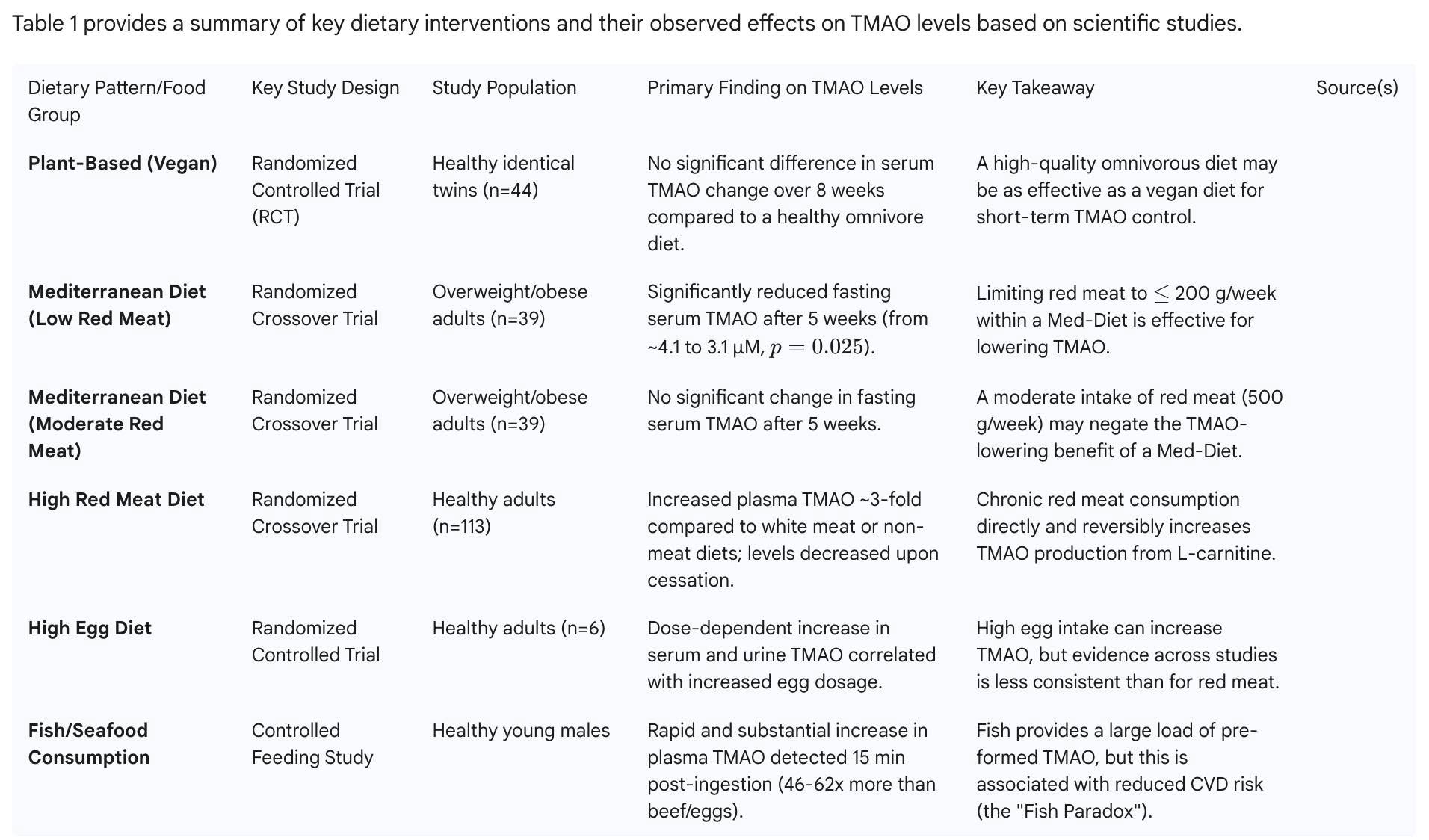
TMAO (trimethylamine N-oxide) gets the most attention. It is made from choline and L-carnitine, found in red meat, egg yolks and some fish, by gut microbes and then liver enzymes, and high levels have been associated with atherosclerosis, heart attack and stroke.2 Yet the group's admins are careful to separate association from causation. Louis states that the latest science is complicated and that we still lack a solid answer on whether TMAO is directly causal.1 Gokhan Can calls TMAO one way red meat and gut dysbiosis contribute to harm, but not the thing he cares about most.2
The practical picture that emerges is a diet-first one. A high-fiber, plant-rich pattern feeds bacteria that make protective molecules, while a few specific exposures, such as carnitine supplements and choline bitartrate, deserve caution. Supplements and probiotics are mostly at an earlier stage of evidence.
Key terms in plain language
- Microbiome: the community of microbes in the gut. Dysbiosis means an imbalanced community, often with low diversity.1314
- Prebiotics are non-digestible fibers that feed good bacteria; probiotics are live bacteria that make up the beneficial part of the microbiome.15
- Short-chain fatty acids (SCFAs), mainly butyrate, are made when colon bacteria ferment fiber.5
- TMA and TMAO: TMA is made by gut bacteria; the liver converts it to TMAO in a step that needs insulin, and the kidneys clear it.1
- Endotoxemia: leakage of bacterial fragments such as LPS through a weakened gut barrier, driving low-grade inflammation.16
TMAO: what is known and what is not
How it is made
Louis summarizes a video by Kevin Klatt as follows. Gut bacteria feed on dietary choline, carnitine and betaine (also called TMG) and produce TMA. The liver converts TMA to TMAO, and insulin is required for that step, so more TMA and more insulin mean more TMAO. The kidneys filter TMAO out, so better kidney function means lower TMAO. TMAO is also found directly in some foods such as fish, which raise blood levels transiently.1 Stanley Hazen's group at the Cleveland Clinic first linked TMAO to cardiovascular risk in 2011 to 2012.13
The fish paradox and the causality question
Fish raise TMAO briefly, yet many studies associate fish consumption with lower heart disease risk, which is hard to square with TMAO being simply harmful.1 Louis therefore frames TMAO as possibly a direct arterial toxin, possibly just a non-causal marker of risk, and says we must live with uncertainty for now.1 In his comment on a carnitine trial, he adds that even if TMAO itself is not causal, it may be a marker for something else that is.4
Newer signals
In July 2026 Cleveland Clinic researchers reported that TMAO was linked to a higher risk of atrial fibrillation, based on blood samples from more than 5,000 people undergoing heart procedures, with follow-up cell experiments suggesting TMAO may alter the heart's electrical environment. The senior author said it may be possible to intervene earlier through diet. Louis framed this as TMAO possibly raising AFib risk.17 This is a press-release-level summary and the study is associational.
Eggs and choline: the form matters
When people used the AFib study to claim that eggs raise AFib risk, Louis called that wrong and pointed to an earlier randomized trial from the same Cleveland Clinic group, published in the American Journal of Medicine in 2021.18 In that trial, plasma TMAO rose significantly in all three arms containing choline bitartrate (all P < 0.0001), but not with four large eggs daily (P = 0.20) or phosphatidylcholine supplements (P = 0.27). Platelet reactivity also rose with choline bitartrate (all P < 0.01) but not with eggs (P = 0.10) or phosphatidylcholine (P = 0.79). Louis notes that phosphatidylcholine is the form of choline typically found in whole food, and that the trial was not funded by the egg industry.318 The same point appears in a post on eggs and Alzheimer's risk, where Louis notes that egg choline does not raise TMAO. In that 6.7-year Rush study of 1,024 older adults, eating more than one egg a week was associated with 47% lower Alzheimer's dementia risk, but it was observational with self-reported diet.19
Carnitine supplements
A phase 2 randomized trial in people with metabolic syndrome found that L-carnitine supplements, over 6 months, did not change total carotid plaque volume but increased carotid plaque stenosis compared with placebo. The suspected mechanism is TMAO production, since carnitine is abundant in red meat. Louis stresses that the progression is concerning regardless of the mechanism.420 This is a trial of a supplement in a specific population, not of dietary red meat.
Ways the group discusses lowering TMAO
Gokhan's written review lists the most impactful approach as dietary modification: less red meat and egg yolk, and a plant-rich, high-fiber Mediterranean-style diet that both reduces precursor supply and fosters a microbiome less able to make TMA. It also lists polyphenols such as resveratrol, allicin from garlic, and incidental effects of statins and metformin.2
- Raw garlic and allicin. An npj Biofilms and Microbiomes paper (2022) reported that in people with high TMAO production, a week of raw garlic juice reduced TMAO formation, improved microbial diversity and raised beneficial bacteria. Allicin reversed atherosclerosis in mouse models. Louis notes cooking destroys allicin.21
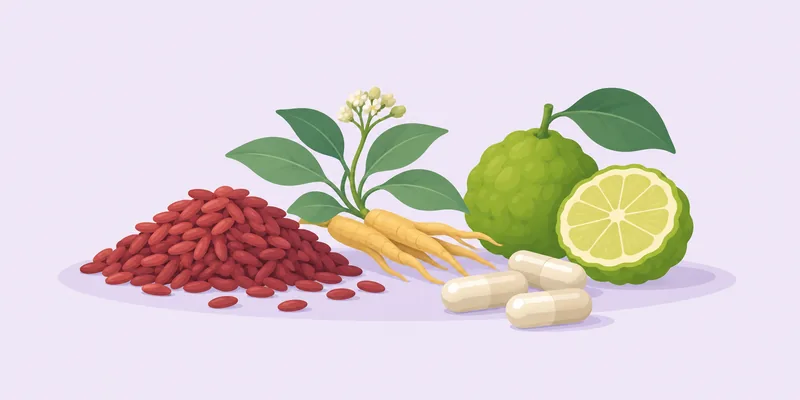
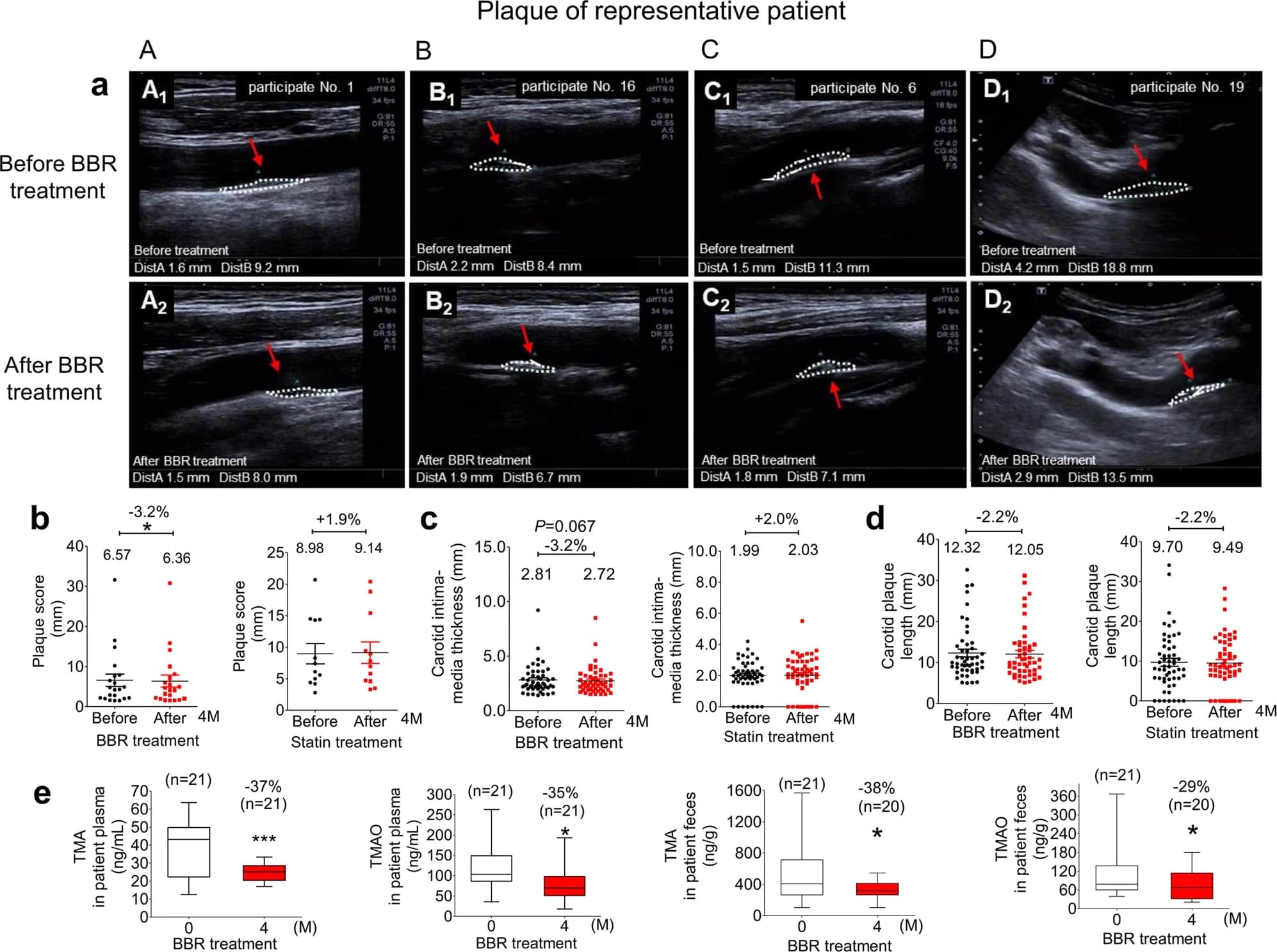
- Berberine. A paper in Signal Transduction and Targeted Therapy (2022) reported that 21 patients with atherosclerosis taking berberine 0.5 g twice daily for 4 months had an average 3.2% decrease in plaque score, while a comparison group of 12 on rosuvastatin plus antiplatelet drugs saw a 1.9% increase. TMA and TMAO fell 38% and 29% in feces and 37% and 35% in plasma.22 The sample is small and the comparison was not a large randomized design, so this is hypothesis-generating. Louis also notes that under 1% of oral berberine reaches the blood, and argues this implies its main action is in the gut on bacteria, unlike metformin.11
- Fiber and diet quality generally, discussed below.
Other gut-derived molecules linked to disease
Imidazole propionate (ImP)
ImP is made by specific gut bacteria from dietary histidine in a two-step pathway involving urocanate and the enzyme urocanate reductase. Gokhan's explainer says high ImP is driven more by a dysbiotic microbiome (bacteria such as certain Clostridium, Ruminococcus gnavus and Eggerthella lenta) than by histidine intake, and that a diverse, high-fiber microbiome is associated with lower ImP. It is elevated in type 2 diabetes, atherosclerosis, heart failure, kidney disease and fatty liver.13 A Nature paper he summarizes found ImP independently associated with cardiovascular disease and, in mice, causing atherosclerosis independent of cholesterol through inflammation via the I1 imidazoline receptor, suggesting a possible cholesterol-independent therapy.23 That causal finding is from mice.
D-lactate
A Cell Metabolism study, shared twice, reported that D-lactate made by gut microbes fuels glucose and fat overproduction in the liver in obese mice and humans. An oral polymer "gut substrate trap" that binds D-lactate improved blood sugar, insulin resistance and liver inflammation in mice without changes in diet or weight.824
Indole-3-propionic acid (IPA)
A summary of a Life Metabolism study in 160 people with coronary artery disease, plus human blood and mice, suggested that intermittent fasting raises gut-made IPA, which inhibits platelet activation and clotting; the antithrombotic effect in mice was similar to clopidogrel. The summary cautions that more research is needed.25
Constipation and protein fermentation
A Cell Reports Medicine study of bowel movement frequency found that one or two a day was a "Goldilocks zone" in which fiber-fermenting strict anaerobes thrived. When stool lingers, microbes run out of fiber and ferment protein, producing toxins such as p-cresol sulfate and indoxyl sulfate that rose even in healthy constipated people and burden the kidneys. The Goldilocks group ate more fruits and vegetables and drank more water.26 A separate Monash-led study linked constipation to higher risk of major adverse cardiac events; constipation affects roughly 14% of people.27
Fiber: the main lever
What the epidemiology shows
Gokhan's longevity summary highlights the WHO-commissioned Reynolds 2019 meta-analysis of 185 prospective studies and 58 trials. Intakes of 25-29 g/day were associated with 15-30% lower all-cause mortality and 16-24% lower incidence of coronary heart disease, type 2 diabetes and colorectal cancer, with further risk reduction for every additional 8 g/day. He adds a 2025 NHANES analysis suggesting diminishing returns beyond about 30 g/day, with a 22 g/day threshold in people with metabolic syndrome associated with 20% lower all-cause and 39% lower cardiovascular mortality.5 These are observational associations. A Stanford Medicine article Louis shared notes that most people fall short of the recommended intake.28
Why: butyrate and the gut barrier
The post describes fiber being fermented by colonic bacteria into SCFAs, mainly butyrate, which acts as a histone deacetylase (HDAC) inhibitor and may induce regulatory T cells and reduce systemic inflammation.5 This is a mechanistic argument rather than proof in humans. A Memorial Sloan Kettering study in 20 overweight people with precursor blood disorders gave 12 weeks of high-fiber plant-based meals plus coaching; none had progressed to myeloma at one year, and the diet was accompanied by improvements in the microbiome and inflammation. Researchers think increased butyrate may be involved. It is a tiny trial, and a 150-person follow-up (NUTRIVENTION-3) is enrolling.29
Not all fiber is alike
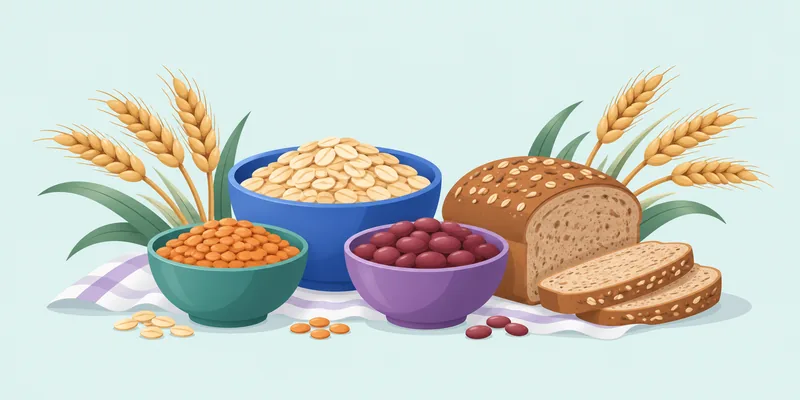
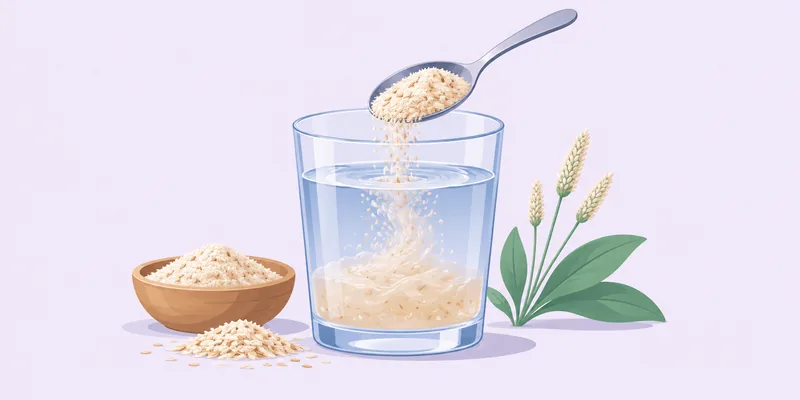
Louis shares two posts arguing that "soluble versus insoluble" is an oversimplification. Fibers differ in solubility, viscosity, fermentability and structure. Cellulose bulks stool; beta-glucan from oats is soluble and viscous and lowers LDL by sequestering bile acids; psyllium is viscous and lowers LDL; inulin is highly fermentable and feeds bifidobacteria, with minimal LDL effect; resistant starch comes from sources such as cooked-and-cooled potato.30 A Laurie Marbas framework divides fibers into gel (oats), feed (beans, onions) and sweep (flax, vegetable skins) types, with health coming from all three.31
Oats and the microbiome
A University of Bonn randomized trial published in Nature Communications in 2026 studied adults with metabolic syndrome on a calorie-restricted diet. The oat group ate 300 g/day of whole-grain rolled oats, cooked in water, for 2 days. Compared with calorie-restricted controls, they had about 10% lower LDL, which persisted for up to six weeks, linked to oat-fed bacteria producing phenolic metabolites such as ferulic acid derivatives. Smaller daily oat intakes over six weeks produced weaker effects.6 Louis cautions that the participants had a BMI above 30 and metabolic syndrome and ate 1,100 to 1,200 kcal a day, and that the calorie-restricted controls did not get the same benefit.32 He recommends whole grains as intact as possible, such as slow-cook steel-cut oats.633
Resistant starch and liver fat
Louis notes that refrigerating cooked grains for 24 hours turns more starch into resistant starch, which passes through the small intestine and feeds gut bacteria.33 He highlights a randomized trial in which one-for-one replacement of refined starch with resistant starch cut liver fat in half in 4 months, with the proposed mechanism being more SCFA production.34
Fruit, fructose and inulin
A 2025 mouse study reported that inulin shifted the microbiome, with Bacteroides acidifaciens a key species, so that fructose was broken down in the intestine before reaching the liver, leaving mice with less liver fat and fibrosis. No human trial has tested that mechanism. Louis uses it as one possible explanation of why whole fruit is linked to less fatty liver.35
Fiber, polyphenols and appetite hormones
Louis quotes Scientific American that gut bacteria turn fiber and polyphenols into molecules that stimulate GLP-1 and PYY, part of the "colonic brake" that slows the movement of food.36 A wild blueberry review (2026) found its strongest evidence was for improved blood vessel function, with the microbiome also covered.37
Diet pattern, additives and the gut
- Traditional versus Western diets. In a Nature Medicine study of 77 healthy Tanzanian men, switching to a Western diet quickly raised weight and inflammatory and cardiometabolic proteins and altered over 300 metabolites; switching to the heritage diet lowered inflammation, and a fermented banana drink (mbege) increased IL-10 and polyphenol metabolites.38
- The Hadza. Louis rebuts carnivore claims by noting that the Hadza get about 70% of calories from plants, have an LDL of about 62 mg/dL, and have gut microbiomes enriched in fiber-degrading Prevotella and Treponema, as described in a 2014 Nature Communications paper.39
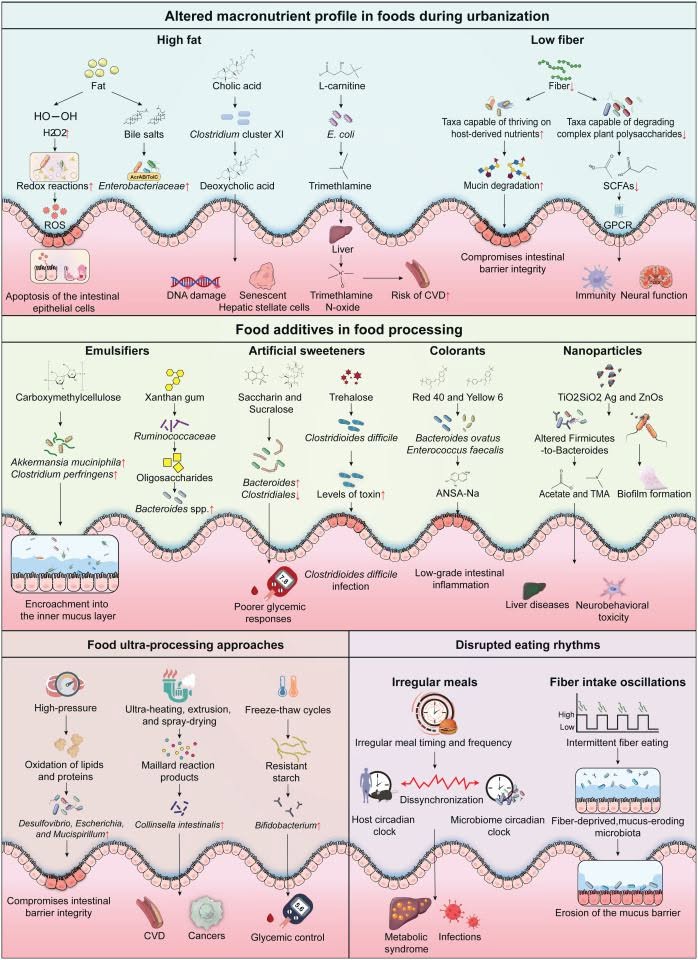
- Low fiber and additives. A shared figure describes how high-fat, low-fiber diets reduce SCFA production and weaken the gut barrier, and that emulsifiers and artificial sweeteners may thin the mucus layer.40 On sweeteners specifically, Louis shared a summary of a long-term randomized trial during weight-loss maintenance that found better weight maintenance and no adverse cardiometabolic effects versus a low-sugar diet alone, with the gut findings worth further study. He does not recommend sweeteners but wants the evidence stated accurately.41 These two posts point in different directions, and the second is stronger evidence than a mechanistic figure.
- Restrictive diets. Louis shares Tim Spector's argument that long-term elimination diets can damage the microbiome in ways that may be hard to repair.42
- Eating pattern. Louis eats two meals a day and shares a Spector video suggesting it may also benefit the microbiome; this is personal experience and opinion.43
- Dairy. Louis cites cohort data that fermented dairy tends to do better than total dairy, but stresses that results depend on what the cheese replaces, and calls the dementia findings on full-fat cheese and cream unreplicated and observational.4445
Gut, inflammation and other organs
Several posts describe the gut as upstream of inflammation. A weakened barrier lets LPS reach the blood, activating immune cells to release TNF-alpha and IL-6, which cause insulin resistance.16 Gokhan lists gut metabolites alongside gum disease, viral infections and clonal hematopoiesis as non-traditional contributors to residual risk, all converging on chronic inflammation and oxidative stress, and describes personal habits such as lots of fiber, flossing and yearly flu vaccination.910
The gut-brain axis is described in an infographic as bidirectional, via neural, endocrine, immune and metabolic routes.46 The gut-kidney link appears in a phase II trial in which lubiprostone (16 ug daily) preserved eGFR over 24 weeks in 118 patients with chronic kidney disease, not by lowering uremic toxins but by shifting the microbiome and raising spermidine.47 Coffee's effect on bowel movement appears to involve other compounds and the microbiome, not just caffeine, and a study compared 31 habitual coffee drinkers with 31 non-drinkers.4849 The appendix is described as a reservoir that repopulates gut bacteria after illness.50
Drugs and the microbiome
- Statins. An ATVB editorial suggests statin-induced gut microbiota changes are a candidate mechanism for statin-associated new-onset type 2 diabetes, but causality needs larger sequencing studies. Louis adds that in JUPITER, high-dose rosuvastatin raised A1C by 0.1, bringing diabetes diagnosis about 5.4 weeks earlier over 2 years on average, small but real. His suggestion that a good probiotic might avoid the rise is a hypothesis.14
- Metformin. A 2018 review concluded that gut microbiota participate in metformin's glucose-lowering effect, and posts note it increases Akkermansia and Bacteroides, though evidence is mostly from animals and organoids.5152 A Scientific American report describes a separate mechanism in which gut cells take up more glucose.53 ImP can blunt metformin's action according to Gokhan's explainer.13
Probiotics, fecal transplants and supplements: early evidence
- Probiotics. One post says certain probiotics can lower cholesterol and reduce inflammation, with no detail.54 A small 2016 Iranian randomized trial found that 12 weeks of daily Lactobacillus and Bifidobacterium gave a moderate but significant improvement in MMSE scores in Alzheimer's patients.55
- Akkermansia. Louis asks whether members take Akkermansia probiotics, marketed as a natural GLP-1 booster, and points to a Harvard Medical School report associating Akkermansia levels with poor bone health. No numbers are given.56
- Fecal microbiota transplant (FMT). A shared description of the DIABMET-FMT trial in 124 adults with type 2 diabetes reports that capsules from lean donors improved insulin sensitivity, diversity and SCFA production over 12 weeks; the details come from the post and could not be verified.12 A single case report of an 82-year-old man whose Alzheimer's symptoms improved after FMT for C. difficile cannot show effectiveness.7
- Magnesium glycinate. In a 240-person trial, magnesium shifted colorectal-cancer-linked bacteria, mainly in women with a normal TRPM7 "magnesium gate".57
What this means for you
These are the group's positions; discuss decisions with your doctor.
- Fiber is the best-supported lever. The posts point to 25-29 g/day and above as associated with lower mortality, and to varied fiber types.531
- Eat grains intact, refrigerate cooked grains, and consider oats for LDL.633
- Be cautious with L-carnitine supplements and choline bitartrate.34
- Whole eggs did not raise TMAO in the Cleveland Clinic trial, though the admins treat TMAO's causal role as unresolved.13
- Raw garlic and berberine lower TMAO in small human studies. Gokhan says TMAO is not his top concern.22122
- Pay attention to regular bowel habits and oral hygiene.1026
- Treat probiotics, FMT and gut-targeting supplements as experimental.712
Frequently asked questions
Does TMAO cause heart disease?
Unknown. It is associated with atherosclerosis, heart attack, stroke and now AFib, but Louis says there is not yet a solid answer on causality, and notes the fish paradox.1217
Do eggs raise TMAO?
In a randomized trial, four large eggs a day did not significantly raise TMAO or platelet reactivity, unlike choline bitartrate.3
Should I take L-carnitine?
A 6-month trial in people with metabolic syndrome saw worse carotid plaque stenosis, and Louis calls it extremely concerning.4
How much fiber is enough?
The Reynolds meta-analysis associated 25-29 g/day with 15-30% lower all-cause mortality, with further benefit per extra 8 g/day; newer NHANES data suggest a plateau near 30 g/day.5
Is garlic or berberine worth using to lower TMAO?
Small studies show lower TMAO, but they are small, and berberine's plaque result lacked a large randomized comparison.2122
Are probiotics useful for heart health?
One post says certain probiotics can lower cholesterol, but gives no detail. Most of the other probiotic and FMT evidence is early or anecdotal.75455