HD-OPM Archive
Topics › LDL, ApoB & lipid panel

Tom Dayspring: circulating oxidized LDL is a useless marker, measure ApoB instead

Louis Nervegna · Apr 17, 2025 · ♥ 16 reactions · 0 comments · original Facebook post
LDL, ApoB & lipid panelRisk assessment & lab tests
↻ This is a repost. The main version (highest ranked) is Circulating oxidized LDL is a poor test; measure ApoB instead, says Dayspring · Feb 04, 2024.
AI summary & key facts

Louis shares Tom Dayspring's view that circulating oxidized LDL is a useless biomarker. He clarifies that oxidized LDL in plaques still matters but occurs after particles leave circulation, and studies adjusting for ApoB find circulating oxLDL unrelated to CVD risk, so ApoB is the causal measure.

(no text — see the shared post below)

Tom Dayspring: Circulating oxidized LDL in the bloodstream is a “useless” biomarker for heart disease.

He says not to waste your money on this test, and to measure ApoB instead.


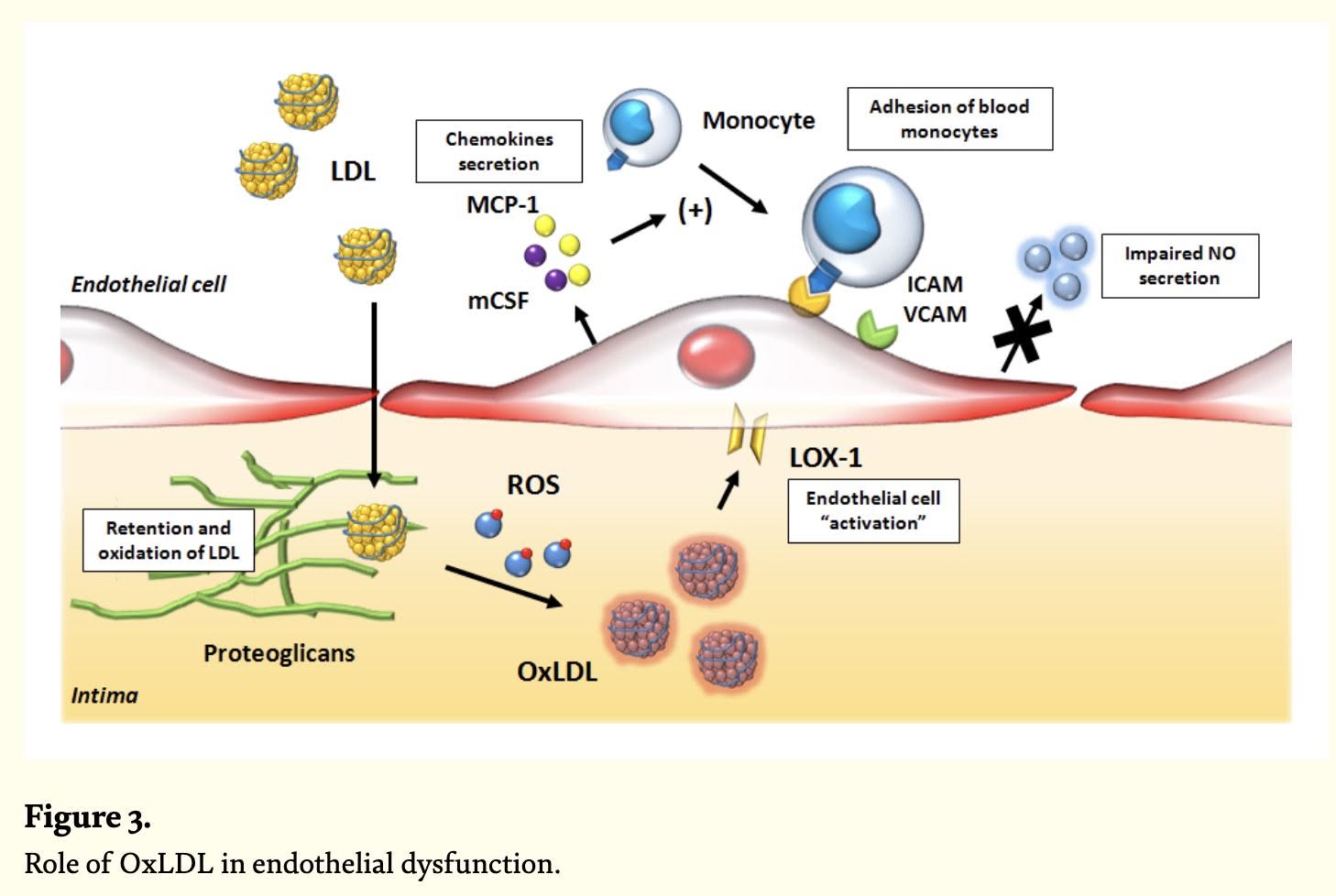
Note that he is talking about the the oxidized LDL in blood circulation— not the oxidized LDL in plaques. The oxidized LDL in plaques still matters a lot. The oxidized LDL in plaques mostly happens after the LDL enters the plaque and leaves circulation. You can not measure this with a blood test unfortunately.

He is talking about LDL oxidizing in circulation before it enters the plaque. The newest studies that properly adjust for ApoB show that circulating oxidized LDL is NOT related to CVD risk. It is the ApoB that is actually causal, whether those particles are oxidized or not in circulation. The ApoB particles get oxidized anyway after they enter the plaque, which can not be measured. Whether or not they are oxidized before they enter plaque seems to make little difference.

#oxidizedldlHD #dayspringHD

← newer: Circulating oxidized LDL tests do not predict CVD risk once older: Menopausal hormone therapy is fairly safe for low-risk women →