The claim that ketogenic diets reduce glycation is likely false.
In fact, there’s evidence that they do the opposite.
Louis disputes the claim that ketogenic diets reduce glycation, pointing to a paper showing ketosis on an Atkins diet increases production of methylglyoxal, a precursor to advanced glycation end products linked to diabetes, heart disease, Alzheimer's and aging.
The claim that ketogenic diets reduce glycation is likely false.
In fact, there’s evidence that they do the opposite.
Ketogenic diets significantly increase methylglyoxal production, which directly causes glycation.
Methylglyoxal is a precursor to formation of advanced glycation end products (AGE’s), which is implicated in the pathogenesis of diabetes, heart disease, alzheimer’s, and aging. Methylglyoxal is a main cause of glycation in humans and other animals.
Blocking production of methylglyoxal significantly extends lifespan in mice.
Claims that ketogenic diets protect against glycation should be viewed with extreme suspicion. They may be doing the exact opposite.
Quoted:
“Since methylglyoxal and its byproducts are recognized as a significant cause of blood vessel and tissue damage, we measured methylglyoxal, acetone, and acetol in subjects on the Atkins diet. We found that by 14-28 days, methylghyoxal levels rose 1.67-fold (P= 0.039) and acetol and acetone levels increased 2.7- and 6.12-fold, respectively (P= 0.012 and 0.028). Samples from subjects with ketosis showed even greater increases in methylglyoxal (2.12-fold), as well as acetol and acetone, which increased 4.19- and 7.9-fold, respectively; while no changes were seen in samples from noncompliant, nonketotic subjects.”
Louis argues that ketogenic diets increase methylglyoxal, a precursor of advanced glycation end products linked to diabetes, heart disease, Alzheimer's and aging. He cites a 2005 study of Atkins dieters in which methylglyoxal rose 1.67-fold by 14-28 days and 2.12-fold in those in ketosis. He says claims that keto protects against glycation should be viewed with suspicion; the study measured markers, not outcomes.
Louis shares a Substack critique of the glycation-focused supplement GLYLO, which questions the mouse lifespan data, the role of reduced food intake and differences between the research and consumer formulas. His comment is that even if benefits come from inadvertent calorie restriction, that is still significant, as with GLP-1 drugs.
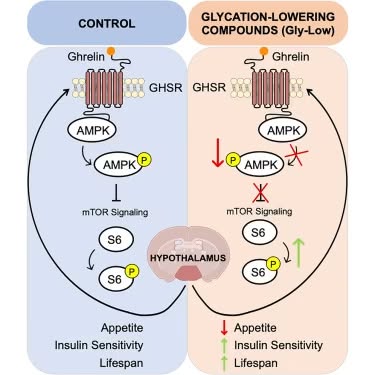
A Buck Institute study in Cell Reports tested a five-ingredient mix (nicotinamide, thiamine, pyridoxamine, alpha lipoic acid, piperine) that lowers glycation. In mice it extended lifespan, reduced appetite and body fat and improved insulin sensitivity.
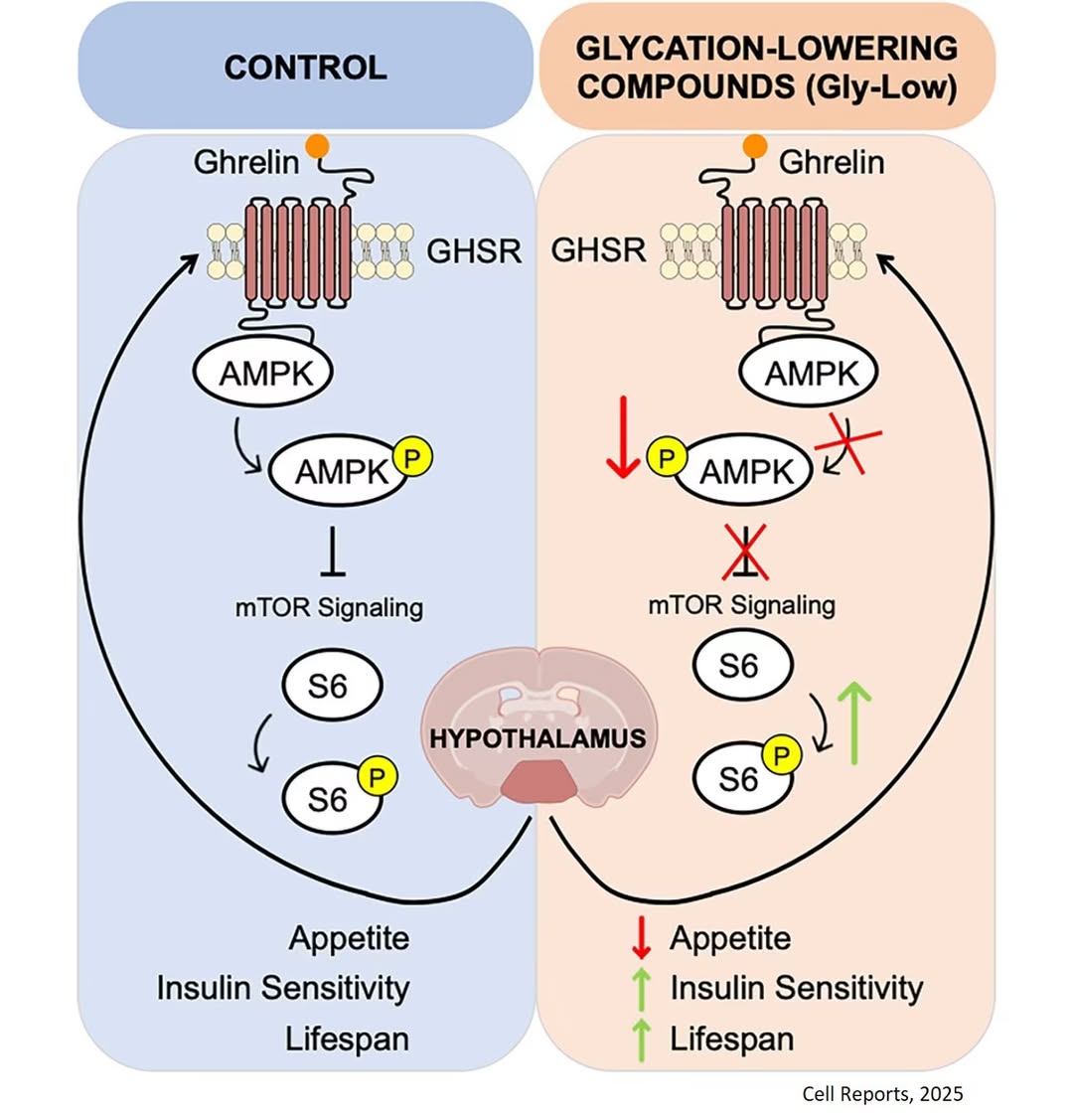
Louis shares a Cell Reports study in mice where a combination of nicotinamide, alpha-lipoic acid, thiamine, pyridoxamine and piperine (Gly-Low) lowered AGEs, curbed hunger, improved insulin resistance and extended lifespan. It is preclinical.
Louis says he underestimated glycation and AGEs in aging after Pankaj Kapahi's work at the Buck Institute. Kapahi's post explains methylglyoxal as a reactive glycolysis byproduct that drives AGEs and aging, and describes GLYLO, a combination of lipoic acid, nicotinamide, piperine, pyridoxine and thiamine that lowered methylglyoxal and AGEs and extended mouse lifespan even when started late. Louis says Kapahi plans a paper showing it reduces arterial stiffening. Evidence is preclinical and the product is commercial.
Summarises a Rhonda Patrick video: moderate exercise is ineffective for many, so vigorous HIIT such as the Norwegian 4x4 (four 4-minute efforts at about 80-90% max heart rate with 4-minute recovery) improves VO2 max. She cites a two-year study that reversed about 20 years of cardiac aging in sedentary 50-year-olds, and exercise reducing glycation-driven heart stiffness (Asif et al., PNAS 2000).