The Norwegian 4x4: A Protocol for Reversing Heart Aging
 ▶Video · YouTube · FoundMyFitness ClipsScientists Discovered the Workout That Reverses Heart Aging By 20 Years (this is it)Watch the full interview with Dr. Rhonda Patrick on The Diary of a CEO: In this video, she discusses: • 3 proven workout protocols that boost VO₂ max • Why moderate-intensity exercise may not boost your fitness • The exercise protocol that reversed the equivalent of 20 years of heart aging • Why does your heart shrink and stiffen as you age? • What's the…youtube.com
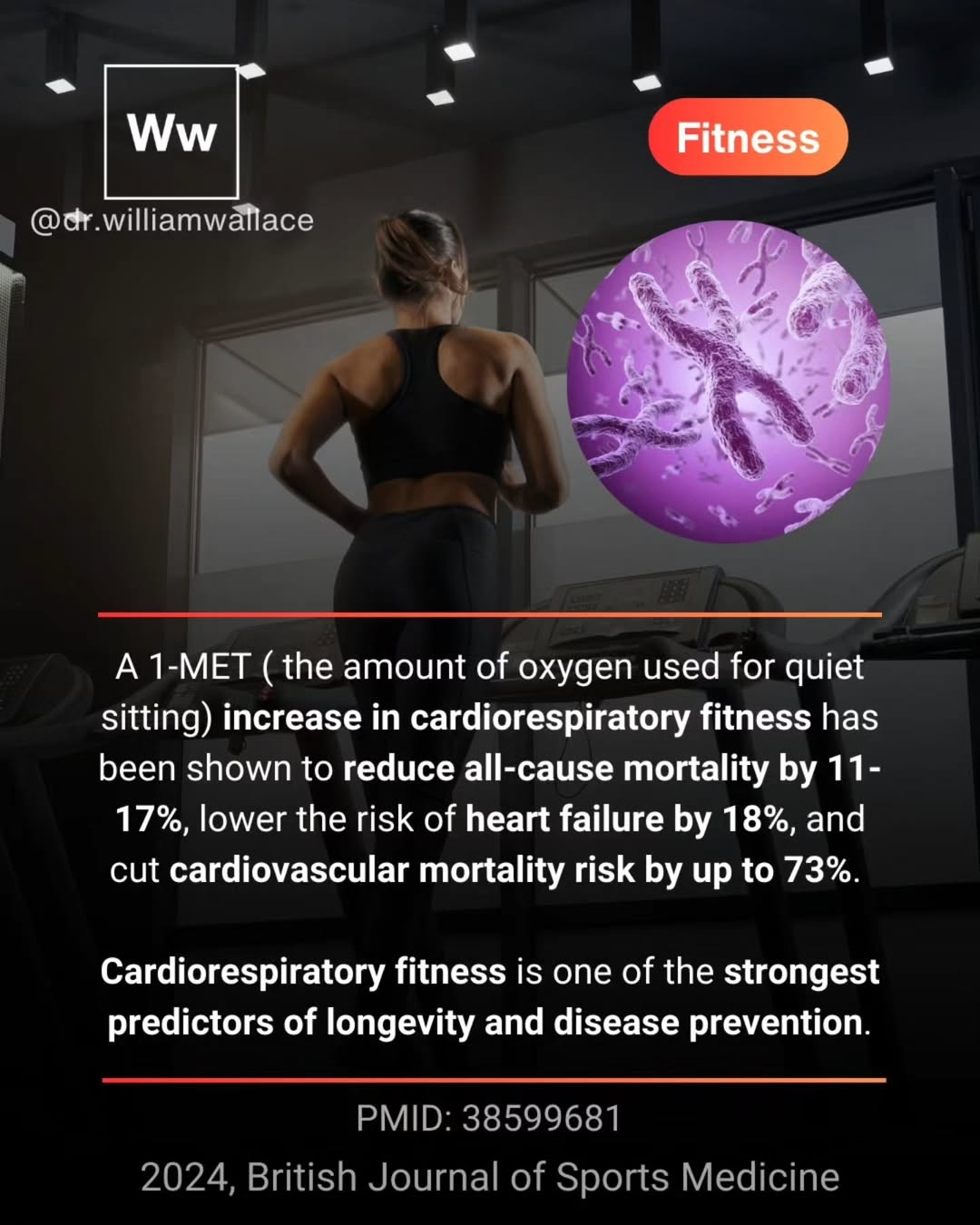
In the video, Dr. Rhonda Patrick discusses the most effective ways to improve cardiorespiratory fitness (VO₂ max) and reverse the structural aging of the heart. She explains that moderate-intensity exercise can be ineffective for a significant portion of the population. Instead, she advocates for vigorous-intensity exercise, particularly High-Intensity Interval Training (HIIT). The "gold standard" protocol she highlights is the Norwegian 4x4, which consists of four repeated cycles of four minutes of high-intensity effort (around 80-90% of max heart rate) followed by four minutes of active recovery. Dr. Patrick cites a landmark two-year study where this type of training, as part of a larger regimen, reversed approximately 20 years of cardiac aging in sedentary 50-year-olds by making their hearts larger and less stiff. The underlying mechanism involves stressing the cardiovascular system to force adaptation and clearing blood glucose to prevent glycation, a process where sugar molecules stiffen collagen in the heart muscle.
Key Claims and Verification
Here are the primary scientific claims made in the video, along with references to support them.
- Claim 1: A two-year exercise program can reverse key aspects of cardiac aging in middle-aged individuals.
- Verification: This is accurate. The study referenced is a well-known clinical trial led by Dr. Benjamin Levine at UT Southwestern and published in the journal Circulation in 2018. In the study, sedentary adults (average age ~53) underwent a two-year training program that progressively built up to include 1-2 weekly sessions of high-intensity intervals (the "Norwegian 4x4"). The results showed that the exercise group significantly increased their VO₂ max (a measure of fitness) and decreased the stiffness of their left ventricle—the heart's main pumping chamber. This increased elasticity is characteristic of a younger, healthier heart.
- Reference: Howden, E. J., Sarma, S., Lawley, J. S., et al. (2018). Reversing the Cardiac Effects of Sedentary Aging in Middle Age—A Randomized Controlled Trial. Circulation, 137(15), 1549–1560.
- Reversing the Cardiac Effects of Sedentary Aging in Middle Age—A Randomized Controlled… (Circulation, 2018)
- Claim 2: As we age, our hearts get stiffer, partly due to glycation.
- Verification: This is well-established in scientific literature. High levels of blood glucose can lead to a non-enzymatic reaction with proteins, forming Advanced Glycation End-products (AGEs). These AGEs cross-link with collagen fibers, which are a major structural component of the heart muscle. This cross-linking reduces the elasticity of the heart tissue, causing it to become stiff. A stiffer heart does not fill with blood as efficiently, which can lead to diastolic heart failure. Exercise is a primary way to clear glucose from the blood, thereby reducing the rate of AGE formation.
- Reference: Asif, M., Egan, J., Vasan, S., et al. (2000). An advanced glycation endproduct cross-link breaker can reverse age-related increases in myocardial stiffness. Proceedings of the National Academy of Sciences, 97(6), 2809–2813.
- Claim 3: The Norwegian 4x4 is a highly effective protocol for improving VO₂ max.
- Verification: This is correct. This protocol was popularized by researchers Jan Hoff and Jan Helgerud at the Norwegian University of Science and Technology (NTNU). Their research has repeatedly shown that high-intensity aerobic interval training is superior to moderate-intensity continuous training for improving maximal oxygen uptake (VO₂ max) in a wide range of populations, from elite athletes to cardiac rehabilitation patients. The longer, 4-minute intervals allow an athlete to spend more total time at a high percentage of their VO₂ max, which is a powerful stimulus for adaptation.
- Reference: Helgerud, J., Høydal, K., Wang, E., et al. (2007). Aerobic high-intensity intervals improve V̇O2max more than moderate training. Medicine & Science in Sports & Exercise, 39(4), 665-671.
- Aerobic high-intensity intervals improve V̇O2max more than supramaximal sprint… (Scand J Med Sci Sports, 2023)
- Claim 4: Many people (up to 40%) do not improve cardiorespiratory fitness with standard moderate-intensity exercise.
- Verification: This is also supported by research. The idea of "exercise non-responders" comes from large studies, most notably the HERITAGE Family Study. This research showed a huge variation in how individuals' VO₂ max responded to a standardized 20-week moderate-intensity endurance training program. While the average improvement was significant, a substantial percentage of participants showed little to no improvement in their cardiorespiratory fitness, confirming Dr. Patrick's point that moderate-intensity exercise is not a "sure thing" for everyone.
- Reference: Bouchard, C., An, P., Rice, T., et al. (1999). Familial aggregation of V̇O2max response to exercise training: results from the HERITAGE Family Study. Journal of Applied Physiology, 87(3), 1003–1008.
- Familial aggregation ofV˙ o 2 max response to exercise training: results from the… (Journal of Applied Physiology, 1999)