How calcium balance goes wrong
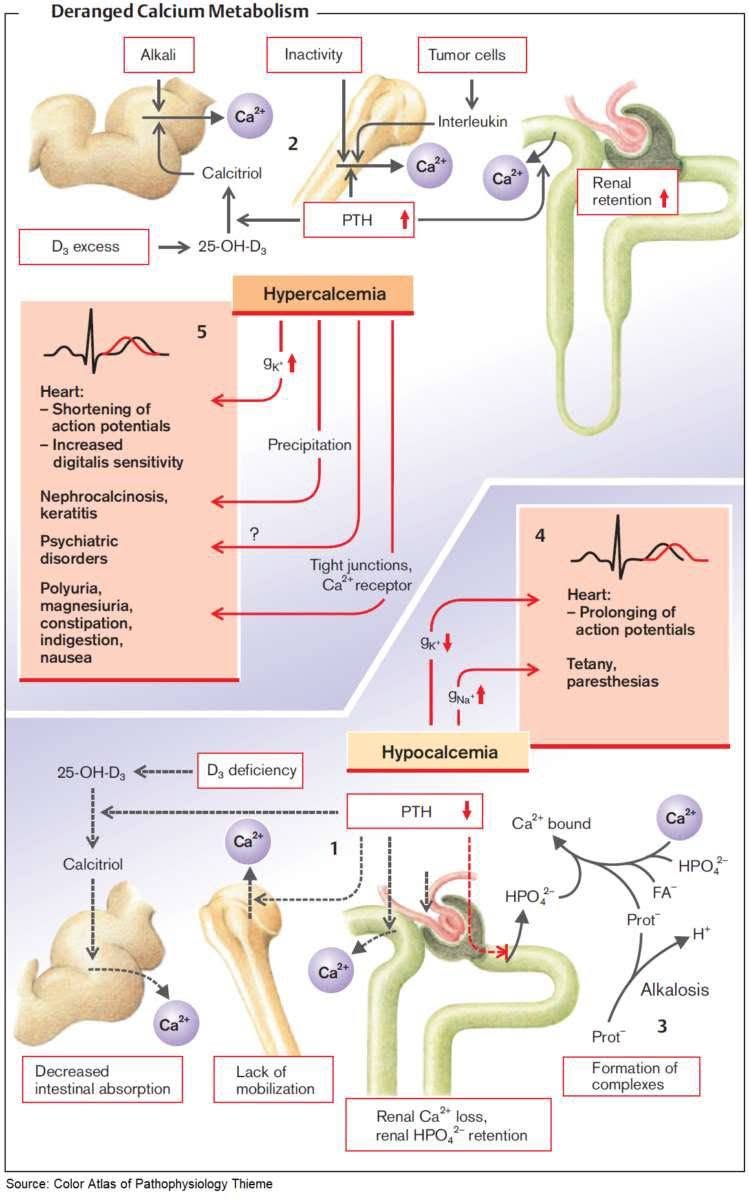
Calcium is essential for bone structure, muscle contraction, nerve signaling, and heart rhythm. The body tightly regulates blood calcium through a feedback system involving the parathyroid hormone (PTH), vitamin D (calcitriol), and the kidneys. When this balance fails, both high (hypercalcemia) and low (hypocalcemia) calcium levels can cause widespread dysfunction.
1️⃣ When calcium is too low - hypocalcemia
Deficiency of vitamin D or reduced PTH secretion lowers calcium absorption in the gut and release from bone. This leads to nerve hyperexcitability and prolonged muscle contractions.
🟢 Example: Vitamin D deficiency reduces 25-OH-D₃ conversion to calcitriol, decreasing calcium uptake from the intestine and causing tetany, numbness, and muscle spasms.
2️⃣ Renal calcium loss and phosphate retention
When PTH is low, kidneys lose calcium while retaining phosphate, further lowering free calcium levels. Alkalosis can also trap calcium in protein-bound forms, intensifying symptoms.
🟢 Example: Chronic kidney disease impairs phosphate excretion, reducing ionized calcium and triggering secondary hyperparathyroidism.
3️⃣ Electrical effects on the heart
Low calcium prolongs cardiac action potentials, causing arrhythmias and increased risk of QT-interval prolongation.
🟢 Example: Severe hypocalcemia can cause paresthesias and tetany—sustained involuntary contractions due to overactive sodium channels.
4️⃣ When calcium is too high — hypercalcemia
Excess PTH, vitamin D toxicity, bone resorption (from tumors or inactivity), or renal retention all increase calcium release into blood.
🟢 Example: In cancer, tumor-secreted cytokines stimulate bone breakdown, raising serum calcium.
5️⃣ Systemic and cardiac consequences
High calcium shortens cardiac action potentials and increases digitalis sensitivity, raising arrhythmia risk. It can precipitate in kidneys and soft tissues, leading to nephrocalcinosis or corneal calcification.
🟢 Example: Hypercalcemia causes fatigue, constipation, nausea, psychiatric symptoms, and polyuria due to impaired renal concentration ability.
6️⃣ The PTH–vitamin D axis
PTH increases bone calcium release, enhances renal calcium reabsorption, and boosts conversion of 25-OH-D₃ to calcitriol. Calcitriol then promotes intestinal calcium absorption.
🟢 Example: Overactivation of this loop, such as in hyperparathyroidism or vitamin D overdose, can push calcium dangerously high.
Calcium homeostasis relies on continuous coordination between bone, kidney, and hormone signaling. Too little excites the nervous system; too much depresses it. Either imbalance disrupts the electrical and structural foundation of nearly every cell in the body.