Kidney disease and heart disease are so tightly entangled that the group's admins and the latest guidelines they share treat them as two sides of one problem. Each condition accelerates the other: reduced kidney function raises cardiovascular risk, and protecting against atherosclerosis lowers the risk of later kidney disease.12 Gokhan Can notes that chronic kidney disease (CKD) almost always accompanies heart disease.3
The practical consequence is that kidney health deserves its own monitoring and its own protective strategy. The group's posts stress three ideas: measure kidney function properly (creatinine alone misses things), treat the shared roots (blood pressure, diabetes, excess visceral fat, lipids), and be careful with drugs, supplements and salt substitutes that kidneys have to clear.456
This article is a summary of those discussions, not medical advice. Where a recommendation is attributed to an admin, it is their view, and the group's admins repeatedly suggest discussing kidney-related decisions with your doctor.
Why the kidneys and the heart are linked
One syndrome, several organs
The 2026 European Society of Cardiology (ESC) guideline summary shared by Louis Nervegna says cardiovascular disease and CKD should be managed together as one "cardiorenal syndrome", because treating them in isolation misses prevention opportunities.1 The American Heart Association (AHA) uses the umbrella term cardiovascular-kidney-metabolic (CKM) syndrome and states that at least 3 in 4 US adults may have it, and that it may be reversible. Louis argues heart, kidney and metabolic disease are, in aggregate, the same disease.7
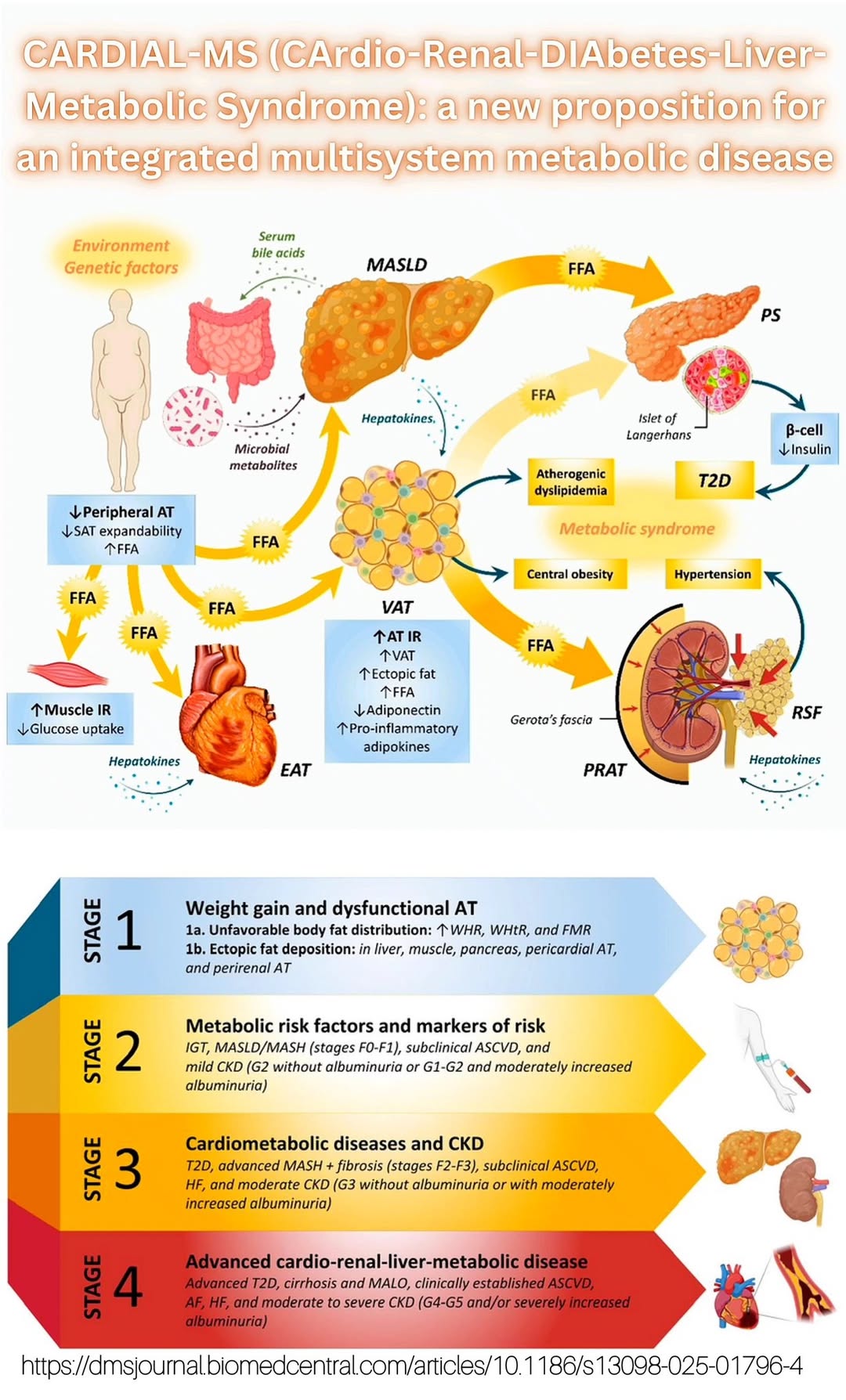
A 2025 proposal called CARDIAL-MS (cardio-renal-diabetes-liver-metabolic syndrome) goes further, describing metabolic liver disease, diabetes, cardiovascular disease and kidney disease as a single progressive syndrome rooted in dysfunctional fat tissue and ectopic fat (fat deposited in the liver, muscle, pancreas and heart and kidney tissue).6 The shared text calls for early intervention beyond single risk factors, before multi-organ damage sets in.
Organs that talk to each other
A shared review describes the kidney as a hub that communicates with the heart, brain, gut, liver and lungs, and whose dysfunction contributes to cardiorenal syndromes, cognitive decline and anemia.13 Gokhan shares a 2026 report that diseased kidneys release tiny particles called extracellular vesicles that appear toxic to the heart, which may help explain why more than half of people with advanced kidney disease develop cardiovascular problems.14
The kidneys also keep the heart's electrical system stable. They regulate blood potassium, and when function declines potassium can accumulate; severe hyperkalemia (high potassium) can disrupt the heart's rhythm and cause life-threatening arrhythmias.15 A shared explainer on calcium notes that CKD impairs phosphate excretion, lowers ionized calcium and can trigger secondary hyperparathyroidism, with low calcium prolonging the QT interval and causing arrhythmias.16
Kidney function in risk calculators
Louis points out that the AHA's PREVENT risk calculator for ages 30 to 79 without known cardiovascular disease accounts for kidney and metabolic disease and estimates 10- and 30-year risk of both atherosclerotic disease and heart failure. He warns it will underestimate risk in people who have had a heart attack or stroke, or who have significant atherosclerosis or a high calcium score.17 He also notes that eGFR is now one of the inputs, because of how strongly it predicts heart attack and stroke.1318
A JACC International piece he shares found kidney function remains a strong prognostic factor in older heart attack patients, and that physiology-guided complete revascularization was effective regardless of kidney function.18 Left ventricular hypertrophy (thickening of the heart's main pumping chamber) can also be caused by CKD, among other things.19
When it starts
A shared Cell 2025 study summary suggests the heart and kidneys are among the first major organs to show measurable age-related change, from the mid-30s to early 40s.20 A study in the American Journal of Kidney Diseases (Lee et al.) found that young adults with better cardiovascular health had lower later risk of both CVD and kidney disease, and that improving health over time helped, while maintaining it from the start helped most.2
How to measure kidney health
Beyond creatinine
Gokhan stresses that creatinine and creatinine-based eGFR (estimated glomerular filtration rate, a calculation of how much blood the kidneys filter per minute) are imperfect. Cystatin C, a protein used to estimate GFR, is independent of muscle mass and may be more accurate, particularly in mild or early disease. Creatinine eGFR and cystatin C eGFR can disagree in about 30% of people, so a combined CKD-EPI creatinine-cystatin C equation may give the best estimate.421
He also links a 2025 report that a mismatch between the two common kidney function tests predicts higher risk of kidney failure, heart disease and death; he gives no numbers.22 He describes his own experience: his creatinine eGFR had averaged about 100, but the combined estimate was 86, which made him realize his kidneys were in slightly worse shape than he had thought.23 Because his doctors rarely order cystatin C and similar tests, he orders them himself.24
Urine tests catch early damage
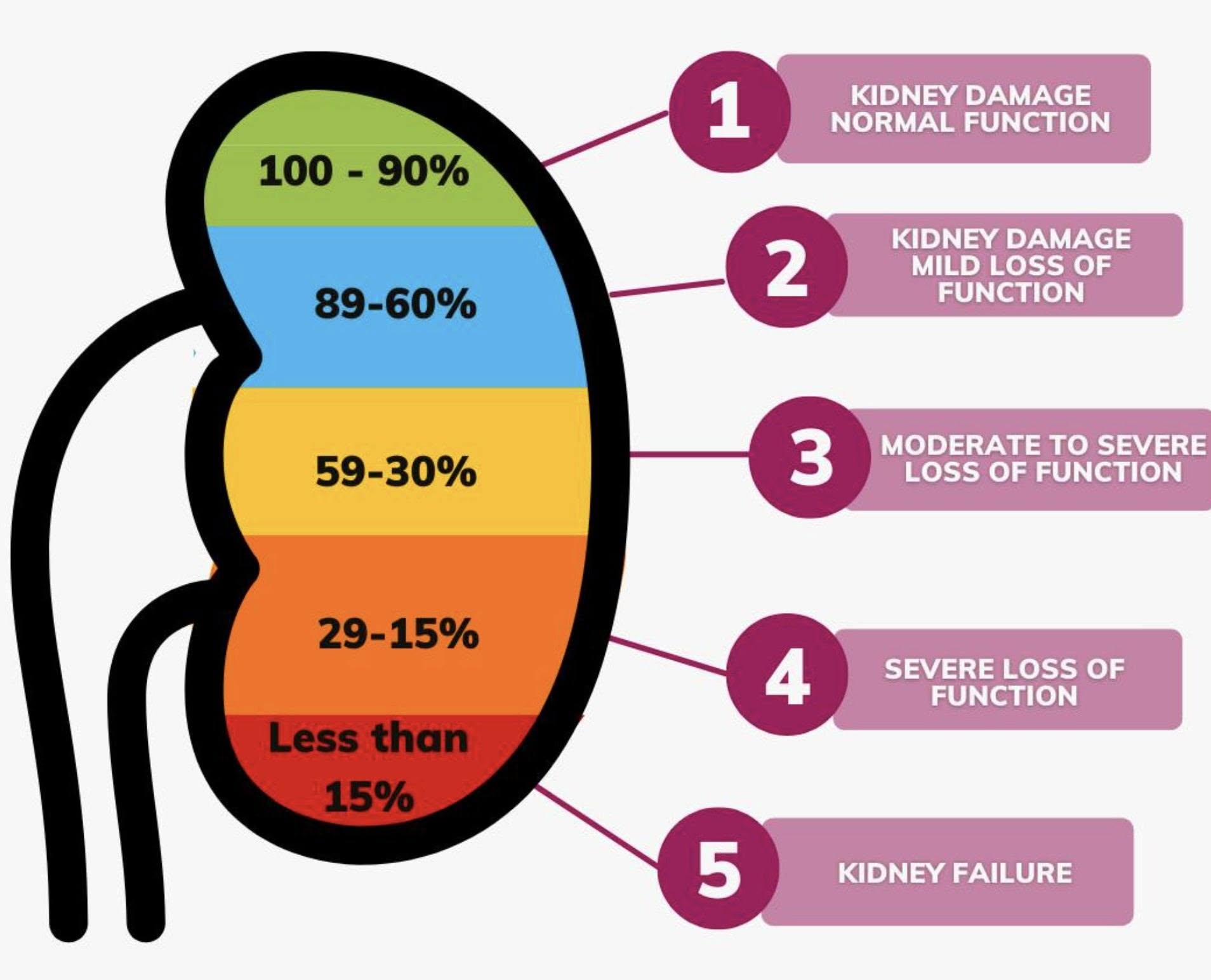
The urine albumin-to-creatinine ratio (uACR) detects albuminuria, which Gokhan describes as an early marker of kidney damage that can appear before eGFR falls.421 The 2026 ESC summary agrees: a patient may have substantial albuminuria and high cardiovascular risk despite a relatively preserved eGFR, so creatinine alone is not adequate screening. It recommends testing eGFR and uACR at diagnosis in everyone with cardiovascular disease, treating albuminuria as a "cardiovascular vital sign", and repeating both at least annually in people with cardiovascular disease, diabetes or CKD.1
Gokhan's ranking of five tests
Gokhan ranks five tests for monitoring kidney health, especially for people on many supplements or drugs:
- Cystatin C (very high usefulness).
- A chemistry panel, blood count and lipids, which includes creatinine and creatinine eGFR (very high).
- Albumin-to-creatinine ratio on a random urine sample (high).
- Urine protein-to-creatinine ratio (high).
- Routine urinalysis (moderate; more general and possibly redundant if the others are done).
He suggests tracking these at least annually, or more often at high risk, and says he personally trusts Life Extension for ordering them in the US.421
What damages the kidneys, and what protects them
Blood pressure, diabetes, Lp(a) and excess fat
A summary of the 2025 AHA/ACC blood pressure guideline shared by Louis says about 57% of men and 53% of women aged 45 to 59 have blood pressure above 130/80 mmHg (about 84% at ages 75 to 80), and that elevated pressure is a powerful risk factor for CKD as well as coronary disease, stroke and dementia.5
Louis shares work from the Copenhagen General Population Study, relayed by Borge Nordestgaard, that genetically high Lp(a) appears to be a direct cause of CKD (Mendelian randomization and observational evidence), and advises people with high Lp(a) to monitor and protect their kidneys.2526
The CARDIAL-MS framework and the AHA's CKM concept both point to excess and misplaced body fat as a root cause, which connects kidney protection with weight loss and metabolic health.67
Gut-related ideas
- A Cell Reports Medicine study shared by Louis found that constipation raised blood levels of toxins such as p-cresol sulfate and indoxyl sulfate, even in healthy people, and that these are particularly burdensome to the kidneys. Once or twice daily bowel movements, along with more fruit and vegetables, water, exercise and a plant-dominant diet, characterized the "Goldilocks" group. This was a cross-sectional study.27
- Gokhan shares an explainer on imidazole propionate, a metabolite made by gut bacteria and elevated in conditions including kidney disease; it describes a diverse, high-fiber microbiome as protective.28
- He also shares mouse and early human data. A gut-bacteria peptide called corisin tracked with severity of diabetic kidney disease and, in mice, a neutralizing antibody reduced kidney damage.3 A phase II trial of 118 CKD patients found the constipation drug lubiprostone (16 micrograms daily) preserved eGFR over 24 weeks versus decline on placebo, apparently through a microbiome shift that raised spermidine rather than by lowering uremic toxins.29 These are early findings.
- Another observation is that TMAO, a compound the liver makes from gut-derived TMA, is filtered out by the kidneys, so better kidney function means lower TMAO; whether TMAO directly causes heart disease is described as unresolved.30
Medicines that protect the kidneys
SGLT2 inhibitors. Louis shares a JAMA editorial summarizing meta-analyses showing these drugs consistently reduce kidney disease progression and hospitalizations across all eGFR and albuminuria subgroups, regardless of diabetes status, including in advanced CKD or low albuminuria.10 A mechanism summary credits improved endothelial function and reduced inflammatory signaling in heart and kidney.31 A second editorial notes they also consistently raise hemoglobin and hematocrit, which may help anemia management.32
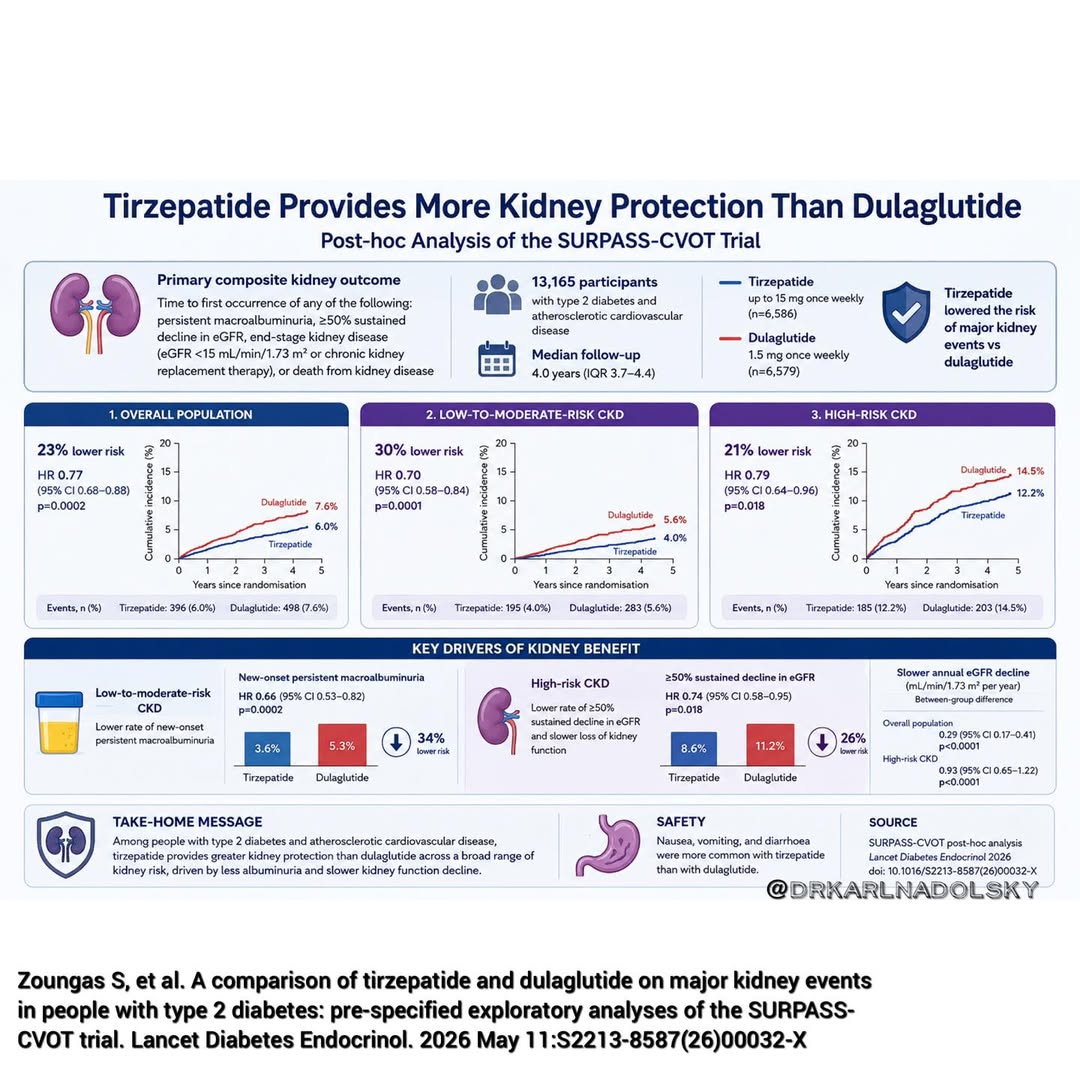
GLP-1 based drugs. In a post-hoc analysis of SURPASS-CVOT (people with type 2 diabetes and heart disease), tirzepatide gave 23% lower major kidney event risk than dulaglutide (30% lower in low-to-moderate CKD, 21% in high-risk CKD), with slower eGFR decline and reduced progression of macroalbuminuria.8 In the REMODEL mechanistic study, semaglutide in type 2 diabetes with CKD reduced albuminuria by 40% and kidney and perirenal fat. Louis's reading is that the benefit comes from negative energy balance, with the drugs simply making calorie restriction easier; that is his interpretation, not the trial's conclusion.9 A Nature Biotechnology editorial reports pharma speakers asking whether GLP-1 drugs might be the first longevity drugs, given benefits that include kidney disease, while a mouse study showed lifespan extension in elderly female mice.3334
Statins. Louis shares that atorvastatin is generally preferred in CKD: it has under 2% renal excretion and needs no dose change in non-dialysis CKD stages 1 to 5, while rosuvastatin is about 30% renally excreted, needs dose reduction when eGFR is below 30 (often a maximum of 10 mg in severe CKD) and at high doses can cause reversible proteinuria or hematuria. The summary adds that KDIGO advises a statin with or without ezetimibe in non-dialysis CKD stages 3 to 5, and that renal benefits of statins are modest, with cardiovascular risk reduction being the main aim.3536 In the PLANET I and II trials, in patients with proteinuria, rosuvastatin 40 mg lowered eGFR and had more renal adverse events including acute kidney injury, while atorvastatin 80 mg reduced proteinuria and preserved kidney function. Louis adds that kidney function typically returns to baseline when the drug is stopped, and that standard rosuvastatin doses are safe for the vast majority.37 A teaching card he first shared said atorvastatin improved eGFR; he later corrected the typo, stating that atorvastatin improved proteinuria but had no effect on eGFR.38 A post-hoc analysis of 6 double-blind trials (30,621 patients) found atorvastatin improved kidney function over time in a dose-dependent way, and that improvement was associated with lower cardiovascular risk.39
| Atorvastatin | Rosuvastatin | |
|---|---|---|
| Renal excretion | Under 2% | About 30% |
| Dose in CKD (not on dialysis) | No change needed in stages 1 to 5 | Reduce when eGFR is below 30; often 10 mg maximum in severe CKD |
| Kidney effects at high dose | Reduced proteinuria (80 mg in PLANET) | Reversible proteinuria or hematuria; 40 mg lowered eGFR in PLANET |
The table summarizes the posts cited above.3537
Metformin. An editorial Louis shares notes that metformin was once avoided in CKD for fear of lactic acidosis; labels were widened in 2016 to eGFR 30 to 59, but guidelines still advise against it below eGFR 30 because of higher lactic acidosis hospitalization risk, and the editorial asks whether benefits might outweigh harms.40 In a later post Louis says patients with kidney dysfunction need to be careful, noting that metformin may protect healthy kidneys but that this may not hold once function is impaired, citing a retrospective cohort.41 The two posts therefore reflect an open question.
Bempedoic acid. A summary of a statin-intolerant trial (4,206 patients) reported fewer cardiovascular events but also raised serum creatinine, uric acid and liver enzymes as adverse effects.42
Drugs and substances that can harm
- Louis says misuse of over-the-counter acetaminophen (paracetamol) and ibuprofen can cause serious liver and kidney damage, and calls this a larger concern than fears about turmeric or green tea.43
- He agrees ibuprofen is "very rough on the kidneys", and that chronic NSAID use (not aspirin) can worsen heart failure and hypertension and raise heart attack and stroke risk, though occasional use is considered fine.1244
- Severe hypercalcemia (too much calcium) can cause cardiac arrest, coma or kidney failure; a coroner's warning concerned an 89-year-old who died of vitamin D toxicity after at least nine months of supplements.45
Diet, salt and supplements
Protein
Louis shares evidence that protein does not harm healthy kidneys. A 10-year cohort with iohexol-measured GFR found higher self-reported protein intake was not associated with GFR decline in adults largely free of CKD.46 A review by Stuart Phillips against the Brenner hyperfiltration hypothesis cites a pooled analysis of 28 RCTs (1,358 adults without kidney disease) with no meaningful effect on GFR, and an 11-year follow-up of 1,624 women with no decline. Louis adds that high protein can cause harm in people with existing kidney problems, which is why low-protein diets remain part of standard nephrology care; a Cochrane review supports very low-protein diets in stage 4-5 CKD.47 Louis separately cautions that the "high-protein craze" is not evidence-based, noting an ICU trial of 3,397 patients where higher-protein feeding made no difference to survival or kidney outcomes.48
Salt, potassium and stones
Louis recommends a 50:50 salt and potassium chloride blend for lowering sodium while raising potassium, but warns that people with kidney problems should not use potassium salts because of the danger of high potassium and fatal cardiac arrest.1115
For kidney stones, he summarizes American Urological Association guidance: calcium oxalate stones are about 80% of stones; all stone formers should aim for urine volume of at least 2.5 liters daily; patients with high urinary calcium should limit sodium and consume 1,000-1,200 mg of dietary calcium daily; those with low urinary citrate should eat more fruit and vegetables and limit non-dairy animal protein; and potassium citrate may be offered for recurrent calcium stones with low urinary citrate.49 He also shares videos on why excess sodium raises stone risk.5051
Foods and supplements: mostly early or mixed evidence
- In a randomized trial in prediabetes, daily avocado plus mango for 8 weeks improved vascular function and some kidney markers including eGFR, though cholesterol, blood sugar and inflammation did not change.52
- A 2000 randomized placebo-controlled trial of coenzyme Q10 in chronic renal failure reported that 36.2% of patients on CoQ10 needed dialysis versus 90% on placebo. The post says it is not claiming CoQ10 reverses kidney disease and that the research exists; the trial is old, and confirmation in larger recent trials matters.53
- Niacin reduced CKD and vitamin D3-induced vascular calcification in mice. Louis stresses it is preclinical, and that niacin failed to improve outcomes in two large trials with high-dose statins and should not be combined with high-dose statins.54
- A review of vitamin K2 and coronary calcium notes that some CKD trials were null, and that K2 is not yet a standard therapy.55
Nuances and caveats
- A normal creatinine does not mean healthy kidneys. The ESC summary and Gokhan both stress that albuminuria and cystatin C can reveal problems that creatinine eGFR misses.14
- Many items are early evidence. Corisin, lubiprostone, niacin, extracellular vesicles and the semaglutide aging study are mouse or phase II data.3293454
- Low values are not always good. Louis explains that observational U-shaped curves arise partly from reverse causality: for example, liver or kidney disease lowers A1C, so a low A1C is not automatically good.5657
- Admin interpretations versus trial conclusions. Louis's view that GLP-1 kidney benefits mainly reflect calorie restriction is his interpretation.9
- Observational findings. The cystatin mismatch report, young-adult cardiovascular health study and bowel movement study are associations.22227
What this means for you
These are ideas the admins and shared sources raise; discuss them with your doctor.
- Ask for both eGFR (ideally including cystatin C) and a urine albumin-to-creatinine ratio, not just creatinine.14
- Track kidney markers at least annually, more often if you take many drugs or supplements or are at high risk.4
- Know your blood pressure and keep it controlled; it is a major driver of CKD.5
- If you have high Lp(a), diabetes or metabolic syndrome, treat kidney monitoring as part of your plan.725
- If you have CKD, ask whether an SGLT2 inhibitor is suitable, and discuss statin choice and dose (atorvastatin is generally preferred; rosuvastatin may need dose limits).1035
- Avoid potassium-based salt substitutes if your kidneys are impaired, and discuss protein intake with a nephrologist if you have established CKD.1147
- Be cautious with chronic NSAID use and with high-dose vitamin D or other supplements.1245
Frequently asked questions
Is eGFR from creatinine enough?
According to Gokhan, no. Creatinine and cystatin C eGFR are discordant in about 30% of people, and urine tests catch early damage that eGFR may miss.4
What is albuminuria and why does a heart patient care?
It is albumin leaking into the urine. The ESC summary calls it a cardiovascular vital sign because rising uACR predicts CKD progression, heart failure, atherosclerotic events and cardiovascular death.1
Does a high-protein diet damage the kidneys?
In people with normal kidney function, the pooled trials and cohort shared in the group found no meaningful harm. In established CKD, low-protein diets are standard nephrology care.4647
Which statin is better for the kidneys?
Louis shares that atorvastatin is generally preferred in CKD, with no renal dose adjustment, whereas rosuvastatin needs dose limits at low eGFR and high doses (40 mg) lowered eGFR in PLANET. For most people on standard doses, rosuvastatin is considered safe.3537
Can I use a potassium salt substitute?
Louis uses a 50:50 sodium and potassium blend himself but warns people with kidney problems not to, because high potassium can cause fatal cardiac arrest.11