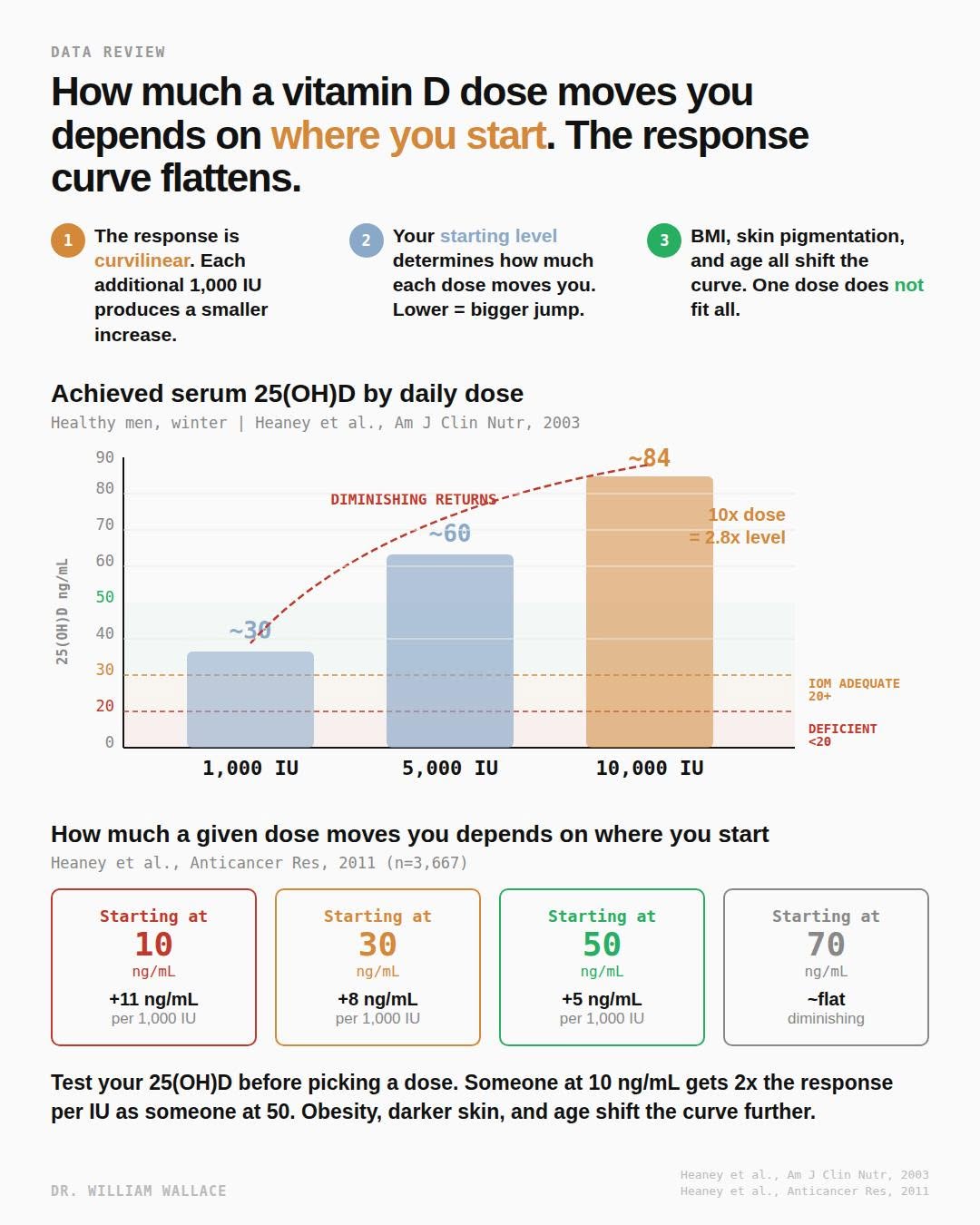
Vitamin D 1000 IU raises blood levels by 11, 8 or 5 ng/mL depending on baseline
A summary of vitamin D dose-response (Heaney 2003): the rise from 1000 IU shrinks as baseline rises, flattening around 70 ng. Useful rule of thumb for dosing.
A shared summary of a University of Surrey, John Innes Centre and Quadram Institute study reporting that vitamin D2 supplementation can reduce D3 levels below those of people taking no supplements. D3 is the more effective form.
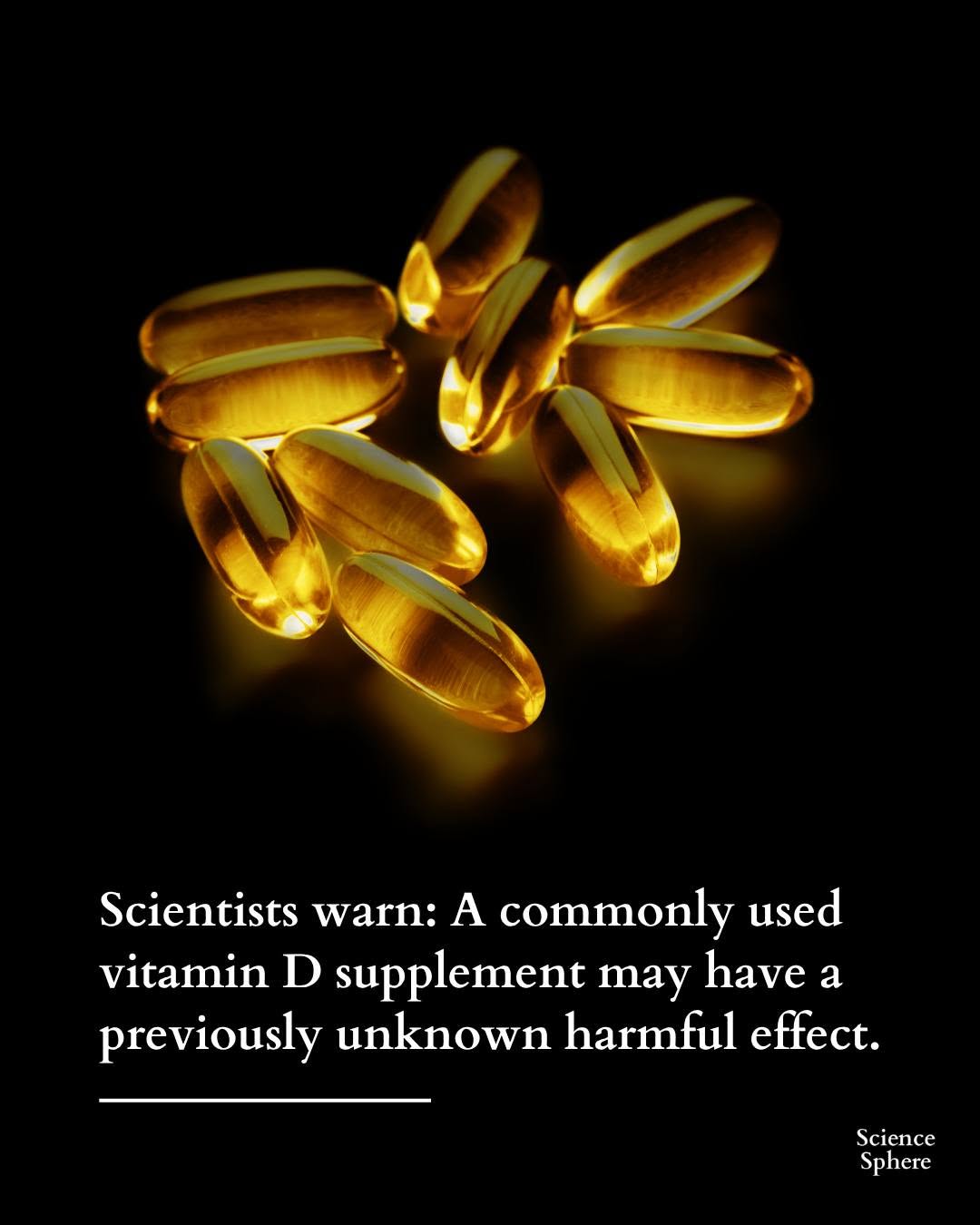
⚠️ Think twice before you pick your daily vitamin D supplement—new science reveals a crucial difference you might be missing.
A major study by the University of Surrey, the John Innes Centre, and the Quadram Institute BioScience found that taking vitamin D2, a common supplement, actually lowers the body's levels of vitamin D3—the form most effective for immune and overall health.
While many take vitamin D to strengthen bones and immunity, the investigation shows that D2 supplementation can reduce D3 concentrations below those seen in people not taking any supplements at all.
Vitamin D is available primarily in two forms: D2 and D3. The body naturally produces D3 in response to sunlight, and it is proven to be more efficient in boosting and maintaining healthy vitamin D levels. In this systematic review and meta-analysis of randomized controlled trials, participants receiving D2 saw a decline in their D3, highlighting a negative interaction that hadn't been widely recognized before.
Researchers urge that, especially in times with limited sun exposure, vitamin D3 is likely the safer and more effective supplement choice for most people. This discovery is prompting experts to recommend plant-based D3 options and calls for health guidelines to be revisited to prioritize public wellness.
Follow Science Sphere for regular scientific updates
📄 RESEARCH PAPER
📌 Emily I G Brown et al, "Effect of Vitamin D2 Supplementation on 25-Hydroxyvitamin D3 Status: A Systematic Review and Meta-Analysis of Randomized Controlled Trials", Nutrition Reviews (2025)
A summary of vitamin D dose-response (Heaney 2003): the rise from 1000 IU shrinks as baseline rises, flattening around 70 ng. Useful rule of thumb for dosing.
Summary of a presentation by Shirin Hooshmand: in postmenopausal women with osteopenia, eating prunes with calcium and vitamin D preserved bone density better than supplements alone, and a larger Penn State study found similar results. Prunes may also help men aged 50-79.
Louis quotes a September 2025 JACC: CardioOncology state-of-the-art review noting that AHA, ACC, ACS, NCCN and WCRF/AICR guidelines all recommend a predominantly whole-food plant-based diet, as does the EAT-Lancet consensus. Patterns like Mediterranean and DASH are included, emphasizing fruits, vegetables, whole grains, legumes, nuts, seeds and olive oil while minimizing red meat.
Summarizes a FoundMyFitness episode on magnesium, stressing that many people do not get enough and that deficiency can have wide-ranging health effects. It gives recommended intakes and argues that the RDA is a minimum to avoid deficiency disease.
Review of vitamin K2 (with or without vitamin D) and CAC. A 2023 meta-analysis of 14 RCTs (n=1,533) found a -17.3 Agatston units/year pooled difference. The largest RCT (389 men, 720 ug MK-7 + 1000 IU D vs placebo for 2 years) missed significance overall but slowed CAC at baseline CAC >=400; some CKD trials were null. Not yet a standard therapy.
Summarizes the supplements Peter Attia says he takes: B6, high-EPA fish oil aimed at a red-cell EPA+DHA level near 12%, vitamin D 5,000 IU, several forms of magnesium, methylfolate and B12 to keep homocysteine below nine, and baby aspirin. This is a personal regimen, not evidence.