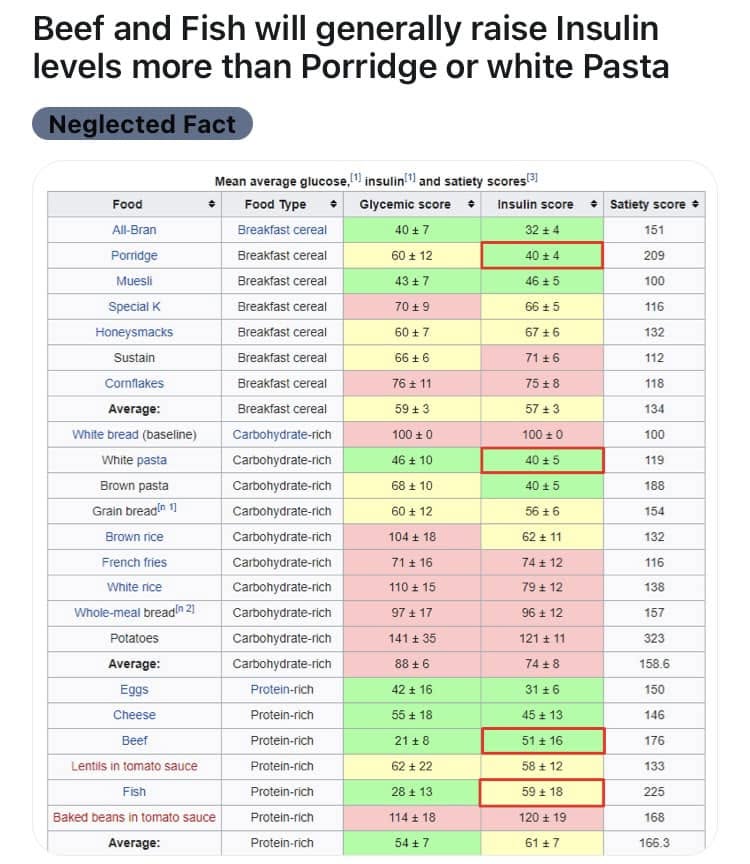
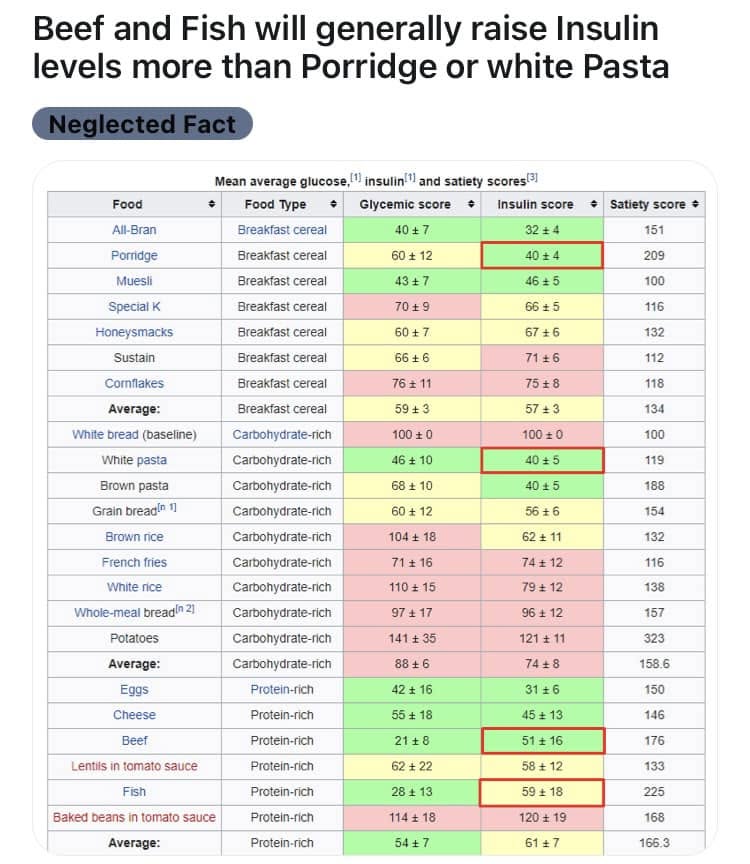
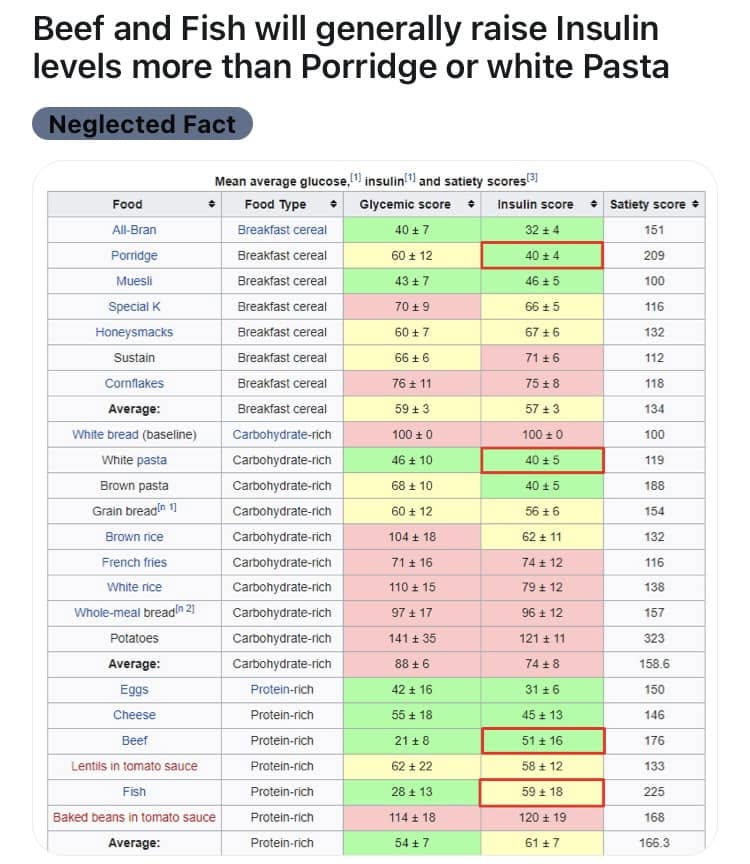
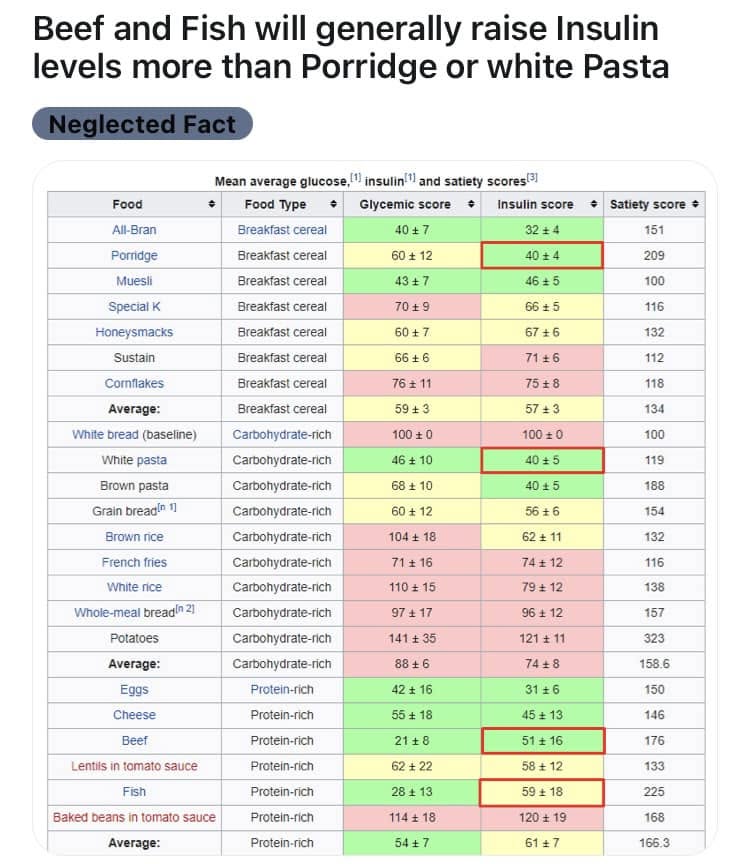
Please don’t confuse insulin with glucose. They are two very different things. Many proteins raise insulin just as much, or more, than carbs.
I’m surprised at how many people in this group don’t understand the difference between glucose and insulin.
(I blame this on social media influencers who have convinced people that they are effectively the same, and that only carbs strongly raise insulin. Nothing could be further from the truth.)
It is crucial to understand the difference if you care about your health
Glucose is a simple sugar. Insulin is a hormone.
CGM’s only measure glucose.
They directly tell you nothing about insulin.
You can have very high levels of insulin at the same time that you have low glucose. This is exactly what happens when you eat red meat. Calorie for calorie, beef raises insulin more than oatmeal or white pasta. Yet beef has almost no effect on glucose:
↪ Beef and whey raise insulin more than pasta, oatmeal or glucose: use the insulin index
Calorie for calorie, processed whey protein powder raises insulin more than white bread or pure glucose. Not just a little more, but a lot more. I’m not aware of any food that is more insulinogenic than whey protein:
↪ Whey protein raised insulin about twice as much as glucose or white bread per calorie
Yet whey protein does not raise glucose. In fact, it lowers glucose because it forces your pancreas to produce so much insulin.
Protein causes a big rise in insulin, just like carbs.
This is basic physiology. You need insulin to remove amino acids from blood and drive them into muscle— for the same reason that you need insulin to drive glucose into muscle. When the pancreas senses excess amino acids in the blood, it immediately starts to release insulin, just like it does with glucose. It is the same process in both cases.
#glucosevsinsulinHD #glucoseHD #insulinHD #cgmsHD #proteinHD #insulinindexHD #redmeatHD #oatmealHD #pastaHDke