Oatmeal
The glycemic index for slow-cook steel-cut oats is 42. This is considered low to moderate.
↪ Glycemic index of oats: steel-cut 42, rolled 55, instant 83
In a healthy person, the blood sugar spike that they produce is small.
↪ Oats raise blood sugar only about 34 mg/dL on average, per Levels CGM data
The beta-glucans in oats directly block the carbohydrate from spiking blood sugar. They not only do it when you eat the oats, but they continue to do it even when you eat other foods hours later.
↪ Oat beta-glucan (4 g) cut breakfast glucose peaks 28% and lunch response 24% in small RCT
There have been 74 randomized controlled trials testing the effects of oatmeal on various cardio-metabolic risk factors. The data is impressive.
facebook.com/share/r/1JTtfqh5ST
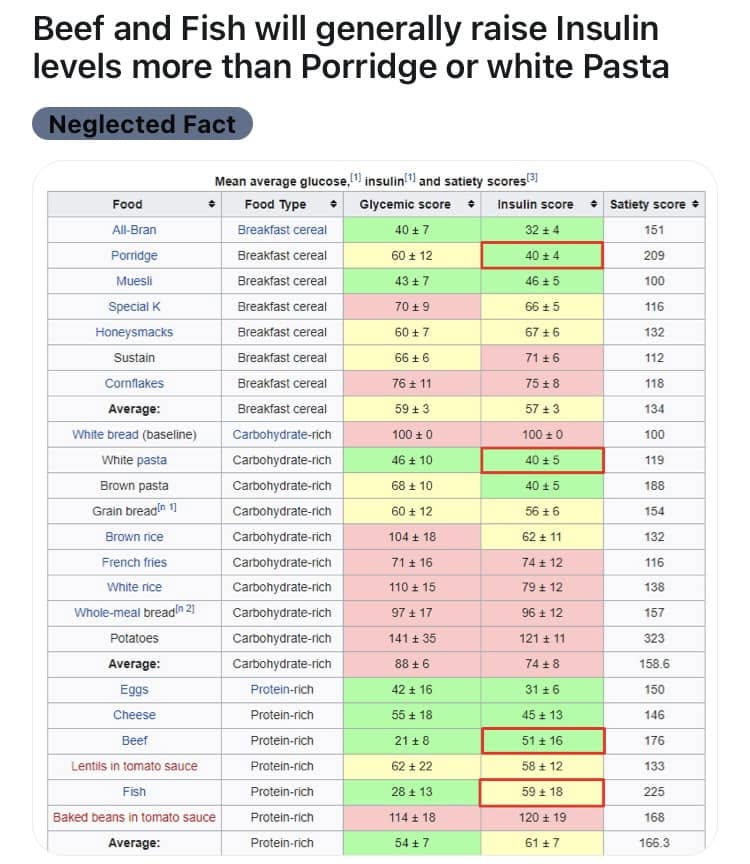
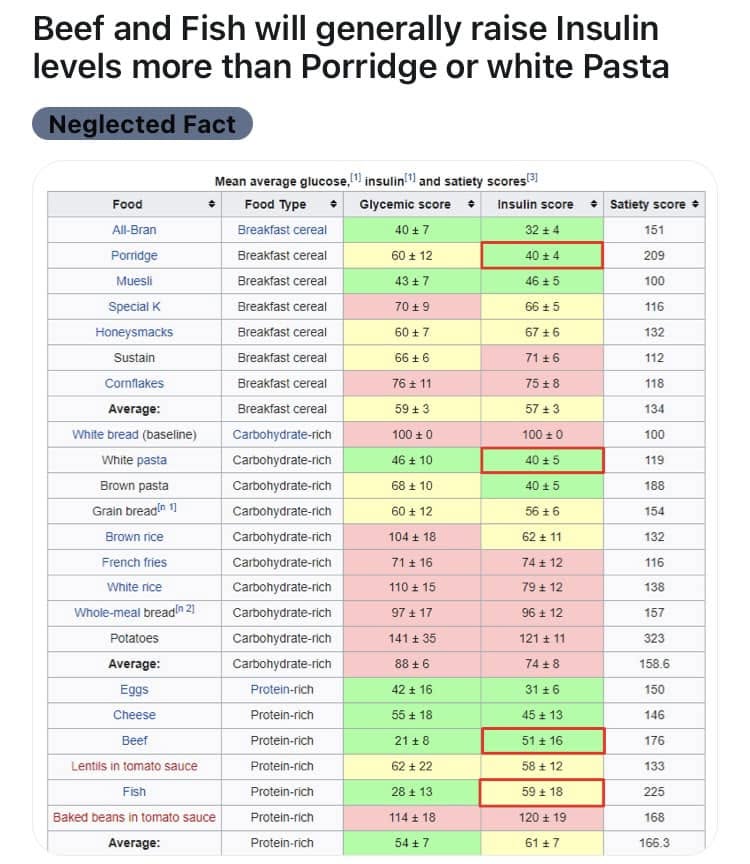
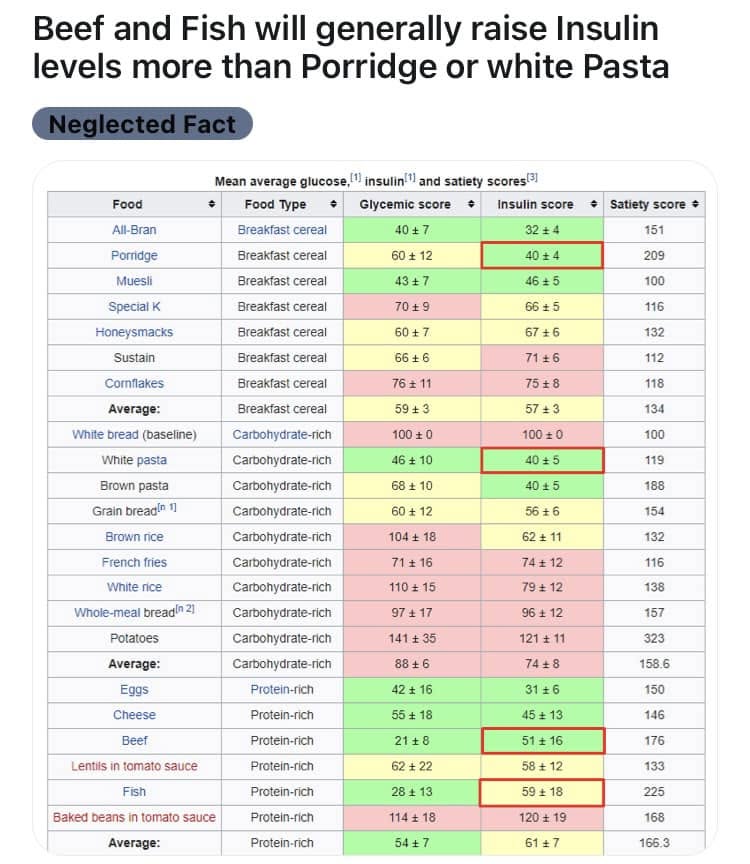
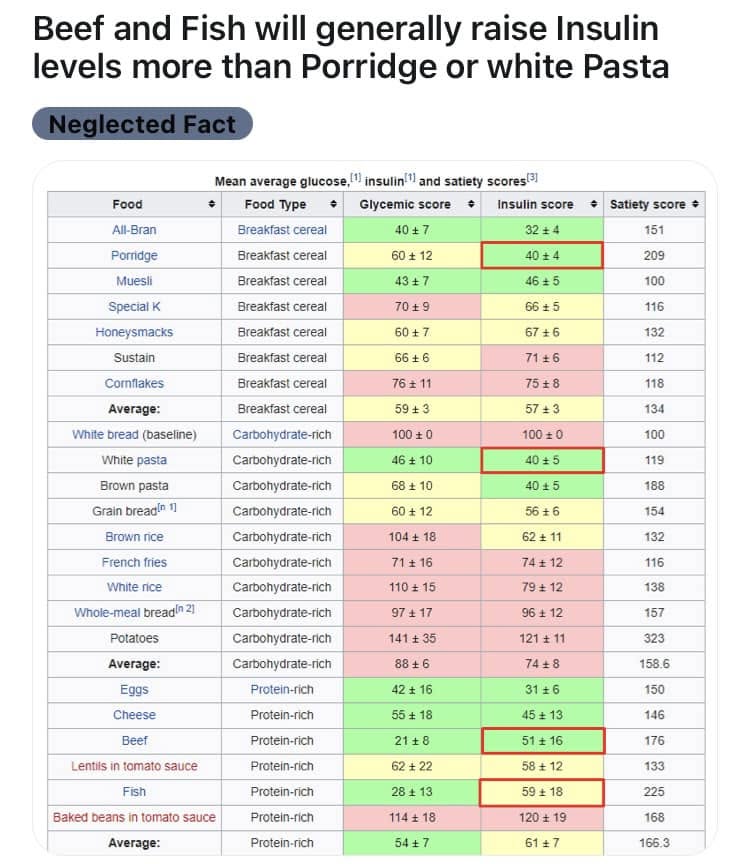
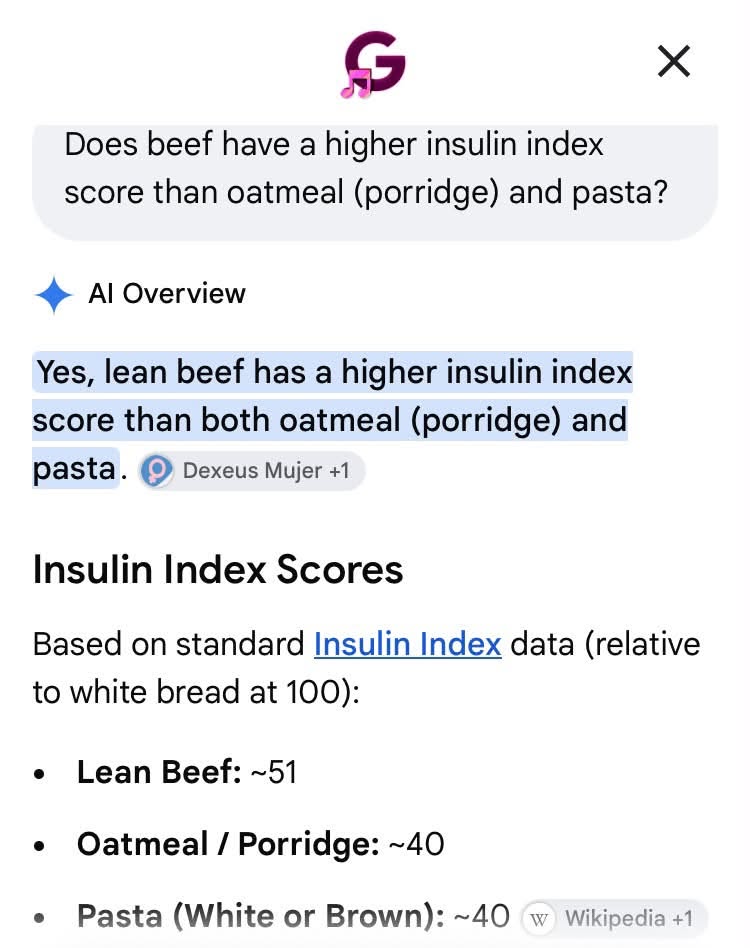
Oatmeal has a lower insulin index than red meat or whey protein. What this means is that oatmeal results in the production of less insulin than an equivalent number of calories from red meat or whey protein.
↪ Beef and whey raise insulin more than pasta, oatmeal or glucose: use the insulin index
If your goal is to lower your post-meal insulin levels, then you are much better off eating oatmeal than red meat or whey protein. Influencers constantly lie about this.
The insulin response to various foods has been exhaustively characterized. You can look it by googling “insulin index”, and fact check everything that I am saying here. See for yourself how these influencers have been lying to you.
#oatmealHD #wholegrainsHD #glycemicindexHD #insulinindexHD #glucoseHD #insulinHD #influencersHD
Some proteins raise insulin levels even more than carbs.
Beef raises insulin more than an equivalent number of calories from white pasta or oatmeal (porridge), when comparing calorie for calorie:
Paper · Am J Clin Nutr · 1997An insulin index of foods: the insulin demand generated by 1000-kJ portions of common foods.The aim of this study was to systematically compare postprandial insulin responses to isoenergetic 1000-kJ (240-kcal) portions of several common foods. Correlations with nutrient content were determined. Thirty-eight foods separated into six food categories (fruit, bakery products, snacks, carbohydrate-rich foods, protein-rich foods, and breakfast cereals) were fed to groups of 11-13 healthy subjects. Finger-prick…pubmed.ncbi.nlm.nih.gov
Whey protein raises insulin more than an equivalent number of calories from pure glucose or white bread, when comparing calorie for calorie:
Paper · Nutr Metab (Lond) · 2012The insulinogenic effect of whey protein is partially mediated by a direct effect of amino acids and GIP on β-cells.Conclusion: Compared with white wheat bread meal, whey causes an increase of postprandial insulin, plasma amino acids, GIP and GLP-1 responses. The in vitro data suggest that whey protein exerts its insulinogenic effect by preferential elevation of the plasma concentrations of certain amino acids, GIP and GLP-1.pubmed.ncbi.nlm.nih.gov
↪ Whey protein raised insulin about twice as much as glucose or white bread per calorie
Social media influencers have been misleading people about this for years.
If you really want to understand how much a particular food raises your levels of insulin, learn about the insulin index (also called the insulinogenic index).
Google “insulin index”.
To get started, read the Wikipedia article on the insulin index for more information (link below):
 en.wikipedia.orgInsulin index - Wikipediaen.wikipedia.org
The table in the Wikipedia article comes largely from this scientific paper:
PaperAm J Clinical Nutrition articleajcn.nutrition.org
#insulinindexHD #insulinHD #proteinHD #cgmsHD #wheyHD #redmeatHD #oatmealHD #pastaHD #glucoseHD #influencersHD