AI summary & key facts
Louis summarizes IVUS/CT-angiography trials showing total atheroma volume falls with statins, from 5% to 17%: COSMOS (5%), SATURN (5.5%), ASTEROID (6.5%), IBIS-4 (7.5%), STABLE (8%) and JAPAN-ACS (17%). The decrease reflects soft plaque regression even if calcified plaque stays the same or rises, and reversal appears once LDL-C falls below roughly 90 mg/dL.
- COSMOS 5%, SATURN 5.5%, ASTEROID 6.5%, IBIS-4 7.5%, STABLE 8%, JAPAN-ACS 17% (plaque trials)
- JAPAN-ACS used atorvastatin 20 mg or pitavastatin 4 mg in ACS
- Reversal begins as LDL-C drops below about 90 mg/dL
- Total plaque falls because soft plaque shrinks more than calcified plaque grows
SIX randomized trials have shown reversal of total plaque volume (TAV) with statins.
(Note that TAV stands for Total Atheroma Volume.)
The reversals in total plaque have ranged anywhere from 5% to 17%.
I listed each of the trials by name below, and the amount of the reversal:
COSMOS - 5%
SATURN - 5.5%
ASTEROID - 6.5%
IBIS-4 - 7.5%
STABLE - 8%
JAPAN-ACS - 17%
The reversals were proven with either CT-angiogram or IVUS (the gold standard).
Note that the reversals in total plaque were a result of reversing soft plaque, not calcified plaque. The reversal in soft plaque was large enough that the total plaque (soft+hard) went down, even if the hard calcified plaque stayed the same or increased.
Statins, ezetimibe, and PCSK9 inhibitors reverse soft plaque and reduce total plaque.
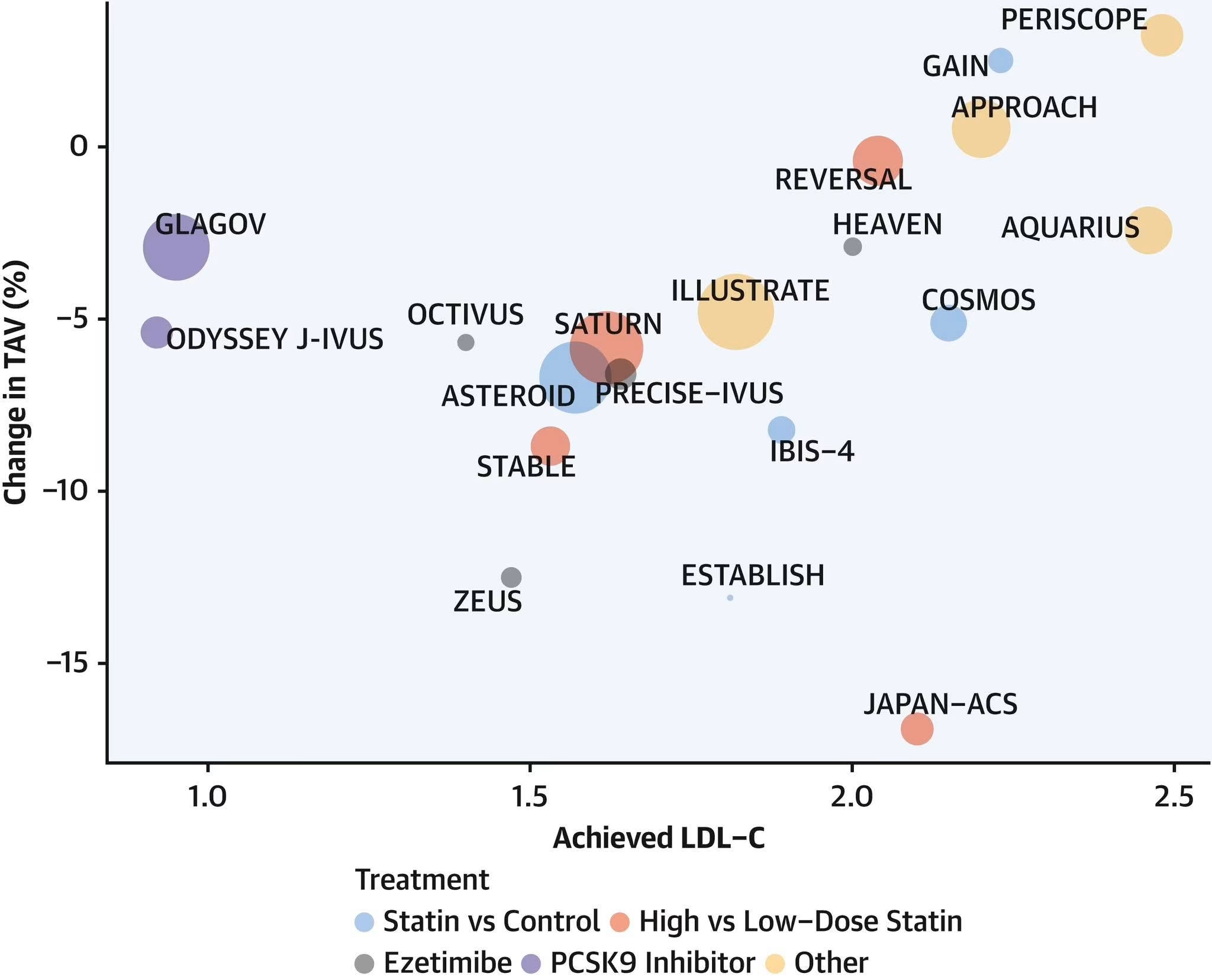
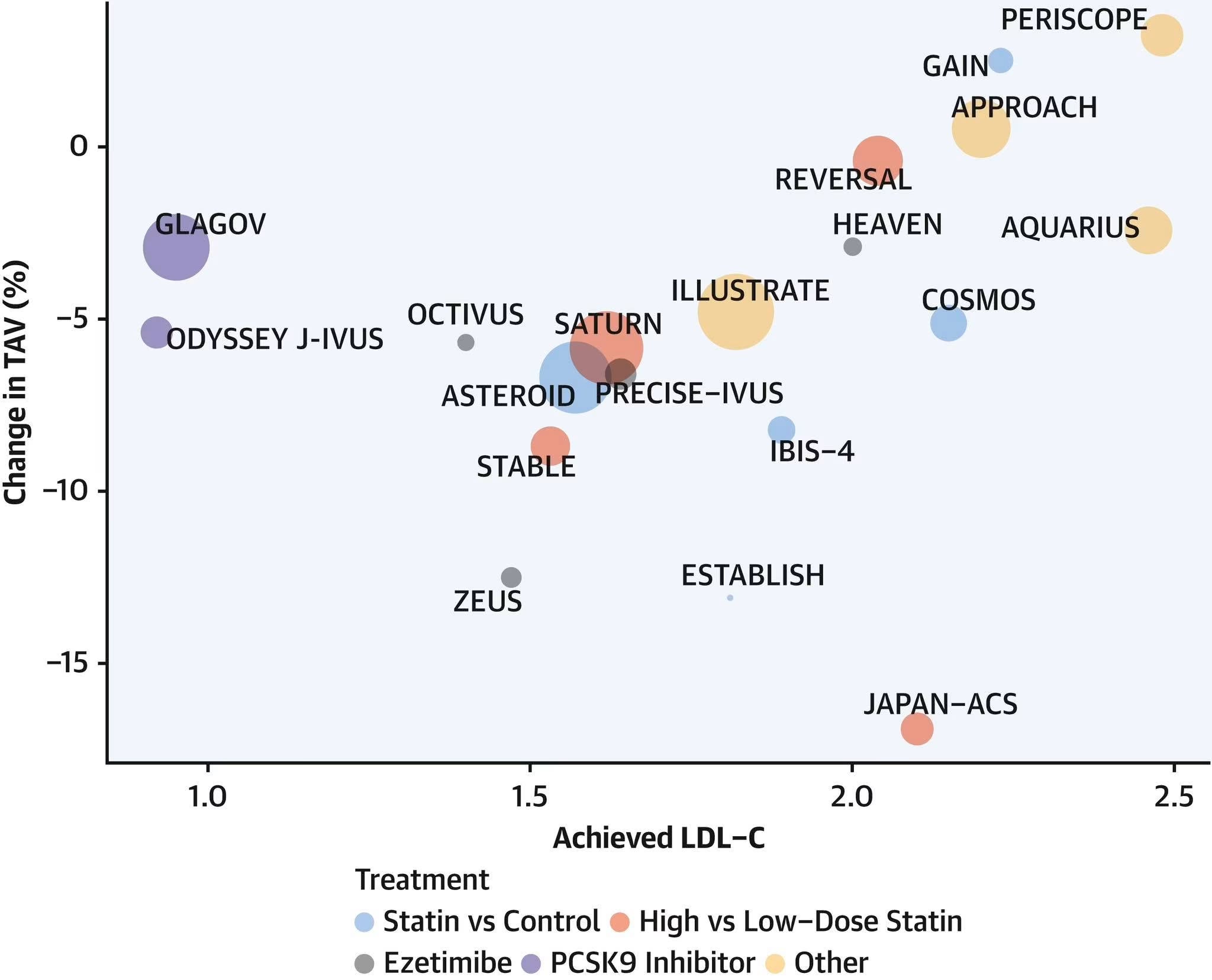
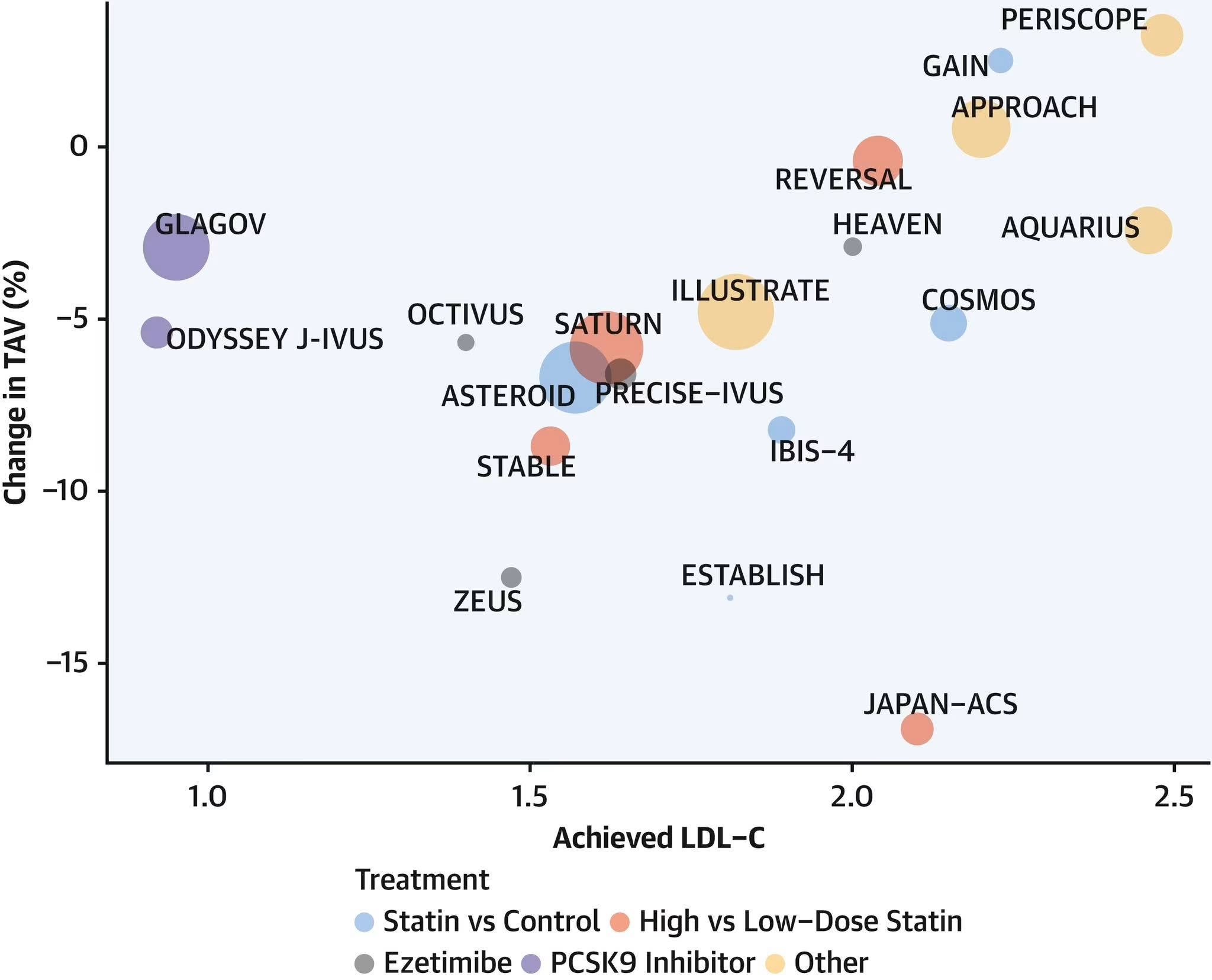
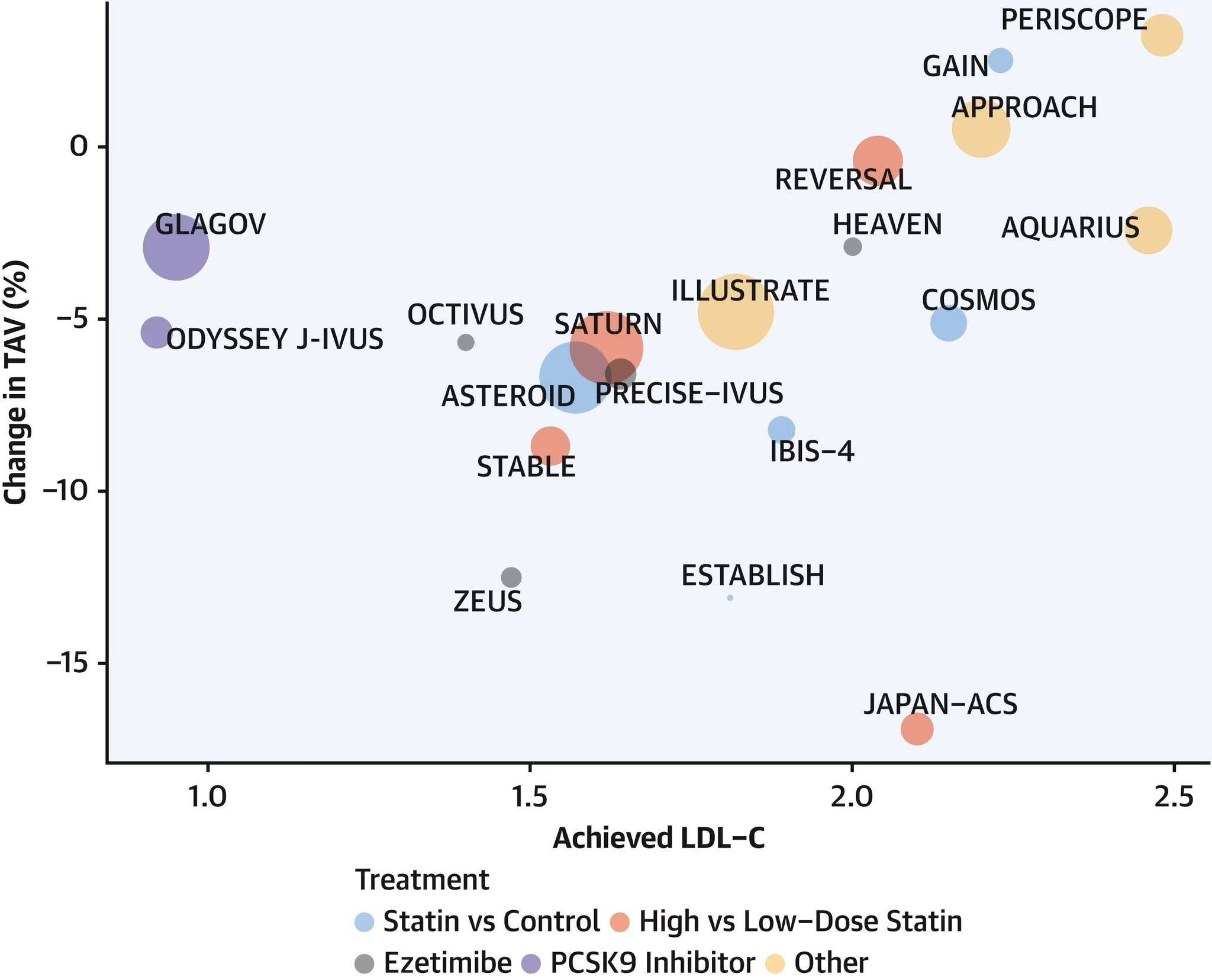
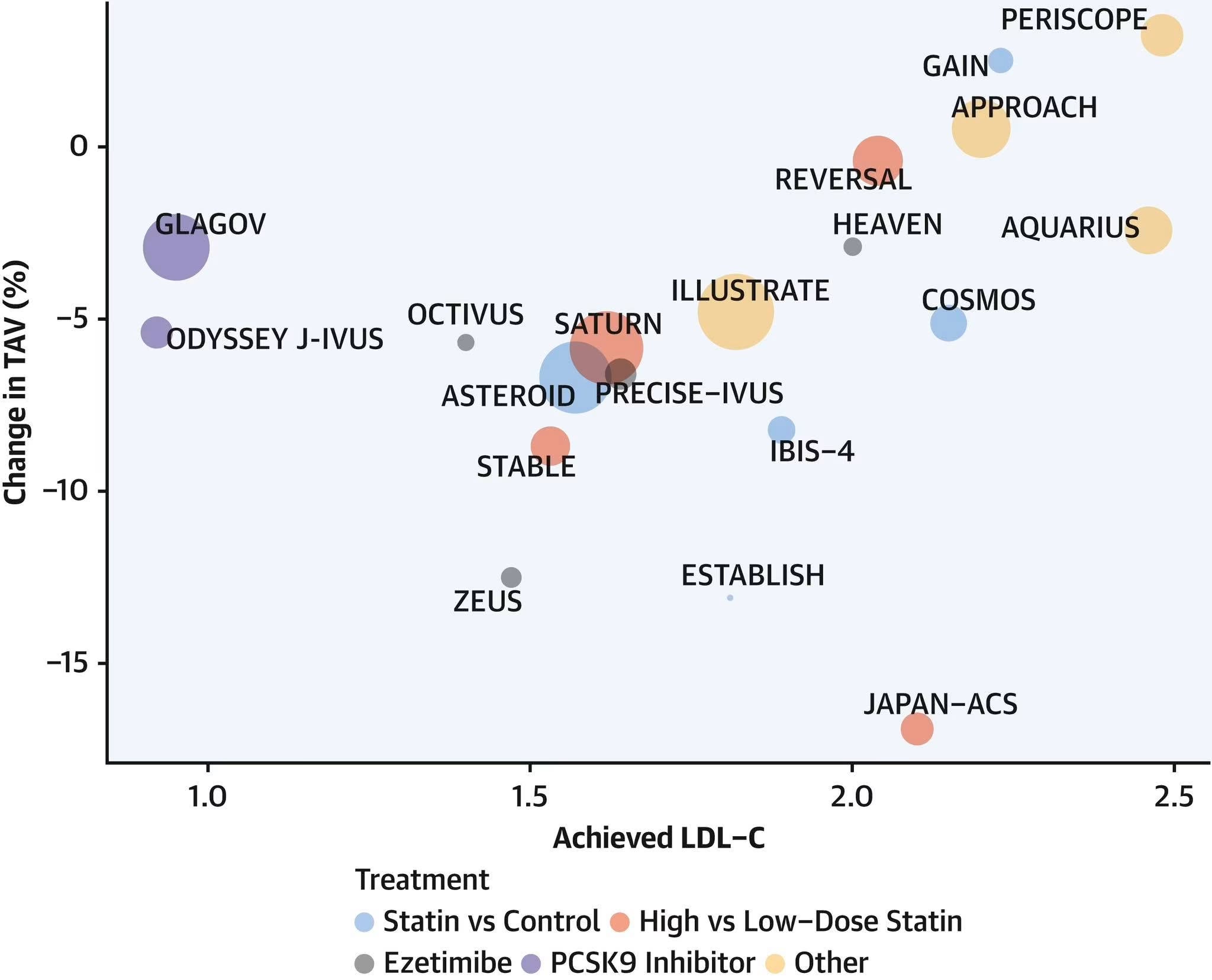
A summary of all the major randomized controlled trials showing plaque reversal, using:
- statins
- pcsk9 inhibitors
- ezetimibe
- other drugs
The x-axis is LDL cholesterol in units of mmol/L. (Multiply by 40 to convert to mg/dL.)
The y-axis is decrease in Total Atheroma Volume (TAV) in percent. This is a measure of total plaque volume.
Reference:
Paper · Journal of the American College of Cardiology · 2022Coronary Atherosclerotic Plaque Regressionjacc.org
The chart shows that it is possible to start seeing reversal of total plaque volume (TAV) with medication once the LDL-C starts getting below roughly 90mg/dL.
The best result achieved with medication was using statins in the Japan-ACS trial. This lead to a massive 17% reduction in total atheroma volume (TAV) in patients with acute coronary syndrome. The dose used was 20mg atorvastatin or 4mg pitavastatin.
↪ Japan-ACS: pitavastatin and atorvastatin both regressed coronary plaque by about 17-18%
Paper · Journal of the American College of Cardiology · 2009Effect of Intensive Statin Therapy on Regression of Coronary Atherosclerosis in Patients With Acute Coronary Syndromejacc.org
The 6 trials with statins on this chart showing plaque reversal are one of the major reasons why they remain standard of care in high risk patients.
Total atheroma volume (TAV) refers to the overall volume of plaque buildup within the coronary arteries or within a particular set of lesions that are being studied. It is a measure of the total plaque burden, and is assessed in these studies using accurate imaging techniques like intravascular ultrasound (IVUS) or coronary computed tomography angiography (CCTA). TAV includes all types of plaque, both calcified and soft plaque.
The graph shows the change in the total atheroma (plaque) volume compared to baseline. For example, a 6.5% reduction in TAV would mean that the total plaque volume in the area being measured by IVUS or CT-angiogram is now 6.5% smaller than it was at baseline.
You can see past posts in the group on the topic of reversing plaque by searching for the tag #reverseHD.
#reverseHD #statinrctsHD #statinsHD #ezetimibeHD #pcsk9HD #tavHD #pavHD #ivusHD #ctaHD #statinreverseHD #japanacsHD #pcsk9reverseHD #ezetimibereverseHD