(no text — see the shared post below)
Hydrophilic statins like rosuvastatin don’t cross the blood brain barrier very well. So they have little effect on cholesterol production in the brain.
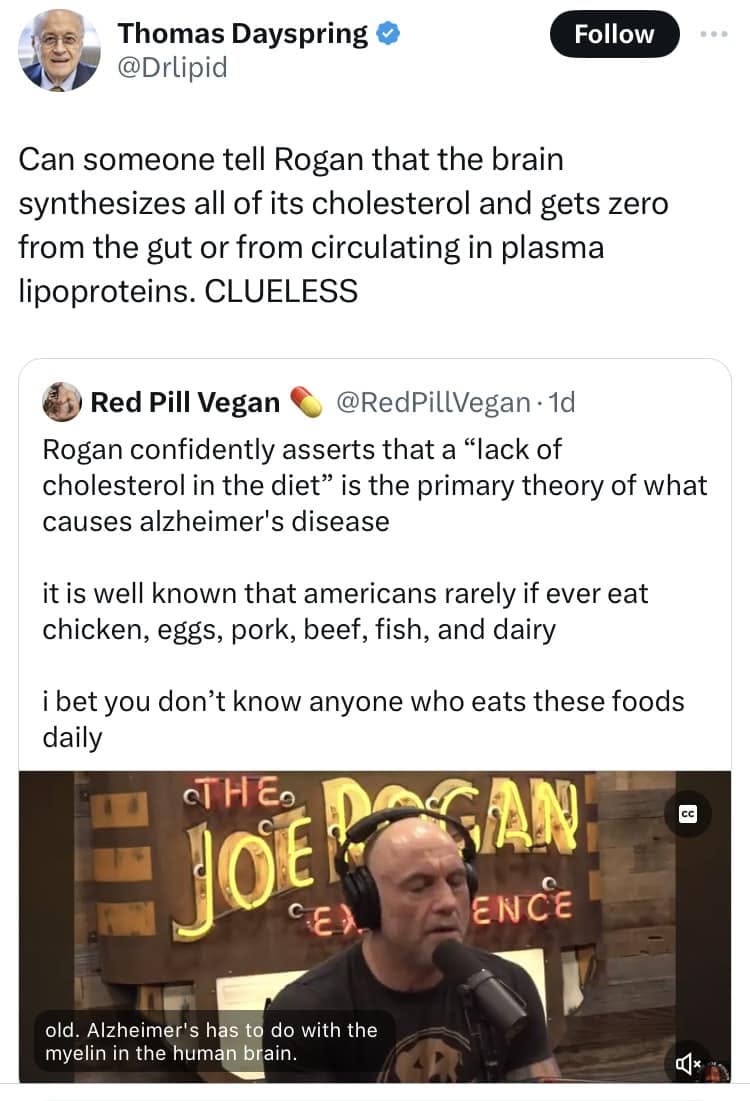
Other drugs like PCSK9 inhibitors, ezetimibe, bempedoic acid, etc. have ZERO effect on cholesterol production in the brain. They only affect cholesterol levels in the blood, which does not cross the blood brain barrier. The brain makes all its own cholesterol internally, completely separate from what’s in the blood. The blood brain barrier does not allow cholesterol in the blood to enter the brain:
↪ Hashtag-only image post on brain cholesterol, PCSK9 and dementia
So what about lipophilic statins like atorvastatin? These do get into the brain. They do cross the blood brain barrier. But there is promising research that shows these lipophilic statins may prevent Alzheimer’s:
↪ Statin use linked to 20% lower dementia and 32% lower Alzheimer's risk in meta-analysis
In fact, the research is so promising that there is now a giant 20,000 person randomized trial testing whether atorvastatin can prevent Alzheimer’s in older people. We should get the results in a few years:
↪ PREVENTABLE: atorvastatin 40 mg vs placebo up to 5 years in ~20,000 adults 75+
However we already know from two previous trials that lipophilic statins do not make existing Alzheimer’s worse (nor do they seem to help unfortunately):
↪ Two RCTs found statins neither helped nor harmed Alzheimer's disease progression
High LDL in midlife is now recognized as the biggest modifiable risk factor for dementia (2024 Lancet Commission Report). It is estimated to be responsible for 7% of dementia cases in the USA:
↪ Lancet Commission 2024: high LDL and hearing loss each account for 7% of dementia cases
↪ 2024 Lancet Commission: high LDL is the top modifiable dementia risk factor (7% of cases)
You can read past posts in the group on these topics by searching for the tags #ldldementiaHD and #statinsdementiaHD.
#bbbHD #braincholesterolHD #dementiaHD
#alzheimersHD #pcsk9HD #brainHD
#pcsk9dementiaHD #ldldementiaHD #statinsdementiaHD #atorvastatinHD #rosuvastatinHD #statinsHD #bempedoicacidHD #ezetimibeHD