More is not necessarily better when it comes to vitamins.
Take folate, for example.
Too much folate shortens lifespan in animal models:
↪ High-dose methylfolate shortens lifespan in animals; stick to the RDA of folate
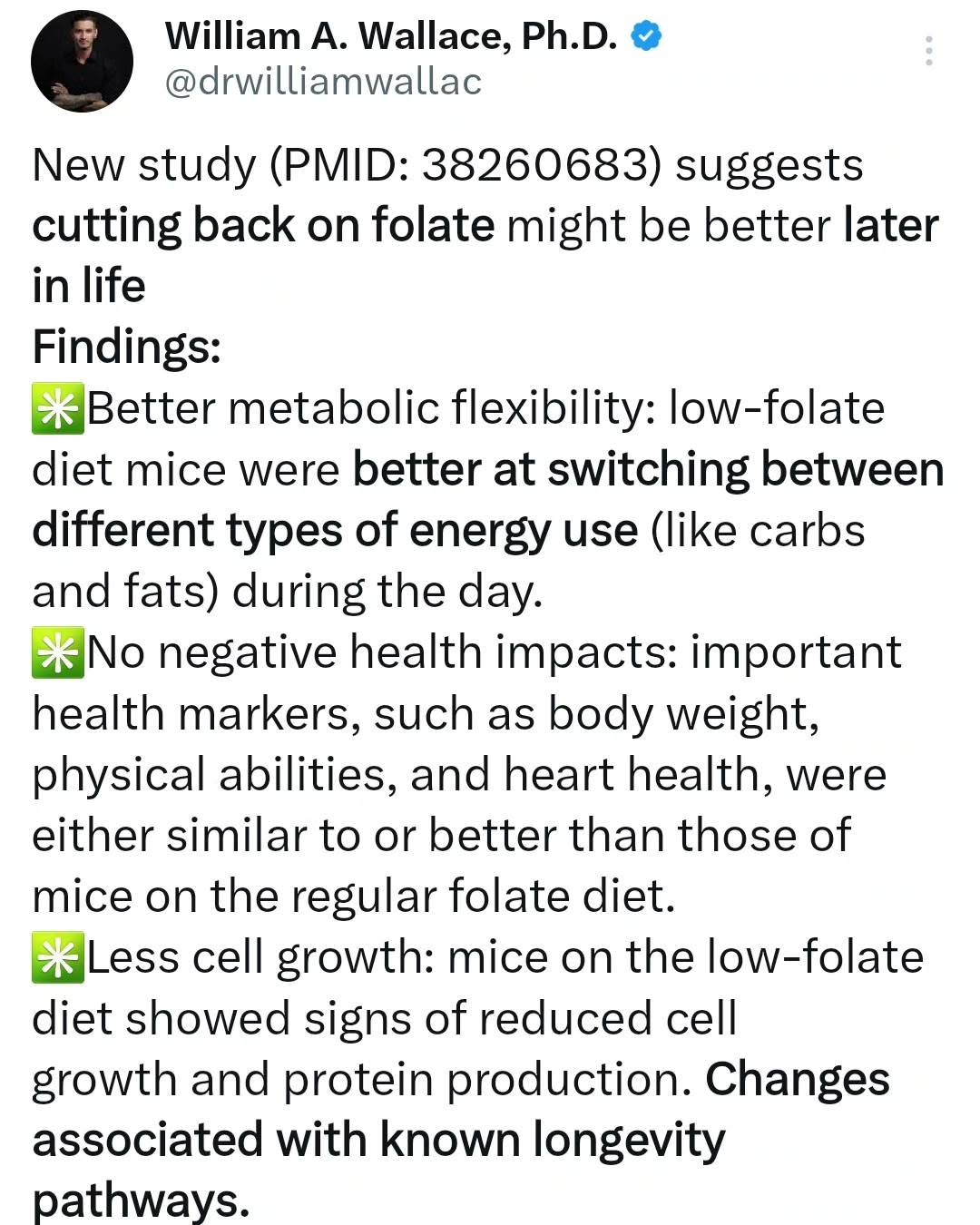
↪ Late-life folate restriction reduced biosynthesis without harming healthspan in mice
There are also disturbing studies that suggest too much folate promotes cancer in humans:
↪ Harvard Nutrition Source review of folate: a little is good, too much may be bad
And no, this has nothing to do with folic acid not being “natural”. It is true for any form of folate, particularly very bioavailable forms like methylfolate.
Folate is necessary for DNA replication. You need some so that your DNA replicates properly. This helps prevent mutations that lead to cancer.
But if you take too much, you are directly fueling replication of cancer cells. That is a very bad idea. The methylated form is extremely potent at doing this. That’s why it’s potentially dangerous, if you take too much. This is only one of multiple issues with taking too much folate.
The influencers telling you to megadose on folate— as if it were completely harmless— don’t know what they’re talking about. They are potentially harming people.
#folateHD #folicacidHD #methylfolateHD #cancerHD #miceHD
Eating Less of Vitamin B9 Could Boost Longevity
(based on research in Yeast, Worms & Mice -- not in humans)
This study examined the effects of limiting dietary folate intake late in life on healthspan in mice. Starting at 52 weeks of age, half of the C57BL/6J mice were switched from a standard diet to one lacking folate and choline. The researchers measured various health metrics, metabolites, and gene expression over the following 68 weeks. Surprisingly, mice on the folate-restricted diet maintained or even increased their weight and did not develop anemia or other adverse health outcomes compared to control mice. Metabolomic and transcriptomic analyses revealed signatures of reduced anabolic processes in the folate-restricted animals, particularly decreased protein synthesis pathways.
The results suggest that limiting folate intake later in life may have metabolic benefits and promote healthy aging, despite the known importance of adequate folate during early development. The researchers propose this could be an example of antagonistic pleiotropy, where high folate intake is advantageous early in life but potentially detrimental later on. They note several limitations of the study, including the use of only one inbred mouse strain and a relatively small sample size. However, the findings raise intriguing questions about optimal folate intake across the lifespan and potential new avenues for promoting longevity through modulation of one-carbon metabolism pathways.
2024 Paper:
Paper · Life Sci. Alliance · 2024Late-life dietary folate restriction reduces biosynthesis without compromising healthspan in miceFolate is a vitamin required for cell growth and is present in fortified foods in the form of folic acid to prevent congenital abnormalities. The impact of low-folate status on life-long health is poorly understood. We found that limiting folate levels with the folate antagonist methotrexate increased the lifespan of yeast and worms. We then restricted folate intake in aged mice and measured various health metrics,…life-science-alliance.org
Popular Article:
scitechdaily.comAccording to Scientists, Eating Less of This Vitamin Could Boost Longevityscitechdaily.com