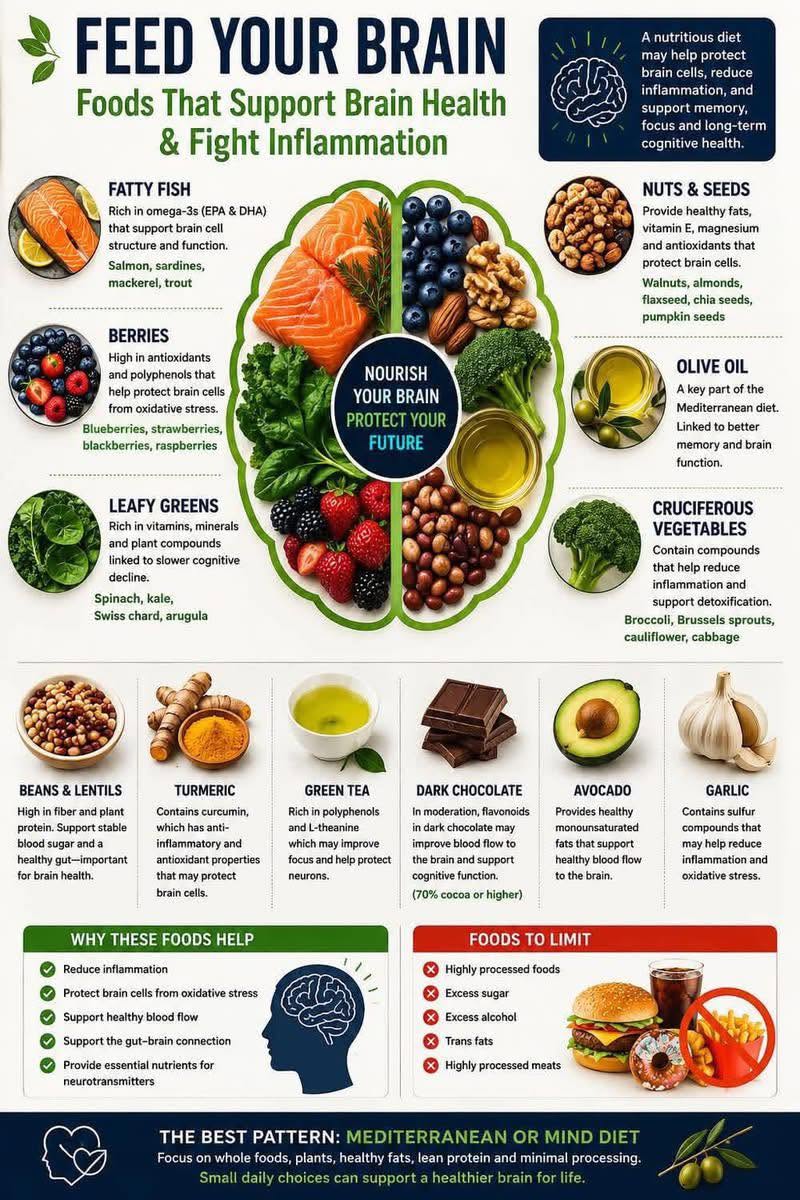
The evidence continues to accumulate that Mediterranean style diets— and especially the MIND diet— are linked with slower progression of Alzheimer’s.
Full study:
Paper · Sci Rep · 2025The long-term neuroprotective effect of MIND and Mediterranean diet on patients with Alzheimer’s diseasenature.comQuoted:
“A five year prospective cohort study published in Scientific Reports in September 2025 by Xiaofang Liu and colleagues at the Huadu District People’s Hospital of Guangzhou followed 1,500 adults aged 50 to 75 (750 healthy controls and 750 patients already diagnosed with Alzheimer’s).
The researchers tracked two dietary patterns. The first, the Mediterranean diet, emphasizes fruits, vegetables, fish, olive oil, and whole grains. The second, the MIND diet, was developed specifically for brain health. It places targeted emphasis on leafy greens, berries, nuts, and whole grains, while strongly limiting red meat and ultra-processed foods.
Their question was: do these diets measurably slow cognitive decline and brain aging?”
“Over five years, participants who adhered closely to either diet scored significantly higher on two standard cognitive assessments (the MMSE and MoCA tests), than those whose eating habits diverged from these patterns. The MIND diet produced the stronger association: each additional point in adherence score corresponded to a 0.33 point improvement on the MMSE and 0.31 points on the MoCA. The Mediterranean diet showed improvements of 0.11 and 0.13 points respectively.Healthy diet plans
Blood and cerebrospinal fluid samples reflected those changes . Participants who followed the diets showed lower levels of amyloid beta, tau protein, and neurofilament light chain, three biomarkers that track neurodegeneration, along with reduced inflammatory markers including CRP, IL-6, and TNF-alpha. Brain imaging confirmed slower hippocampal shrinkage and less cortical thinning in both healthy adults and Alzheimer’s patients who followed the diets most closely.
Three specific nutrients drove the strongest signals. Polyphenols from berries and whole grains correlated with lower inflammatory markers. Omega-3 fatty acids from fish associated with slower accumulation of amyloid beta and tau. B vitamins correlated with higher cognitive test scores across the five-year period.”
 Futura-SciencesThis diet, tested on 1,500 patients, slows Alzheimer’s - Futura-SciencesA five year prospective cohort study published in Scientific Reports in September 2025 by Xiaofang Liu and colleagues at the Huadu District People’s Hospital of Guangzhou followed 1,500 adults aged 50 to 75 (750 healthy controls and 750 patients already diagnosed with Alzheimer’s).The researchers tracked two dietary patterns. The first,...futura-sciences.com