"Ultra-processed food" (UPF) is a label for industrial products made from extracted food substances and additives rather than recognizable whole foods: potato chips, doughnuts, soda, most ice cream, packaged snacks and similar items. Large observational studies link higher intake with more cardiovascular disease, diabetes, certain cancers, dementia and earlier death. The group's admins, especially Louis Nervegna, consistently advise limiting these foods, while pointing out that the category is broad and that a few specific items appear to carry most of the risk.123
For heart health the practical picture is fairly consistent across the sources shared in the group. Sugar-sweetened beverages and processed meat look like the clearest culprits, major cardiology societies recommend limiting UPF, and the best-supported eating patterns (Mediterranean, DASH and similar) are built around minimally processed foods. The evidence is mostly observational, so associations may be affected by confounding.2345
What counts as ultra-processed?
The post from Examine.com shared in the group says ultra-processed foods are generally defined as the result of multiple stages of processing, made from substances derived from food (such as white flour, sugar and oil) plus additives such as flavorings, preservatives and emulsifiers. They tend to be high in fat, salt and sugar, which can increase overconsumption. Examples given are potato chips, doughnuts, soda and most ice cream.1
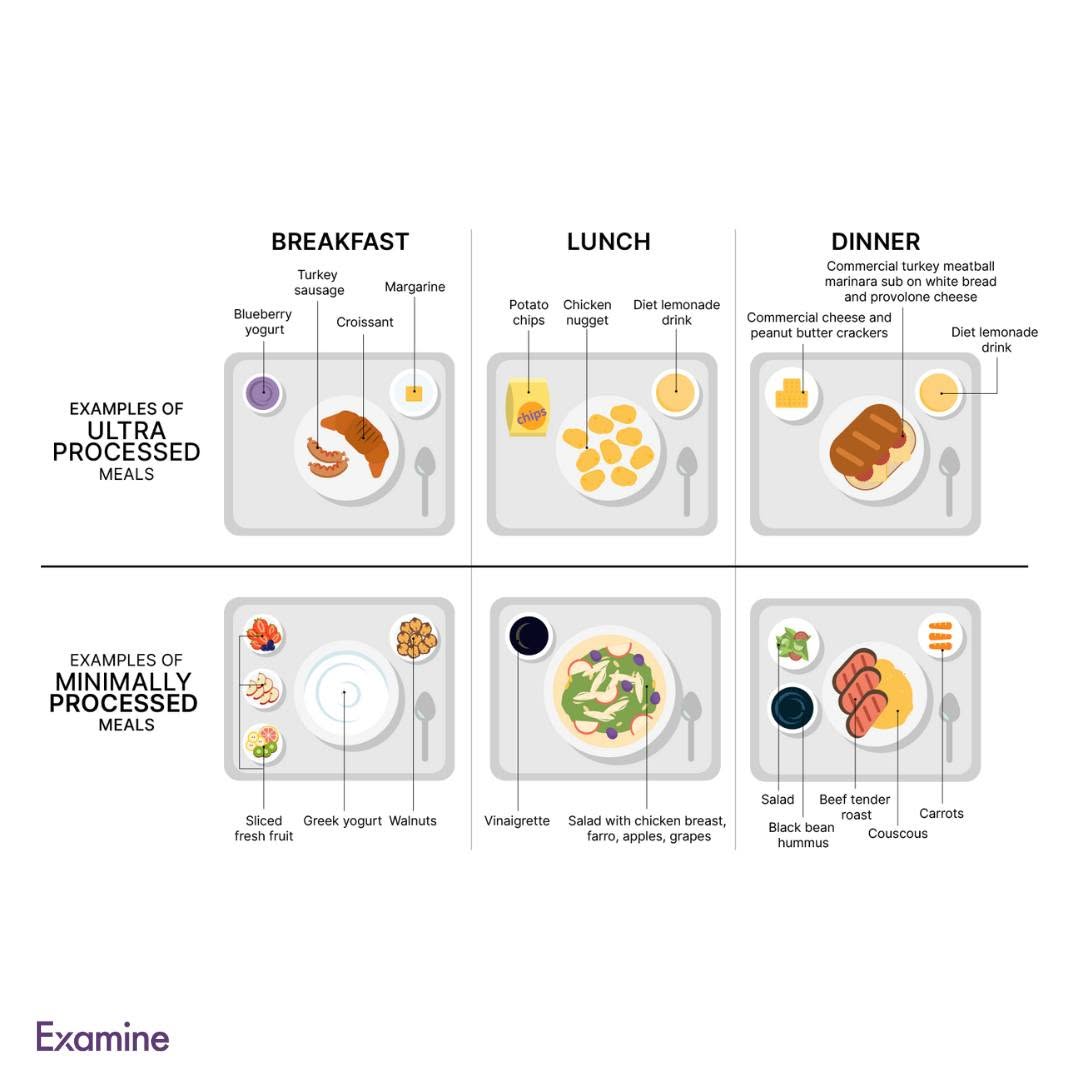
A radiology conference report adds more examples: breakfast cereals, margarines and spreads, packaged snacks, hot dogs, soft and energy drinks, candies and desserts, frozen pizzas, ready-to-eat meals and mass-produced packaged breads. It also notes that these foods usually have long shelf lives and combine sugar, fat, salt and carbohydrates in ways that affect the brain's reward system, making it hard to stop eating.8 News coverage of the Nurses' Health Study analyses also lists sugary sodas, processed meats, candies and chips, and products made with ingredients rarely found in a home kitchen.39 Louis has also shared a video explaining the definition, though the post gives no details.10
Two cautions about the label come up repeatedly:
- It is a broad category. Examine.com notes that "not all ultraprocessed foods are created equal", that some are probably fine, and that context matters.1
- Processed meat is its own concern. Processed meat is meat that has been chemically preserved, salted, cured, fermented or smoked, including bacon, ham, hot dogs, sausages, corned beef, salami, canned meat and jerky.6
What the evidence shows
The big picture: umbrella reviews and cohorts
A review of 45 meta-analyses covering almost 10 million people, reported by CNN, found consistent evidence linking higher UPF intake to more than 70% of the 45 health outcomes it assessed. The lead author described strong evidence for approximately 50% higher risk of cardiovascular disease-related death and of common mental disorders.2 This is a review of observational associations and cannot by itself prove cause.
Other posts add outcome-specific findings, all from observational studies:
- Early colorectal polyps: among more than 29,000 women in the Nurses' Health Study II who had a colonoscopy before age 50, those eating the most UPF (about 10 servings a day) were 45% more likely than those eating the least (about 3 servings a day) to have a conventional adenoma, the most common precancerous polyp. UPF made up about 35% of daily calories in the cohort, and there was no clear link to serrated lesions.911
- Dementia: a news report on a Mass General Brigham study said each 10% increase in UPF was associated with higher dementia risk.12 A 2026 American Journal of Public Health analysis of the Health and Retirement Study was reported as finding 41% lower dementia risk with lower UPF intake, with processed meats such as bacon, hot dogs and ham linked to the highest risk.13 An Annual Review of Nutrition review was reported as finding that replacing 10% of ultra-processed calories with unprocessed foods was linked to 19% lower dementia risk.14
- Aging and muscle: a study presented at a radiology meeting found more UPF intake associated with more fat inside thigh muscle on MRI, regardless of energy intake, BMI, sociodemographics or physical activity.8 Another report linked fast food, processed meat and sugary drinks to faster biological aging on epigenetic clocks in young adults, while fruit and vegetable diets were linked to slower aging.15
Former FDA commissioner David Kessler, quoted in a 60 Minutes segment shared by Louis, described "energy-dense, highly palatable, rapidly absorbable, ultraprocessed foods" as having altered our metabolism and driven the greatest increase in chronic disease in history. This is a public-figure statement, not trial data.16
Which items matter most for the heart
The most useful finding for heart disease comes from the Harvard Nurses' Health Study and Health Professionals Follow-up Study. Researchers looked at 10 UPF categories. Only two were clearly associated with greater cardiovascular risk: sugar-sweetened drinks (such as soda and fruit punch) and processed meat, poultry and fish (such as bacon, hot dogs, breaded fish products, chicken sausages and salami sandwiches). When these two categories were excluded, most of the risk associated with UPF disappeared, according to the study's lead analyst. Louis's reading is that avoiding these two items may remove most of the extra cardiovascular risk from UPF.3 He makes the same point when sharing the colorectal polyp data, again highlighting sugary beverages and processed meat.911
Processed meat shows up repeatedly:
- A University of Washington review of more than 70 studies on processed meat, sugary drinks and trans fats and the risk of type 2 diabetes, ischemic heart disease and colorectal cancer concluded that risk rose steadily with intake, so there is no "safe" amount of processed meat for diabetes or colorectal cancer. About one hot dog a day was linked to at least 11% higher type 2 diabetes risk and at least 7% higher colorectal cancer risk versus none.6
- Louis states that processed meats have the worst hazard ratios of any food category apart from trans fats in large epidemiological studies. This is his summary of the literature, supported in the post by links to Harvard Chan School pages.131417
- He also argues that "natural" cured meats made with celery juice still contain nitrosamines, which he says are likely carcinogenic and linked to atherosclerosis and diabetes. This is his opinion in a post rebutting a claim that hot dogs are healthy.17
- A Harvard Chan School article linked from that post says UPF, particularly processed meats, sugary breakfast foods and sugar- or artificially sweetened beverages, may increase risk of early death.17
Do randomized trials support causation?
Observational data cannot settle cause, so the small experiments shared in the group are informative though limited:
- Weight gain: in a small randomized crossover trial in young men, one week of an entirely ultra-processed diet led to more weight gain than a week with no UPF. Examine.com says this is consistent with multiple observational studies and an earlier randomized trial, and that collectively the evidence suggests UPF can increase weight gain.1
- Liver fat: in healthy young men, five days of 1,200 to 1,500 extra calories per day from refined carbs, saturated fat and processed food increased liver and visceral fat with barely any weight gain, and the men's brains became less responsive to insulin, according to the shared interview. Louis connects this to his view that excess liver fat is a main driver of insulin resistance.18
Nuances and common questions
The problem may be specific ingredients, not "processing" itself
The Harvard category analysis suggests the risk is concentrated in sugary drinks and processed meat rather than spread evenly over all UPF.3 Another example comes from seed oils: Louis shared a video arguing that in large cohorts that properly correct for UPF intake there is no association between seed oil consumption and colon cancer, and no association with prostate cancer, which illustrates how failing to account for processed-food intake can distort headline findings. This is the video's argument as relayed by Louis.19
Food quality beats macronutrient ratios
A Harvard analysis of about 200,000 adults followed for up to 30 years found that the quality of a low-carb or low-fat diet mattered more than the ratio. Healthy low-carb and low-fat versions were associated with roughly 15% and 13% lower coronary heart disease risk, while unhealthy versions (refined carbs, processed meats) were associated with about 14% and 12% higher risk.20 In menopausal women, diet patterns emphasizing nuts, legumes, fruit, vegetables and whole grains and low in red and processed meat, potatoes and sodium-rich foods were linked to less weight gain, and those with the highest adherence to the Planetary Health Diet had 54% lower obesity risk.21
"Natural" does not mean traditional
Louis shared a quote from Valter Longo saying the true Mediterranean diet hardly exists any more even in Italy because refined and processed products have displaced it. Louis's view is that what people actually eat around the Mediterranean today is "full of processed junk, just like the standard American diet".22 A shared interview with palaeoanthropologist Daniel Lieberman similarly says humans are "clearly mismatched to ultra-processed foods", though it argues the paleo diet is not the answer, since ancestors also ate wild grains, legumes and starchy tubers.23
Whole-food plant diets versus processed plant foods
The ESC scientific statement, as summarized in the group, says patterns rich in ultra-processed foods (including processed meat), red meat, salt, sugar and saturated fat increase cardiovascular risk, while plant-based patterns rich in minimally processed foods decrease it.5 A JACC: CardioOncology review quoted in the group states that red meat and ultra-processed foods are associated with greater CVD and cancer risk, likely through shared pathways including chronic inflammation, oxidative stress, metabolic dysregulation and gut dysbiosis.24 Louis suggests nuts and seeds as a healthier alternative to ultra-processed protein powders, noting that their fat and fiber are cardioprotective and filling.25
GLP-1 drugs and the food environment
Several posts note how GLP-1 receptor agonist drugs interact with UPF. A magazine article says the drugs seem to dampen cravings for hyperpalatable ultra-processed snacks, pushing food companies toward satiety-focused products.26 A survey reported that users cut roughly 720 to 990 calories per day and reduced processed food, sugary drinks, refined grains and beef, while saying they still craved high-calorie foods as much as before; Gokhan Can adds from personal experience that with less appetite it is easier to eat everything in moderation.27 Luigi Fontana argues the obesity curve barely changes even with GLP-1s because culture normalizes ultra-processed food, alcohol, snacking and big portions.28 Louis also shared a Scientific American piece explaining that gut bacteria ferment fiber and polyphenols, which many processed foods lack, into molecules that stimulate GLP-1 and PYY.29
What the major guidelines say
- ACC (2026 scientific statement): emphasize vegetables, fruits, nuts and seeds, legumes, whole grains, fish and seafood, healthy beverages and unsaturated fats; limit ultra-processed foods, sugar-sweetened beverages, refined grains, excess sodium, red and processed meat, alcohol, and saturated and trans fats. The statement cites support for reducing sodium and UPF, particularly sugar-sweetened beverages and processed meats.4
- AHA (2026 dietary guidance): among nine features, choose whole foods instead of overly processed foods, avoid processed meat, minimize added sugar and salt, and favor unsaturated fat.7 The AHA also welcomed the new US dietary guidelines' emphasis on limiting added sugars, refined grains, highly processed foods and sugary drinks.30
- ESC/EAPC: see above; diets high in UPF increase risk.5
- ASPC: minimize processed foods and added sugars, with zero sugar-sweetened beverages, at most 2,300 mg sodium, and limited processed and red meat.31
- Nordic guidelines: in a Swedish cohort of more than 76,000 adults, closest adherence to guidelines that cut back on red meat, processed foods and added sugar was associated with 23% lower risk of premature death.32
- A "longevity diet" summary: fatty fish twice a week, whole grains and whole fruit; processed meat close to zero, sugar-sweetened drinks (including juice) zero, and UPF as low as possible.33
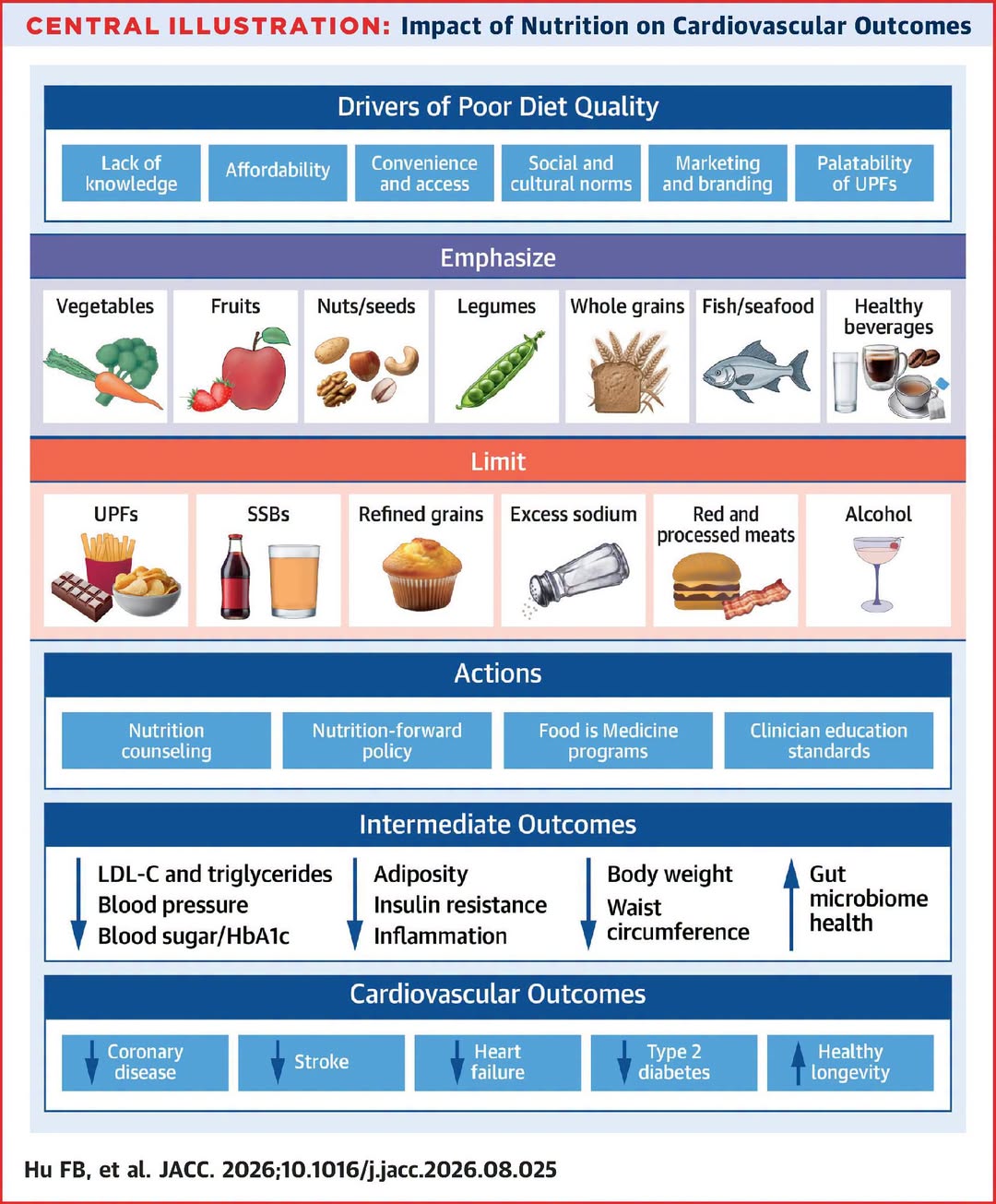
The Mediterranean, MIND and AHEI patterns the group favors also explicitly minimize processed foods. The MIND diet lists ultra-processed and fast foods among foods to limit.343536 Observational and trial data on these patterns include a 1,500-person cohort linking MIND and Mediterranean adherence to better cognitive scores37 and an 18-month randomized trial in which Mediterranean diets slowed a marker of brain shrinkage in people over 5038.
What this means for you
These points summarize what the posts say; they are not personal medical advice, and your doctor can help tailor them.
- The group's admins suggest prioritizing the highest-yield changes first: eliminate sugar-sweetened beverages and processed meat, since the Harvard category analysis found most of the UPF-related cardiovascular risk came from them.39
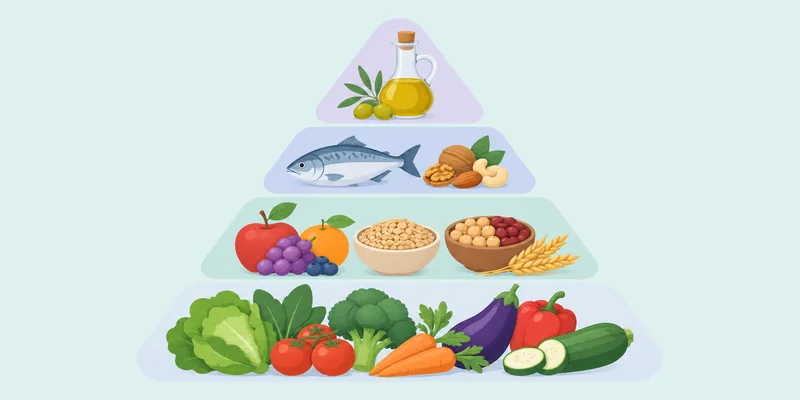
- Eat mostly minimally processed foods: vegetables, fruit, legumes, whole grains, nuts, olive oil and fish, which is the common thread of the ACC, AHA, ESC and ASPC recommendations.45731
- Swap rather than just subtract: for example, nuts and seeds instead of protein powders, and fruit or berries instead of sweets.2536
- Gokhan's Mediterranean do's and don'ts advise at least five servings of fruit and vegetables daily, whole grains instead of refined, and not relying on sugary beverages, snacks and pastries.3639
- A news piece Louis shared quotes a physician saying you do not need to cut out UPF completely but should limit them if you can, while also exercising, not smoking, limiting alcohol and red and processed meats, and eating plenty of fruit and vegetables.9
- Check sodium: Gokhan uses no-salt sprouted bread, which he says lowers his blood pressure.40
Frequently asked questions
Are all ultra-processed foods equally harmful?
No. Examine.com notes that not all UPF is equal and that some may be fine, and the Harvard cohort analysis found two categories, sugary drinks and processed meat, accounted for most of the cardiovascular signal.13
How strong is the evidence that UPF causes harm?
Most evidence is observational. The 45-meta-analysis review found strong associations, such as about 50% higher cardiovascular death risk, while small randomized experiments show more weight gain after a week of an all-UPF diet and more liver fat after five days of overeating processed food.1218 Gokhan reminds readers that reverse causality and confounding are always possible in observational diet research.41
Is processed meat as bad as people say?
The group's posts, citing Harvard and University of Washington work, point to no clearly safe level for diabetes and colorectal cancer risk, and Louis calls processed meat among the worst food categories by hazard ratio.617
Do I need to avoid UPF completely?
The posts do not demand perfection; they emphasize limiting UPF and building the diet around whole foods, with ultra-processed foods "as low as possible".4933
Can GLP-1 medicines replace a good diet?
Fontana argues drugs cannot override a food culture centered on UPF, while users report eating fewer processed foods on the drugs.262728