Glycine lowers A1C from 8.3 to 6.9 in type 2 diabetes patients, and improves inflammatory markers.
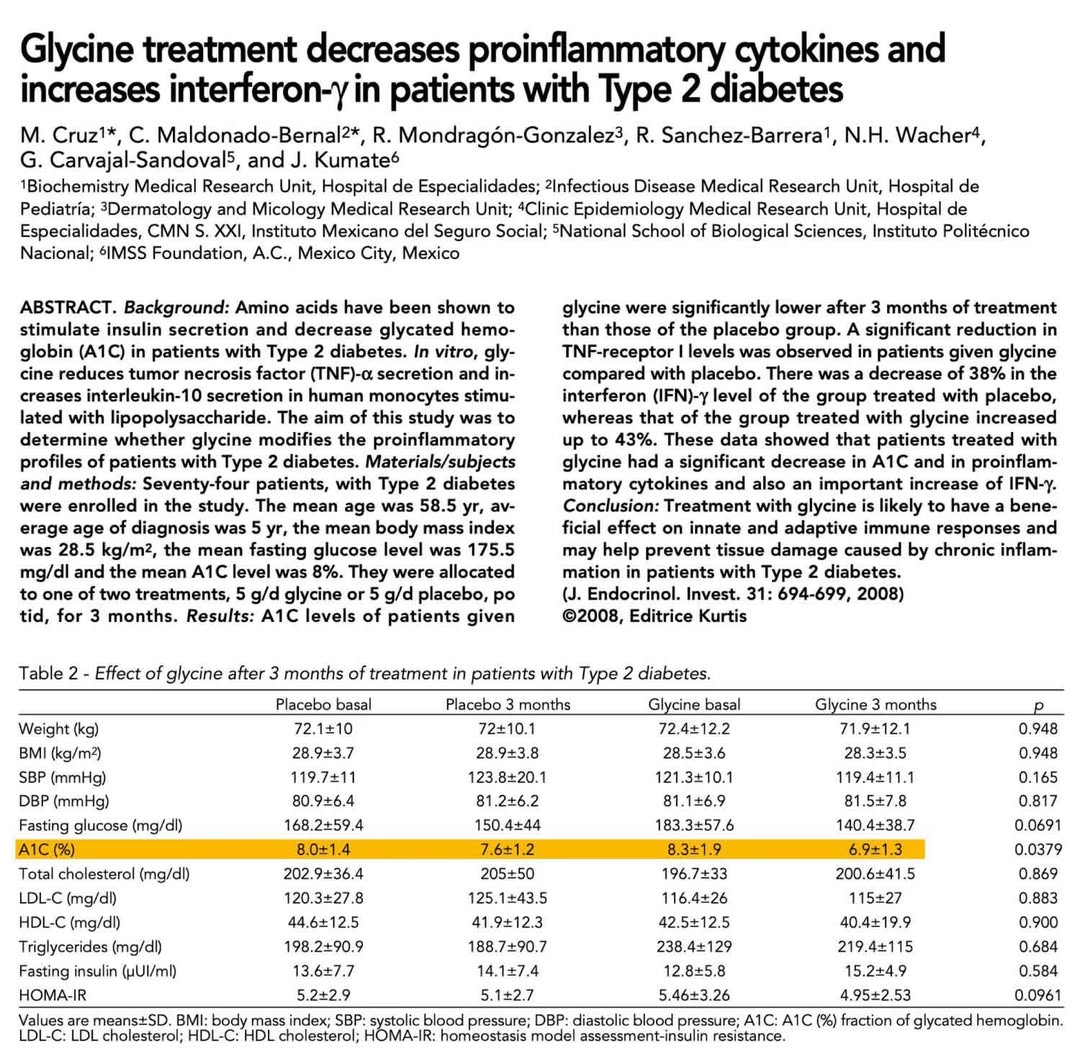
The study used 5g, three times a day, for 3 months.
HbA1c declined significantly compared to baseline and compared to the placebo group.
The glycine also modified their inflammatory profile by reducing proinflammatory markers and increasing protective ones.
Link to the full study:
Paper · J Endocrinol Invest · 2008Glycine treatment decreases proinflammatory cytokines and increases interferon-gamma in patients with type 2 diabetes.Conclusion: Treatment with glycine is likely to have a beneficial effect on innate and adaptive immune responses and may help prevent tissue damage caused by chronic inflammation in patients with Type 2 diabetes.pubmed.ncbi.nlm.nih.govQuoted:
“A1C levels of patients given glycine were significantly lower after 3 months of treatment than those of the placebo group. A significant reduction in TNF-receptor I levels was observed in patients given glycine compared with placebo. There was a decrease of 38% in the interferon (IFN)-gamma level of the group treated with placebo, whereas that of the group treated with glycine increased up to 43%. These data showed that patients treated with glycine had a significant decrease in A1C and in proinflammatory cytokines and also an important increase of IFN-gamma.”
“Treatment with glycine is likely to have a beneficial effect on innate and adaptive immune responses and may help prevent tissue damage caused by chronic inflammation in patients with Type 2 diabetes.”
Key Findings from the study:
The 2008 study published in the Journal of Endocrinological Investigation examined 74 T2D patients who received 5 grams of glycine three times daily for three months.
The results showed
-Decrease in Proinflammatory Markers: Glycine treatment significantly reduced levels of TNF-receptor I (TNFR1). Other reviews note decreases in Interleukin-6 (IL-6) and Interleukin-1 beta (IL-1β).
-Increase in Interferon-gamma (IFN-γ): While the placebo group saw a 38% decrease in IFN-γ, the glycine-treated group experienced an increase of up to 43%.
-Improved Glycemic Control: Patients had significantly lower HbA1c (A1C) levels after three months compared to the placebo group.
Mechanism of Action
Researchers believe glycine exerts these effects through several pathways:
-Immune Modulation: By increasing IFN-γ, glycine may enhance both innate and adaptive immune responses, potentially improving the body's defense against infections, which are often more common in diabetic patients.
-Cellular Protection: Glycine activates glycine receptors on inflammatory cells (like macrophages), causing hyperpolarization that blunts the response to proinflammatory stimuli.
-Reduction of Chronic Inflammation: The overall shift toward an anti-inflammatory state may help prevent long-term tissue damage and vascular complications caused by the chronic low-grade inflammation associated with T2D.
Therapeutic Potential
Other studies suggest glycine may also protect against specific diabetic complications, such as retinal damage and kidney dysfunction, by reducing systemic oxidative stress and improving microcirculation.