The title is overstated, but the article has a nice summary of the study.
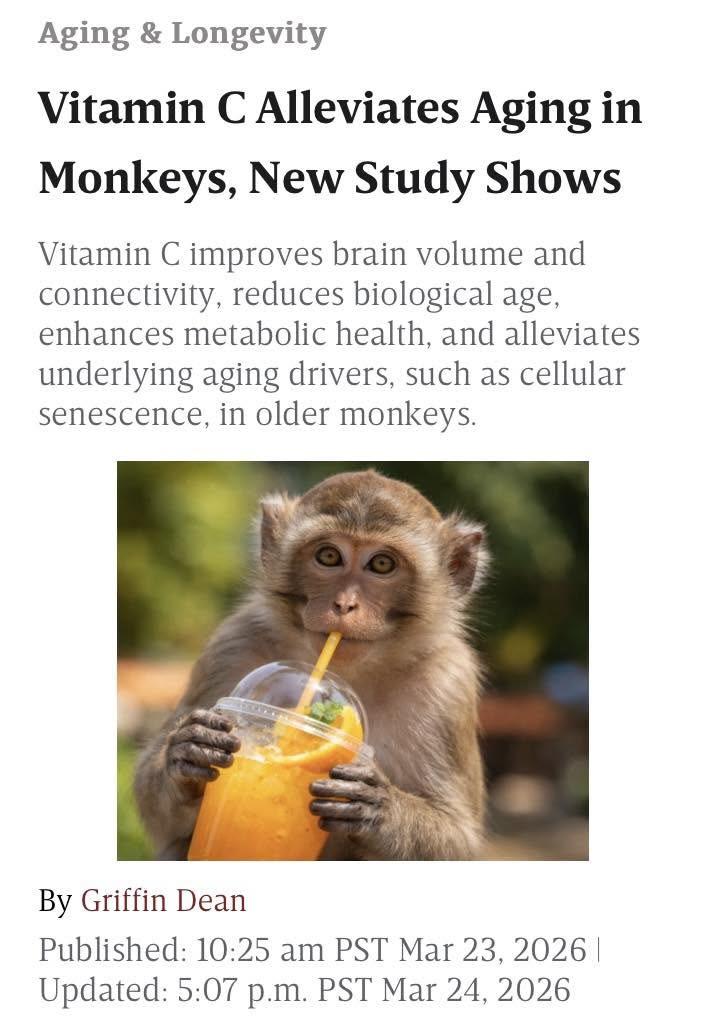
Link to article:
nad.comVitamin c alleviates aging in monkeys new study showsnad.comAlso see this previous post that goes into the study in more detail: ↪ Monkey study links iron buildup ('ferro-aging') to organ decline; vitamin C may protect.
Quoted from the article:
“Although gene therapy can block ACSL4, the researchers searched for less invasive compounds that could have similar effects. They screened 100 ferroptosis-related molecules and found that vitamin C most effectively reduced lipid damage. The researchers even discovered that vitamin C directly binds and inhibits the enzymatic activity of ACSL4.
Having identified vitamin C as an ACSL4 inhibitor, the researchers tested it on monkeys, which—like humans and unlike mice—must obtain vitamin C through their diet. They fed old monkeys 30 mg/kg/day of vitamin C for 40 months, producing striking results. It reduced oxidative stress, inflammation, and cellular senescence in multiple organs, including the brain and heart. It also lowered the biological age of multiple organs, as measured with several aging clocks.
Brain imaging revealed more profound benefits. Using MRI, the researchers showed that treated monkeys had larger brain regions associated with adaptive behavior, along with improved connectivity in areas associated with spatial awareness and decision-making. These findings suggest that vitamin C may counteract brain aging, which encompasses brain volume loss and reduced connectivity.
Vitamin C also improved metabolic health. Treated monkeys showed reduced visceral fat, lower (“bad”) LDL cholesterol, and lower insulin levels, along with higher (“good”) HDL cholesterol and improved glucose control. Together, these findings reveal that vitamin C may be a health promoter by counteracting ferro-aging.”
#ironHD #ferritinHD #vitamincHD #agingHD #longevityHD #monkeysHD #acsl4HD #ferroagingHD #ferroptosisHD #peroxidationHD