The problem with hsCRP is that it is not specific to arteries
- It picks up inflammation anywhere in the body.
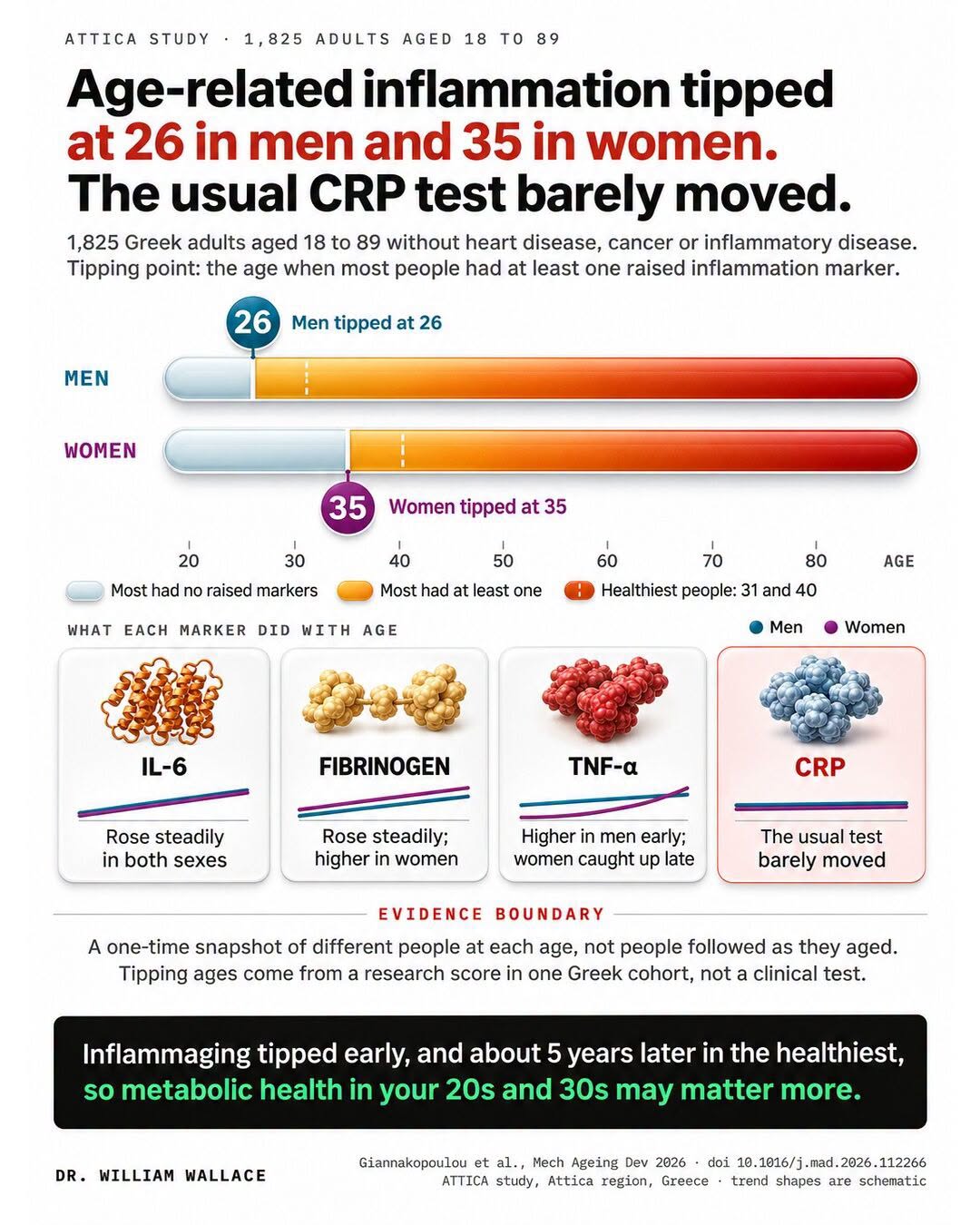
High-sensitivity C-reactive protein (hsCRP) is produced by the liver in response to an inflammatory signaling molecule called Interleukin-6 (IL-6). While standard CRP tests look for massive spikes (like from a major infection or autoimmune disease), hsCRP measures tiny, low-grade amounts of "silent" inflammation.
However, hsCRP is entirely non-specific.
It tells you that there is a fire somewhere in the body, but it cannot tell you where the fire is. A high reading could be driven by a brewing cardiovascular issue, but it could just as easily be triggered by a minor hidden infection, a tough workout the day before, or a flare-up of arthritis.
- A major driver of hsCRP in older people is actually the skin. This makes sense because skin is your largest organ, so it creates a big share of your inflammatory signaling as it degenerates with advancing age. (This is a good reason to take care of your skin as you get older.) Visceral fat is also a huge contributor.
This is one of the most interesting areas of longevity research, often tied to a concept known as "inflamm-aging" (age-related chronic low-grade inflammation).
- The Skin Barrier: Research has shown that as skin ages, its structural barrier function degrades. This dysfunction causes the skin to release a massive cascade of inflammatory cytokines (like IL-6 and TNF-alpha) into the bloodstream, which travel to the liver and elevate hsCRP. Because the skin is your largest organ by surface area, its collective age-related degeneration makes it a big contributor to systemic inflammation as you get older.
- Visceral Fat: This is the fat stored deep in the abdominal cavity around your organs. Unlike subcutaneous fat (the fat under your skin), visceral fat is highly metabolically active and essentially acts like an inflammatory organ, constantly pumping out cytokines that drive up hsCRP.
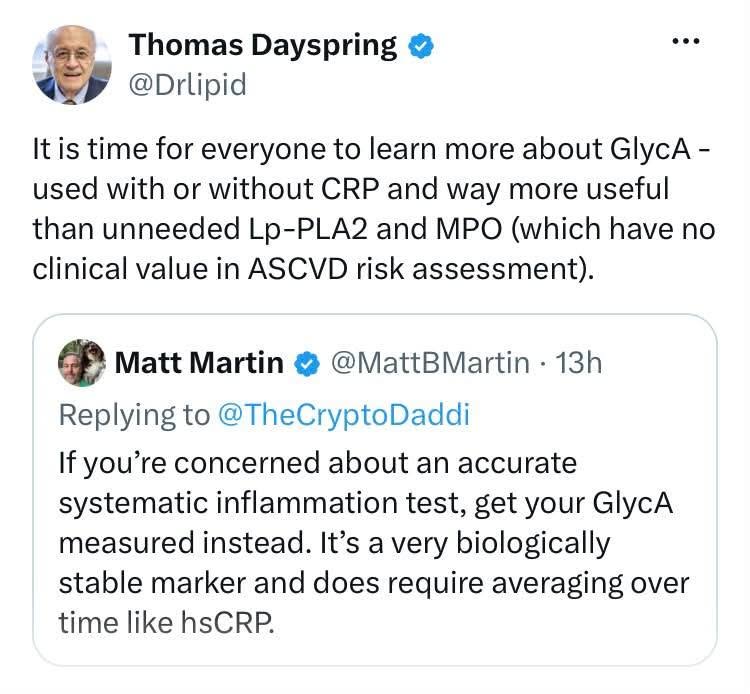
- What is really needed is a commercial blood test that specifically measures inflammation only in the arteries. That blood test really doesn’t exist yet. Tests like Lp-Pla2 and MPO can hint at the amount of inflammation in arteries, but they are far from perfect. They are not very good at predicting risk by themselves.
There is currently no definitive, single commercial blood test that isolates vascular (arterial) inflammation with 100% specificity. Because of this, cardiologists must look at a mosaic of clues.
There are two main "surrogate" blood tests used to hint at arterial inflammation:
- Lp-PLA2 (Lipoprotein-associated phospholipase A2): An enzyme that specifically measures inflammation inside the blood vessel walls. It is a strong indicator of whether arterial plaque is unstable or prone to rupturing.
- MPO (Myeloperoxidase): An enzyme released by white blood cells when blood vessels are under stress or damaged. It signals that the lining of the arteries is actively inflamed.
While both Lp-PLA2 and MPO are much more specific to the cardiovascular system than hsCRP, they still suffer from individual variability, can fluctuate based on other systemic immune responses, and are generally used as risk-stratification tools in combination with other markers, rather than definitive diagnostic standalones.
Note that this post was written in collaboration with Gemini AI.
#hscrpHD #crpHD #inflammationHD #lppla2HD #mpoHD #skinHD #visceralfatHD #inflammagingHD #il6HD #tnfalphaHD