I think he has finally had it with all the nonsense from influencers about protein and muscle.
Here is what the preponderance of evidence really shows PART 2.
This post specifically discusses older people and women.
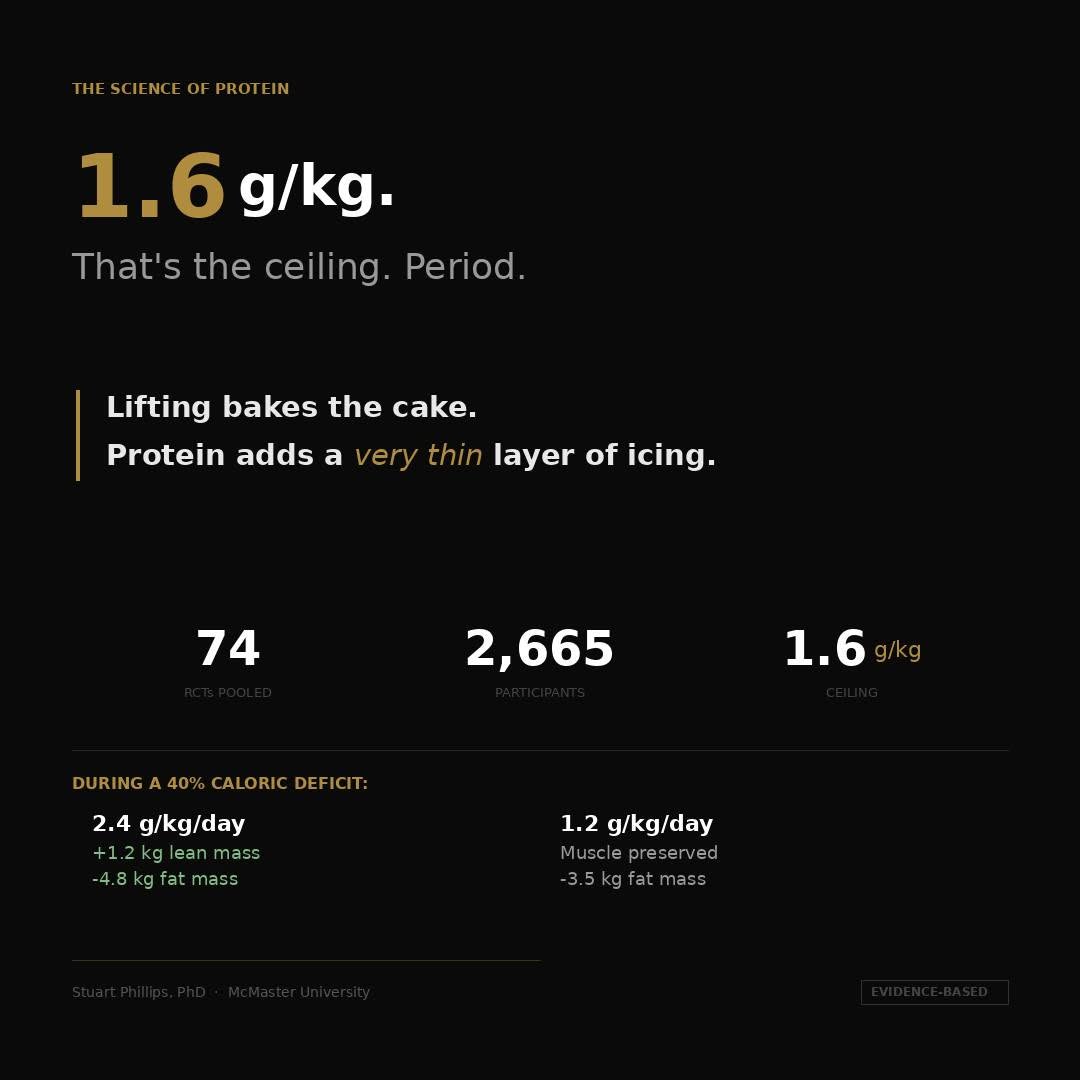
You can find PART 1 here: ↪ Phillips: 74 trials show no extra muscle gain above 1.6 g/kg/day protein with lifting.
#proteinHD #proteinsummaryHD #resistancetrainingHD #influencersHD #stuartphillipsHD
Yesterday's post got a few folks' knickers in a twist 😉
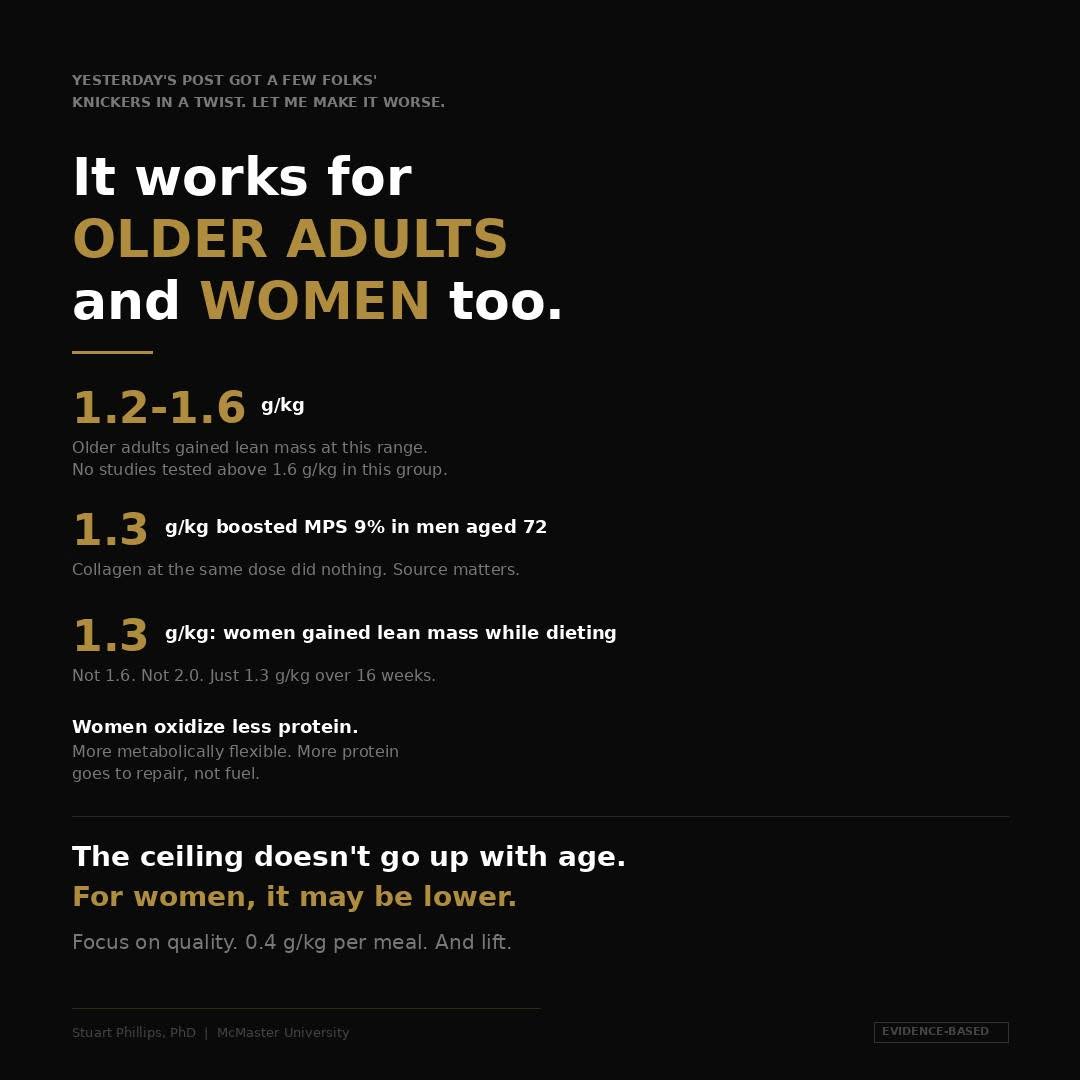
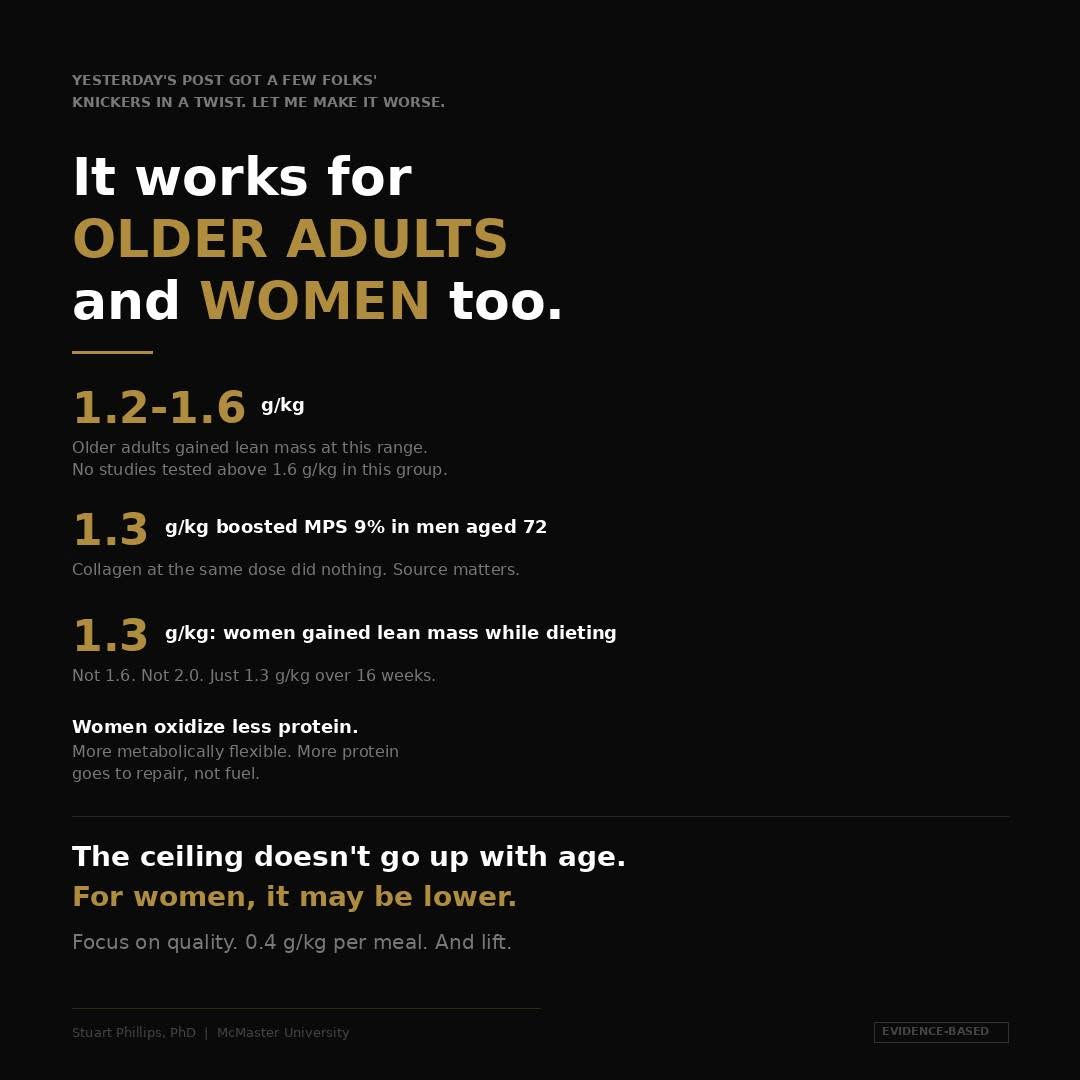
So let me make it worse: the 1.6 g/kg ceiling? It works for older adults too. And for women, the protein requirement to spare lean tissue while losing weight is likely even lower than you think.
Let me explain...
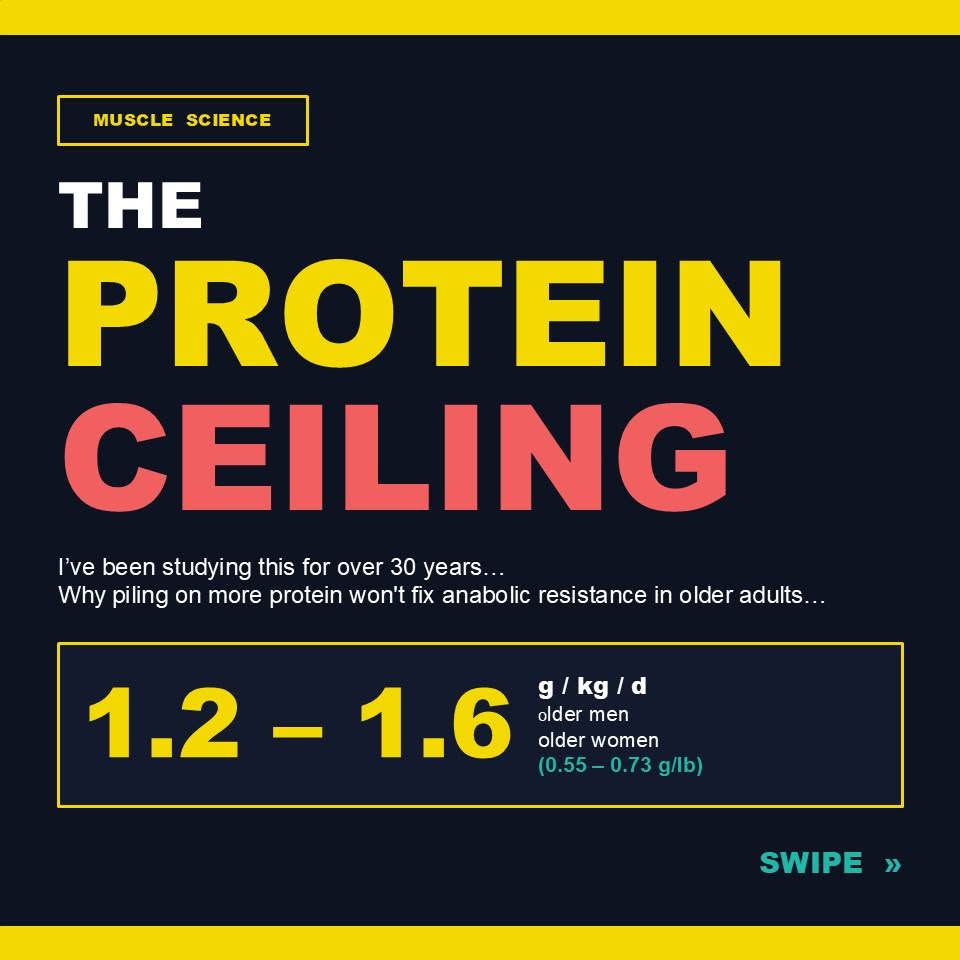
Our group's meta-analysis (Nunes et al., 2022) included older subjects and found that ingesting more protein may increase lean body mass in older adults at 1.2 to 1.59 g/kg/day (SMD = 0.20, 95% CI 0.02:0.37). There were no studies testing the effect of additional protein on LBM and RE using intakes at or above 1.6 g/kg/day in older subjects. Read that again. No studies. The evidence in older adults supports benefits at intakes well below where the internet thinks the floor is.
What about older men specifically? McKendry et al. (2024) studied healthy older men (average age 72) and found that simply increasing daily protein from the RDA (~0.8 g/kg) to ~1.3 g/kg/day with whey or pea protein boosted integrated muscle protein synthesis by roughly 9%. That's a meaningful bump from a modest increase. Not 2.5 g/kg. Not 3 g/kg. About 1.3 g/kg.
And the source mattered: collagen protein at the same dose did nothing for MPS, because it lacks sufficient essential amino acids and leucine to switch on the muscle-building machinery. Quality over quantity.
Women
This is where it gets really interesting. In our study of overweight and obese premenopausal women (Josse et al., 2011), the high-protein group consumed just 1.3 g/kg/day. That's it! Over 16 weeks of diet and exercise-induced weight loss, they gained 0.7 kg of lean mass while losing significantly more fat and visceral fat than the other groups. The adequate-protein group at ~0.8 g/kg lost lean mass. The middle group held steady. But the group that gained lean tissue while dieting? 1.3 g/kg. Not 1.6. Not 2.0.
Why might women need less? Women oxidize less protein than men during exercise and at rest. They are more metabolically flexible, relying more on fat as a fuel source. This means that a greater proportion of ingested protein is available for tissue maintenance and repair rather than being burned for energy. The 'metabolic math' simply works differently.
And here's what ties this all together: our comprehensive review (McKendry et al., 2021) makes clear that the real driver of muscle preservation in aging isn't protein dose, it's resistance training. RT is the most potent nonpharmacological intervention for increasing skeletal muscle mass, strength, and function at any age.
Protein supports the process. It doesn't drive it. As I said yesterday, it's the icing, not the cake!
The pattern across all of this data is remarkably consistent:
- Older men: benefits at ~1.2 to 1.3 g/kg with quality protein sources.
- Older women: lean mass gained during weight loss at 1.3 g/kg.
- Both: resistance training is the non-negotiable.
The protein ceiling doesn't go up with age. If anything, the evidence suggests the threshold for meaningful benefit in older adults, and women in particular, is lower than what most people are targeting. The focus should be on protein quality, likely protein distribution across meals (~0.4 g/kg per meal for older adults), and above all, lifting.
Yesterday's post wasn't wrong. It just didn't go far enough.
Lift heavy. Eat enough protein. Stop overthinking the number.
References
Nunes EA, Colenso-Semple L, McKellar SR, et al. (2022). J Cachexia Sarcopenia Muscle. 13(2):795-810. DOI: 10.1002/jcsm.12922
McKendry J, Lowisz CV, Nanthakumar A, et al. (2024). Am J Clin Nutr. 120:34-46. DOI: 10.1016/j.ajcnut.2024.05.009
Josse AR, Atkinson SA, Tarnopolsky MA, Phillips SM. (2011). J Nutr. DOI: 10.3945/jn.111.141028
McKendry J, Stokes T, McLeod JC, Phillips SM. (2021). Compr Physiol. 11(3):2249-2278. PMID: 34190341