Coronary artery calcium (CAC) is calcium deposited in the walls of the heart's arteries, measured by a quick CT scan and reported as an Agatston score. A score of zero is considered excellent and a score over 400 suggests significant risk.8 If your number came back high, the group's central message is that it is serious but workable: Louis Nervegna writes that a high CAC "is not a death sentence" but "does put you at high risk, so it is important to manage that risk."1
The most useful way to think about the number is as a window onto something else. Louis explains that calcified plaque develops from soft plaque over a long period, so the amount of calcium is a proxy for the amount of dangerous soft plaque you have built up.9 The practical plan that follows from this is to push LDL cholesterol (the "bad" cholesterol carried in particles that deposit in artery walls) low, control every other risk factor, eat a Mediterranean-style diet, exercise, and work with a cardiologist. This summary explains the reasoning and the evidence the group has collected for each step, and is not medical advice; the group's admins consistently recommend discussing decisions with your own doctor.
What a CAC score does and does not tell you
Why calcium predicts risk
Heart attacks are mostly driven by soft, lipid-rich plaque. A post citing a 2022 JAMA review says about 64% of heart attacks caused by acute thrombosis come from rupture of soft lipid-rich plaque and another 25% from erosion of soft plaque, with only about 5% involving calcified nodules.10 Louis argues that calcified plaque is relatively stable and low risk, and that you do not get calcification unless you first had a lot of soft plaque.11
Louis also offers an analogy: calcification, in arteries as in tissue around breast implants, is an inflammatory damage response that ends with calcium deposited to wall off the area.12 That is his framing, not a trial result.
Why the number alone is not the goal
Louis says the "obsession" with lowering the CAC number is misguided; the focus should be on reversing or at least stabilizing soft plaque. He notes it is theoretically possible that removing calcified plaque could even destabilize it, and that without randomized trials on heart attacks and death nobody knows.9 On reversing calcification itself, he writes that in principle it is possible (macrophages can dissolve calcium, as in calcific tendonitis), but for arteries the methods are speculative and poorly understood.13
Turning a score into a risk number
Several posts help convert the score into a risk estimate:
- The MESA risk calculator uses your CAC score plus other risk factors to estimate your 10-year risk of heart attack or stroke.14
- The AHA PREVENT calculator is designed for primary prevention in ages 30 to 79, and Louis warns it will underestimate the risk of anyone with significant atherosclerosis or a high calcium score.15
- A 2026 JAMA analysis found that adding CAC to PREVENT improved prediction only modestly for the average person, but Louis stresses that once you know you have a very high score you should assume you are at high risk regardless of what the calculator says.16
- Louis has also stated, without a source in the post, that a CAC above 300 gives about the same 10-year prognosis as someone who already had a heart attack.17 Treat this as his claim rather than a cited finding.
- The 2026 ACC/AHA cholesterol guideline, as summarized in a post shared by Louis, formally places a CAC above 300 in the highest-risk treatment category, with LDL target below 55 mg/dL; it also brings back explicit LDL targets (below 55, 70 or 100 depending on risk) and recommends universal Lp(a) screening.2
A zero score is not a clean bill of health, and a high score is not the end of the story
It also helps to know the limits of the test in the other direction. A Western Denmark registry of 23,759 people with symptoms who had CT angiography found 54% had a CAC of zero, and half of those with symptomatic blockages had zero CAC.1819 Louis adds that soft plaque takes 10 to 15 years to begin calcifying, so a 45-year-old with significant soft plaque might not show calcium until about 60.20 A short clip states that roughly a quarter to a third of heart attacks occur in people with CAC of 0, though no study is cited.21
The plan: lower LDL as far as you reasonably can
What the evidence shows
Louis shares a graph of all 25 statin randomized trials through 2016 that had a significant effect on cardiovascular outcomes (excluding trials under 6 months or with fewer than 50 events). A reduction of about 75 mg/dL (1.9 mmol/L) in LDL cut the risk of heart attack or stroke by about 40% on average compared with placebo.322 He notes that 40 mg/dL is about 1 mmol/L, and that the seven primary prevention trials showed even larger relative reductions than the 18 secondary prevention trials.3
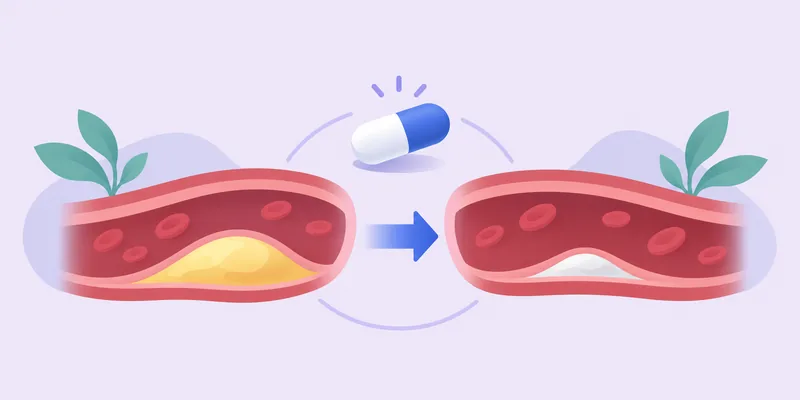
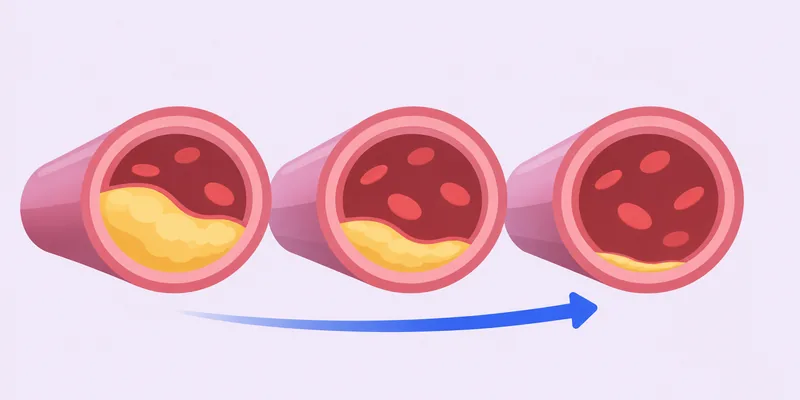
On plaque itself, a meta-analysis of 31 IVUS (intravascular ultrasound) studies with 4,997 patients found lipid-lowering therapy significantly lowered plaque volume, with maximal regression at LDL below 80 mg/dL and HDL above 45 mg/dL, and each 1% reduction in percent atheroma volume was linked to 20% lower risk of major cardiac events.23 In the SATURN trial, rosuvastatin 40 mg and atorvastatin 80 mg both reduced plaque volume over two years, with rosuvastatin showing a slightly greater reduction in total atheroma volume.23 Louis writes that when LDL is pushed below 70 mg/dL with diet and medication, plaque growth often stops and even reverses, and that "getting your LDL low is imperative."1
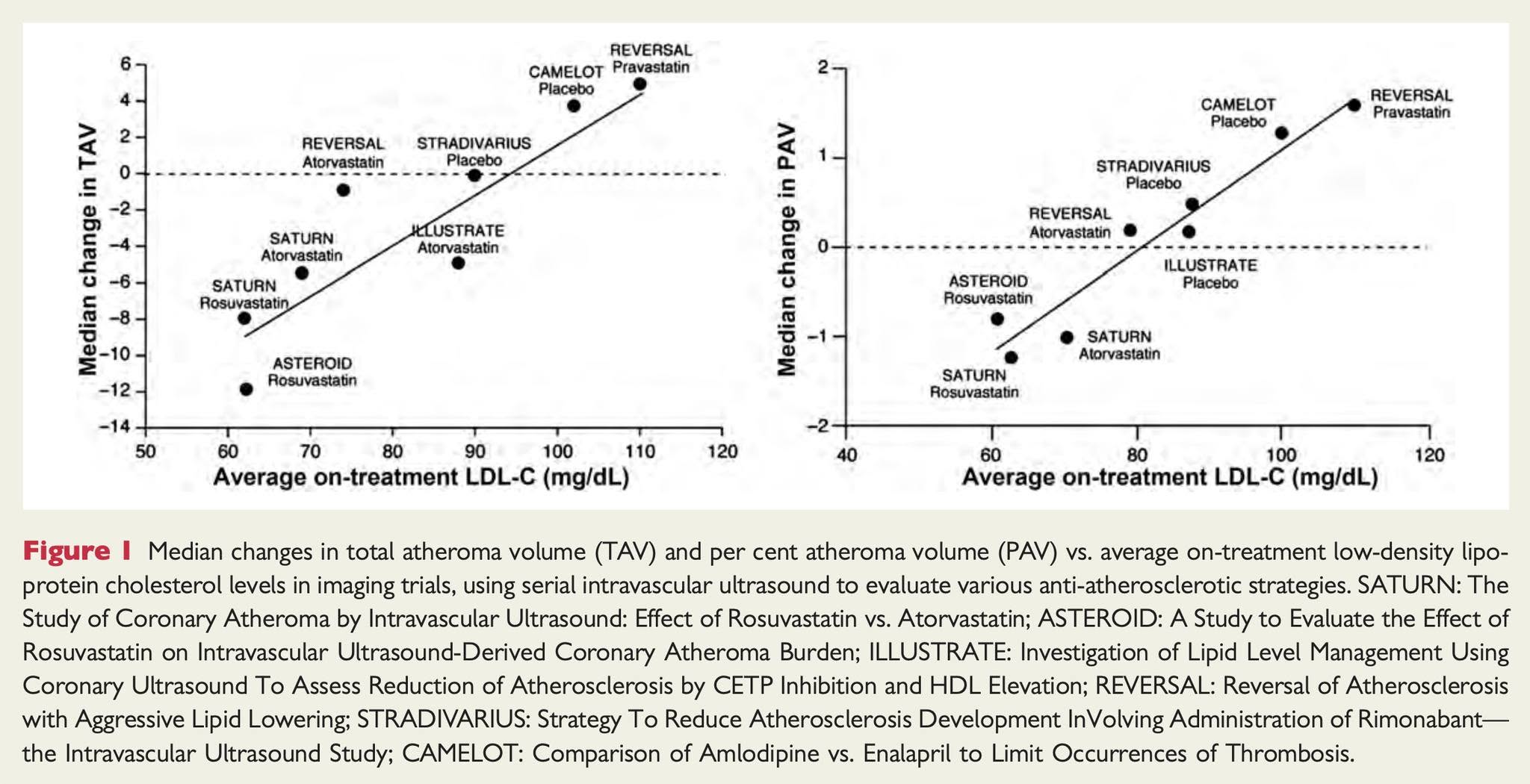
Gokhan Can's ranking of plaque-regression interventions puts statins, PCSK9 inhibitors and ezetimibe as having the strongest trial evidence, with high-dose EPA (icosapent ethyl 4 g/day in EVAPORATE) and pioglitazone fairly good. Colchicine, aged garlic extract, Centella, pine bark, nattokinase and plant-based diets are described as promising but needing more rigorous imaging trials.24 That post notes statins reduced total atheroma volume by 0 to 20% in studies and that high-intensity atorvastatin and rosuvastatin appear more effective.24
Ezetimibe, PCSK9 inhibitors and other add-ons
If LDL is still too high on a statin, the group's posts describe adding other agents. In GLAGOV, evolocumab reduced total atheroma volume 2.9% over 76 weeks, and at least six IVUS trials of adding ezetimibe showed numerically greater regression, though not all reached significance.24 Louis says that adding a PCSK9 inhibitor to a statin lowers heart attacks and strokes considerably more than a statin alone, but that no randomized outcome trials exist for PCSK9 inhibitors as monotherapy.25
A physician-style protocol described by Gokhan (the Bale-Doneen approach) combines lifestyle counseling, regular imaging and biomarker testing, a statin with ezetimibe or niacin, systolic blood pressure under 120, low-dose aspirin where appropriate, insulin sensitizers and anti-inflammatories. In its 2016 community-based paper, carotid IMT measures fell markedly over a median of 3 years.26 This was an observational clinic cohort, so it cannot prove which part of the package worked.
Statins and your scan: the "calcification paradox"
This is the single most confusing part of CAC follow-up. Gokhan explains that the Agatston score is not true calcium volume: it multiplies area by a step-wise density factor of 1 to 4, so plaque that becomes slightly denser can jump a category and raise the score. Statins can turn soft, lipid-rich plaque into denser, more stable calcified plaque, so a rising CAC on treatment may reflect stabilization rather than failure.4 Louis recommends the article to everyone who tracks their CAC.8
A second article by Gokhan reviews the data: in the St. Francis Heart Trial (atorvastatin 20 mg, 4 years) CAC progression was not reduced but clinical events were 33% lower; in SALTIRE (atorvastatin 80 mg, LDL down about 53%) annual CAC progression was 26% versus 18% on placebo; BELLES showed similar progression (about 11 to 14%) with either intensity.5 A cohort analysis in the same post reports odds of severe CAC rising with longer statin use (1.49 for 0 to 5 years, 2.38 for 5 to 10 years, 4.48 for more than 10 years), interpreted there as plaque repair into stable scar.5 These duration-based odds come from an observational design, so they do not on their own prove that calcium is "good."
Show data
| Odds ratio (log scale) | 95% CI | |
|---|---|---|
| 0–5 years | 1.49 | – |
| 5–10 years | 2.38 | – |
| More than 10 years | 4.48 | – |
Louis adds that PCSK9 inhibitors appear to regress soft plaque without as much of the calcification increase, and that adding one to a statin seems to attenuate statin-induced calcification; he cautions that whether this is better or worse long term is still being debated.25 The takeaway: if your follow-up CAC rises on therapy, ask your cardiologist how to interpret it, ideally with imaging that shows soft plaque (see below).
Statin choice and kidneys
If you also have kidney disease, Louis shares that PLANET I and II found high-dose rosuvastatin (40 mg) lowered eGFR whereas atorvastatin 80 mg reduced proteinuria and preserved function.28 A related teaching card originally called atorvastatin "preferred" in chronic kidney disease, and Louis later corrected it to say atorvastatin improved proteinuria but had no effect on eGFR.29
Diet, weight and exercise
Diet
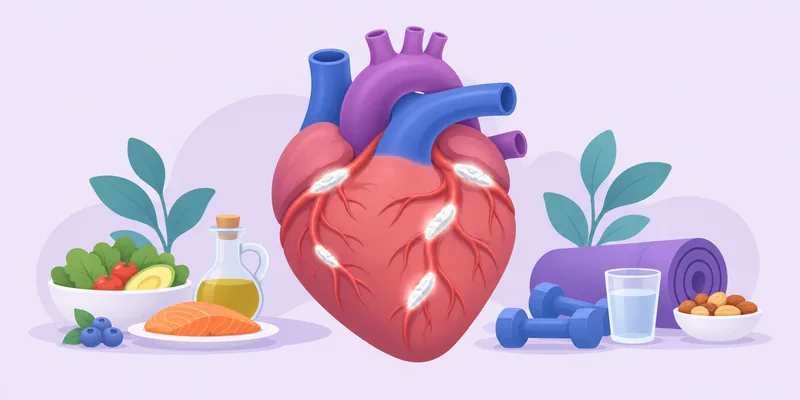
Louis states that the traditional Mediterranean diet has the most evidence for preventing heart attacks and strokes.1 He lists six randomized diet trials that showed plaque reversal: Lifestyle Heart (1990, Ornish diet), STARS (1992, AHA diet), SCRIP (1994, AHA diet), PREDIMED (2013, Mediterranean), CORDIOPREV (2021, Mediterranean) and DISCO (2021, DASH). All were primarily plant-based and none was strictly vegan.7 Foods emphasized across them were fruits and vegetables, legumes, whole grains, yogurt, nuts, olive oil, fish and some eggs and poultry; foods limited were junk food, refined grains, sugary foods, large amounts of butter, fatty red meat and alcohol.7
Two supporting points from other posts. First, a Harvard cohort of 221,054 adults associated replacing 10 g/day of butter with plant oils (especially olive, canola and soybean) with 17% lower all-cause mortality; this is an observational association.30 Second, Louis notes that Esselstyn's own published results combined his plant-based diet with lipid-lowering drugs, mostly statins, and that Esselstyn says the combination works better than diet alone.31
Two cautionary data points on diet and calcification: in the CARDIA cohort of 2,226 young adults, an animal-based low-carbohydrate score was associated with higher CAC progression (HR 1.456), whereas a plant-based low-carb score was not (HR 1.016).32
Show data
| Hazard ratio (log scale) | 95% CI | |
|---|---|---|
| *Animal-based low-carb score | 1.456 | – |
| Plant-based low-carb score | 1.016 | – |
And the Keto-CTA study of "lean mass hyper-responders" on keto diets showed non-calcified plaque volume rose 18.8 mm3 in a year versus 4.9 mm3 in a comparison group (the Nature-CT study); Louis describes this as 3.8 times faster and says Budoff reportedly considers it a good comparison, but it is Louis's own comparison across two studies.33 In his extrapolation, he cautions the linear projections are likely upper bounds.34 One explanation offered in the LMHR community is that ApoB appeared unrelated to progression because of range restriction in a small extreme sample.35
Weight
Louis writes that for most people the "magic number" is about 30 lb of weight loss, which clears ectopic fat from the liver and pancreas and reverses metabolic syndrome, and that studies have shown it can reverse soft plaque.1
Exercise
Louis shares a clip of sports cardiologist Andre La Gerche stating that for two people with the same CAC score, the one who exercises has a much lower heart attack risk over 20 to 25 years.6 Louis also argues that statins and exercise both help stabilize existing soft plaque by calcifying it.11
Other numbers worth knowing
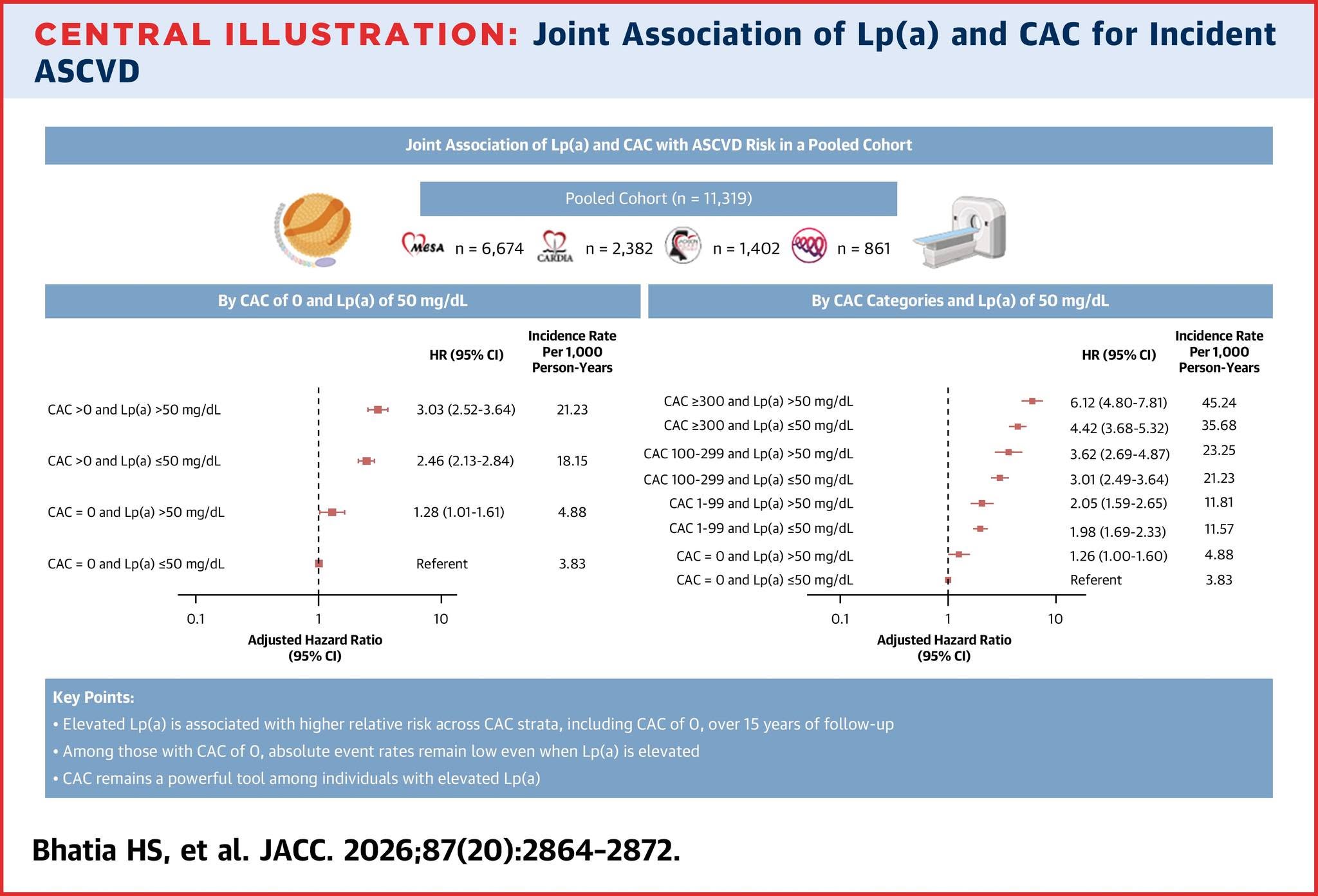
- Lp(a), an inherited cholesterol particle: in MESA analyses shared by Louis, high Lp(a) mattered mainly when CAC was 100 or higher, and a CAC of zero seemed to outweigh high Lp(a) over 10 years.3637 A 2026 JACC finding says absolute event rates stay low at CAC 0 even with elevated Lp(a).38 But an NLA update quoted by Thomas Dayspring says a CAC of zero does not eliminate Lp(a)-associated risk, especially in younger people.39 For those with high Lp(a), MESA suggests CAC under 100, hsCRP under 2 mg/L and low visceral fat appear protective, though it is observational.40
- Unusual causes: a Wall Street Journal essay shared by Louis says sitosterolemia (over-absorption of plant sterols) may be more common than doctors realize.41
Tracking progress
Louis says carotid IMT ultrasound does not accurately predict heart attack risk and mostly reflects blood-pressure and age-related change, whereas carotid plaque burden (cPB) by ultrasound reflects actual plaque.42 In a 12-year cohort of about 5,700 people without symptoms (901 deaths), cPB predicted all-cause mortality better than CAC (HR 1.23 versus 1.15 per trend); the test is cheap and radiation-free.4344 Also, a coronary CT angiogram can show soft plaque that CAC misses; Louis shares a JAMA finding that compared with risk scoring, CT angiography modestly improved healthy behaviors and acceptance of preventive therapy.27
Louis also shares Joel Kahn's step-by-step guide on interpreting a CAC above zero, calculating risk and treatment options, and a JACC 2022 review of plaque regression.4546
Supplements and speculative ideas
- Vitamin K2: a 2023 meta-analysis of 14 trials (1,533 people) found a pooled difference of about -17.3 Agatston units per year. The largest trial (389 men; 720 mcg MK-7 plus 1,000 IU vitamin D for 2 years) missed significance overall but slowed CAC in the subgroup with baseline CAC at or above 400, and some kidney-disease trials were null. It is not yet standard therapy and was not powered for hard events.47
- Pomegranate: Louis finds it promising but notes larger trials were never done; this is his opinion.48
- Lycopene: Louis suggests it might help prevent LDL oxidation in the artery wall, with no data in the post.49
What this means for you
- Book a visit with a cardiologist to discuss your score, your LDL target and whether to start or intensify therapy, and treat the high-risk framing seriously.12
- Ask about an LDL goal below 70 mg/dL (below 55 mg/dL under the 2026 guideline summary for CAC above 300).12
- Ask for Lp(a) to be measured at least once.236
- Do not expect the CAC number to fall; ask how to interpret a rising number.45
- Favor a Mediterranean-style pattern and aim for a healthy weight; Louis names about 30 lb for those who need it.17
- Exercise regularly.6
- Consider a carotid plaque burden ultrasound or CT angiogram if your doctor agrees, rather than repeated CAC scans alone.2744
- Add lifestyle and natural approaches to, not instead of, medical care.1
Frequently asked questions
Does a high CAC mean I will have a heart attack?
No. It means higher risk, and the group stresses the risk is manageable.1
Is it worth having a CAC scan at all?
Louis asks whether scanning changes outcomes and cites two 2026 trials: a Danish trial of about 30,000 men (no reduction in death, MI or stroke at 7 years, more serious bleeding) and the US CorCal trial of nearly 6,000 people (event rates identical to risk-calculator-guided statin decisions). He says for some it is a wake-up call but for the average person it does not seem to change outcomes.50 This concerns screening average people, not what to do once you already have a high score.
Why did my score rise after starting a statin?
Possibly because plaque is becoming denser and more stable, and because the Agatston formula steps up with density.4
Can I get a zero by reversing calcium?
Louis says it is possible in principle but speculative in practice, and that the aim should be soft plaque.913
How does my score compare with others my age?
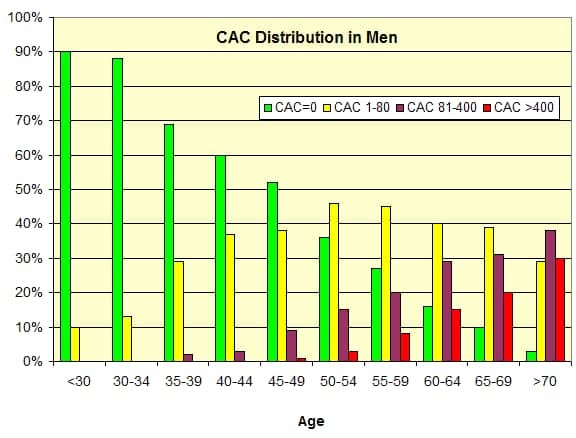
Louis shared a chart showing how CAC scores are distributed across ages, from a CAC scoring guide; the post gives no further explanation.51