HD-OPM Archive
Topics › Supplements & vitamins

CoQ10 improved tinnitus severity and sleep in presbycusis patients in a small 2025 RCT

Louis Nervegna · Oct 28, 2026 · ♥ 6 reactions · 5 comments · original Facebook post
Supplements & vitamins
AI summary & key facts

A 2025 double-blind randomized trial in the Iranian Journal of Otorhinolaryngology tested coenzyme Q10 added to routine care in patients with tinnitus due to age-related hearing loss. It reported reduced tinnitus disability and improved sleep. It is not related to heart health.

CoQ10 might help with tinnitus.

Link to journal paper:

Paper · Iran J Otorhinolaryngol · 2025The Effect of Coenzyme Q10 on Tinnitus Severity and Sleep Quality in Patients with Presbycusis.Conclusion: This study indicated that adding CoQ10 to the routine regimen for patients with tinnitus due to presbycusis significantly decreases tinnitus disability, improves sleep disturbance, and reduces tinnitus loudness. However, more studies should be conducted in this regard.pmc.ncbi.nlm.nih.gov
#coq10HD #tinnitusHD

Research cited

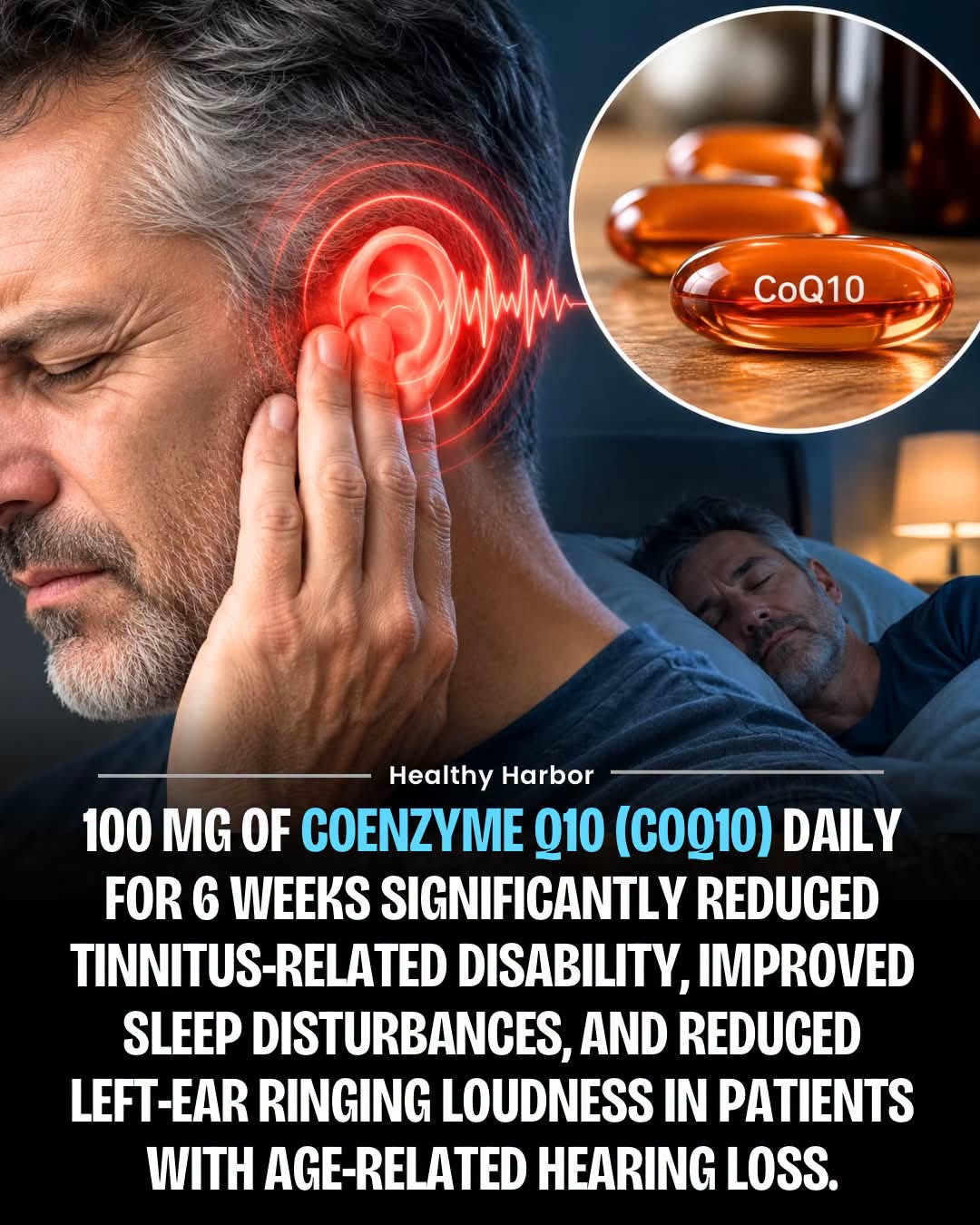
Persistent ringing, buzzing, or humming in the ears can make everyday activities difficult, particularly when it interferes with sleep, concentration, and quality of life. This condition, known as tinnitus, frequently accompanies age-related hearing loss (presbycusis), and effective treatments remain limited. A 2025 double-blind, randomized controlled trial published in the Iranian Journal of Otorhinolaryngology investigated whether Coenzyme Q10 (CoQ10), a naturally occurring compound involved in mitochondrial energy production and antioxidant protection, could help reduce tinnitus symptoms. Researchers enrolled 50 patients with tinnitus associated with age-related hearing loss, randomly assigning 25 participants to receive 100 mg of CoQ10 daily alongside routine treatment and 25 to receive a placebo alongside routine treatment for six weeks.

The results showed that participants receiving CoQ10 experienced significantly greater improvements in several tinnitus-related outcomes compared with placebo. Sleep disturbance scores decreased by an average of 7.6 points in the CoQ10 group versus 1 point in the placebo group (P < 0.001). Tinnitus-related disability scores also improved, with reported average reductions of 17.2 points versus 4.56 points (P < 0.001). Left-ear tinnitus loudness scores decreased by 2.2 points in the CoQ10 group compared with 0.54 points in the placebo group (P < 0.001). However, improvements in right-ear tinnitus loudness and overall quality of life were not statistically significant between groups. Researchers concluded that CoQ10 supplementation may be a promising complementary approach for managing tinnitus associated with age-related hearing loss, although larger and longer clinical trials are needed to confirm its effectiveness and determine whether the benefits persist after treatment.

May be an image of text
← newer: Joel Kahn highlights statin 'passivation' of arteries shown older: Oatmeal has a low glycemic index and lower insulin index tha →