HD-OPM Archive
Topics › LDL, ApoB & lipid panel

Nearly every cell makes its own cholesterol, especially brain cells

Louis Nervegna · Oct 29, 2026 · ♥ 4 reactions · 2 comments · original Facebook post
LDL, ApoB & lipid panelBrain health & dementia
AI summary & key facts

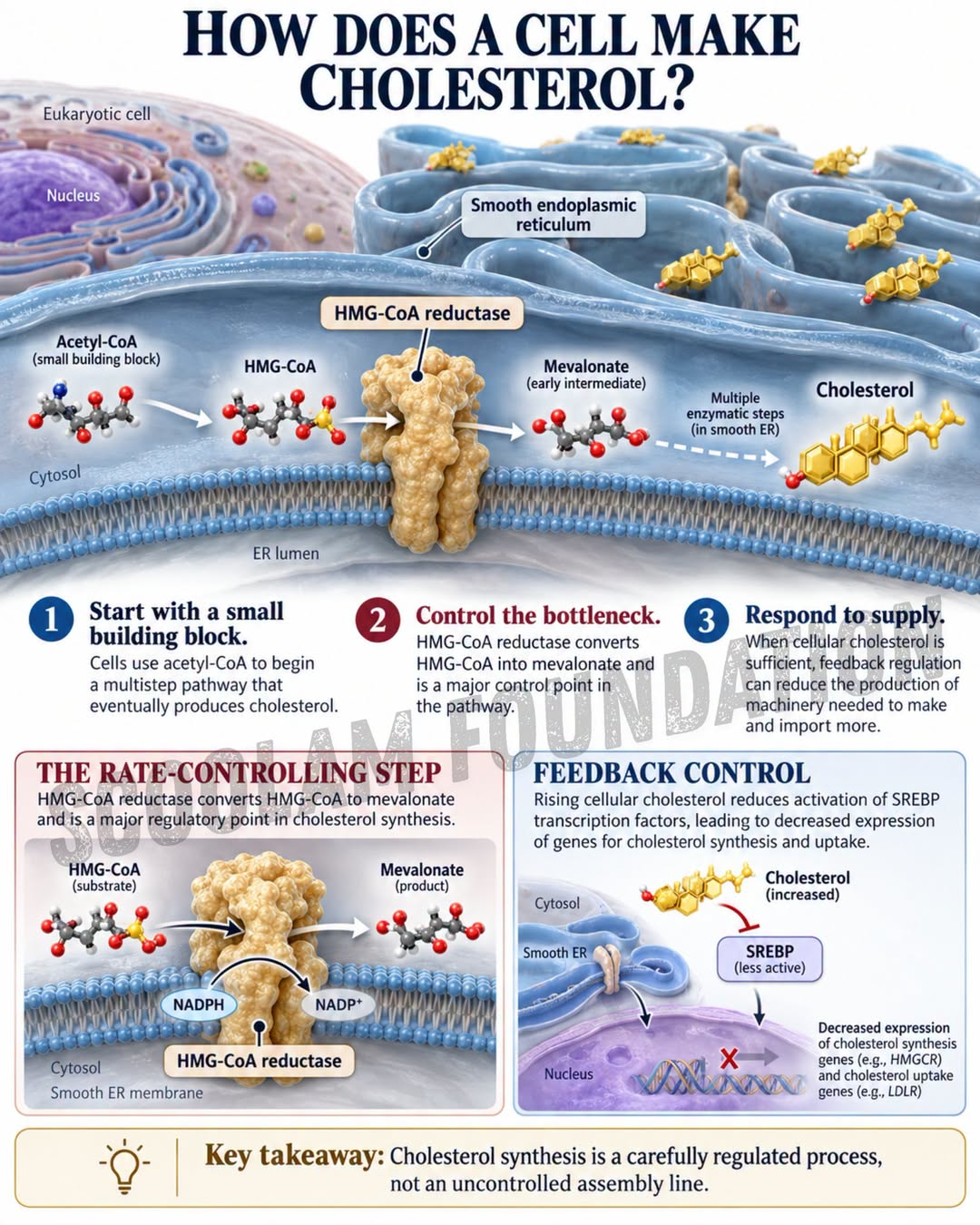
Louis notes that nearly every nucleated cell synthesizes its own cholesterol rather than relying on blood cholesterol, particularly cells in the brain. The shared explainer describes cholesterol biosynthesis through the mevalonate pathway with HMG-CoA reductase as the rate-limiting step. It frames why circulating cholesterol and tissue cholesterol are largely separate pools.

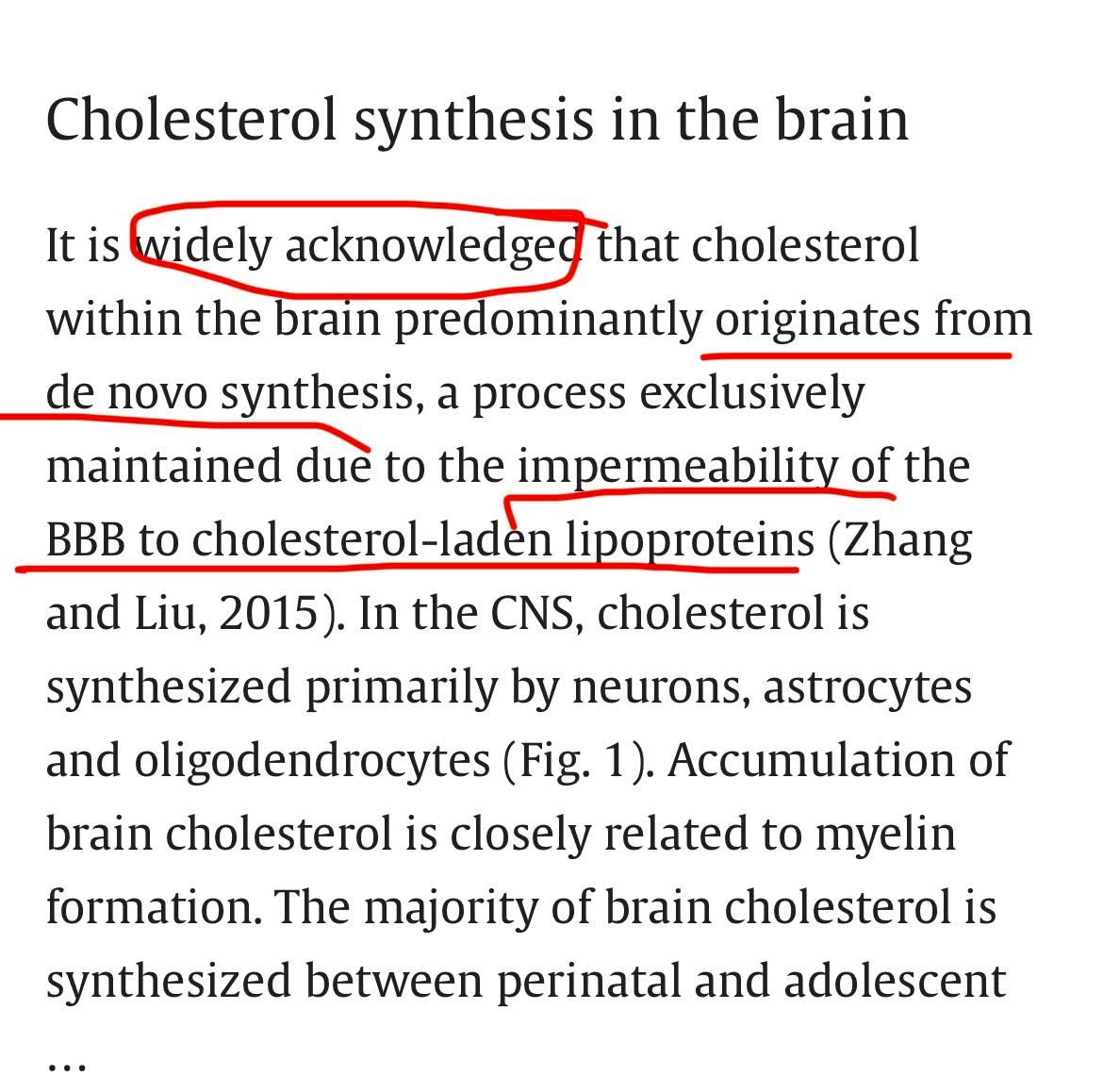
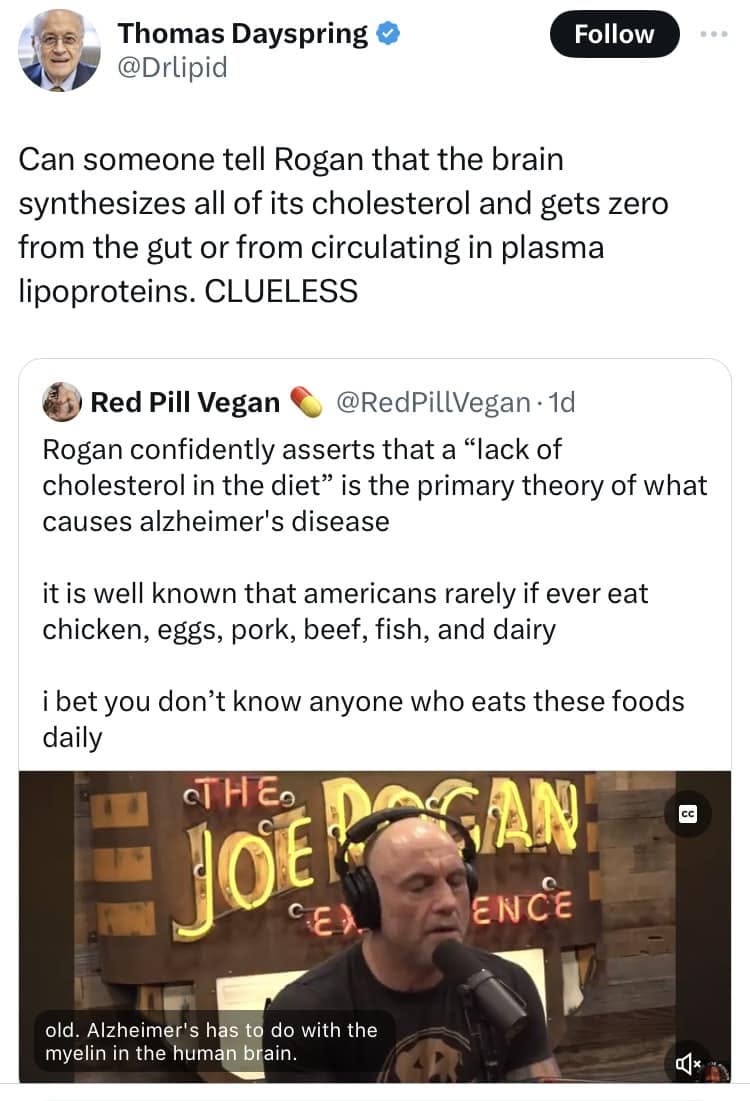
Nearly every cell (with a nucleus) in your body makes its own cholesterol internally. They don’t rely on the cholesterol circulating in
your blood. This is especially true for the cells in your brain.
#braincholesterolHD #lowldlHD #cholesterolHD

Have you ever wondered how your cells manufacture cholesterol, an essential molecule needed to build cell membranes, produce steroid hormones, and synthesize bile acids? 🧬 Through a complex biochemical process called cholesterol biosynthesis, cells convert acetyl-CoA into cholesterol through the mevalonate pathway, where the enzyme HMG-CoA reductase controls a key rate-limiting step, followed by the formation of intermediates such as mevalonate, squalene, and lanosterol. This carefully regulated process occurs mainly in the cytosol and endoplasmic reticulum, helping maintain cellular membrane stability, support hormone production, and regulate lipid metabolism, while medications called statins lower cholesterol synthesis by inhibiting HMG-CoA reductase.

#cholesterolbiosynthesis #cholesterolmetabolism #mevalonatepathway #biochemistry #medicaleducation

May be an image of text
← newer: Meta-analysis of 119 trials: nuts did not cause weight gain older: Alkaline phosphatase (ALP): what the liver and bone enzyme m →