Your blood can easily supply your tissues with all the cholesterol they need, even at very low levels of circulating LDL-C.
The majority of circulating cholesterol delivered to peripheral tissues goes to the adrenal glands and gonads for steroid hormone production. Yet, this net daily demand is very small— typically only tens of milligrams per day— and is easily met even at very low blood LDL-C levels. At any given moment, a typical adult has roughly 4,800–6,000 mg of total cholesterol circulating in their blood! So supplying tens of milligrams to the adrenals and gonads over the course of an entire day is trivial.
Clinical trials confirm that even extreme therapeutic lowering of LDL-C does not impair steroid hormone production. Trials such as FOURIER (evolocumab) and ODYSSEY OUTCOMES (alirocumab) confirmed that lowering LDL-C to extremely low concentrations (<15–20 mg/dL) does not impair adrenal steroidogenesis, gonadal hormone production, or vitamin D levels.
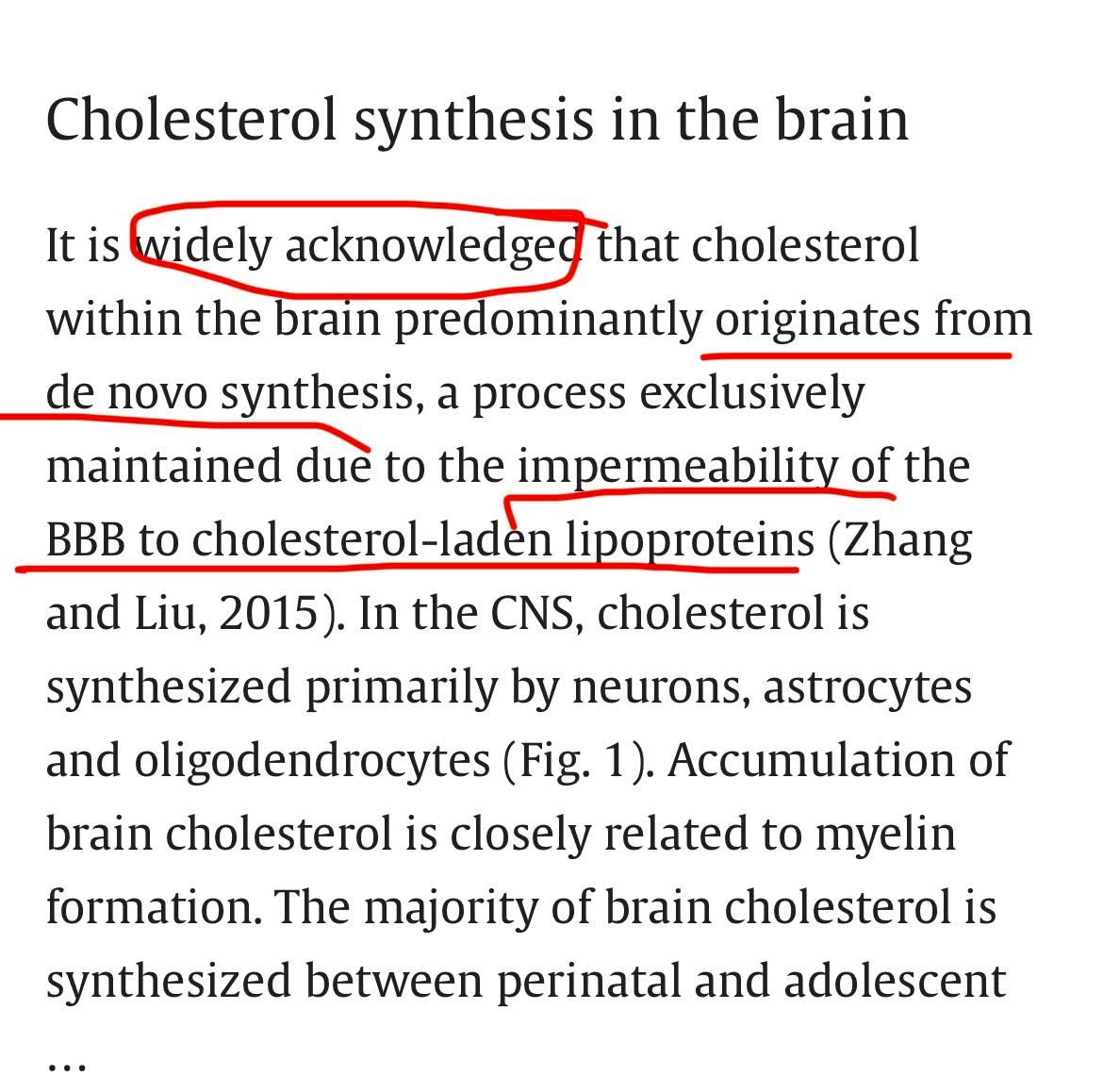
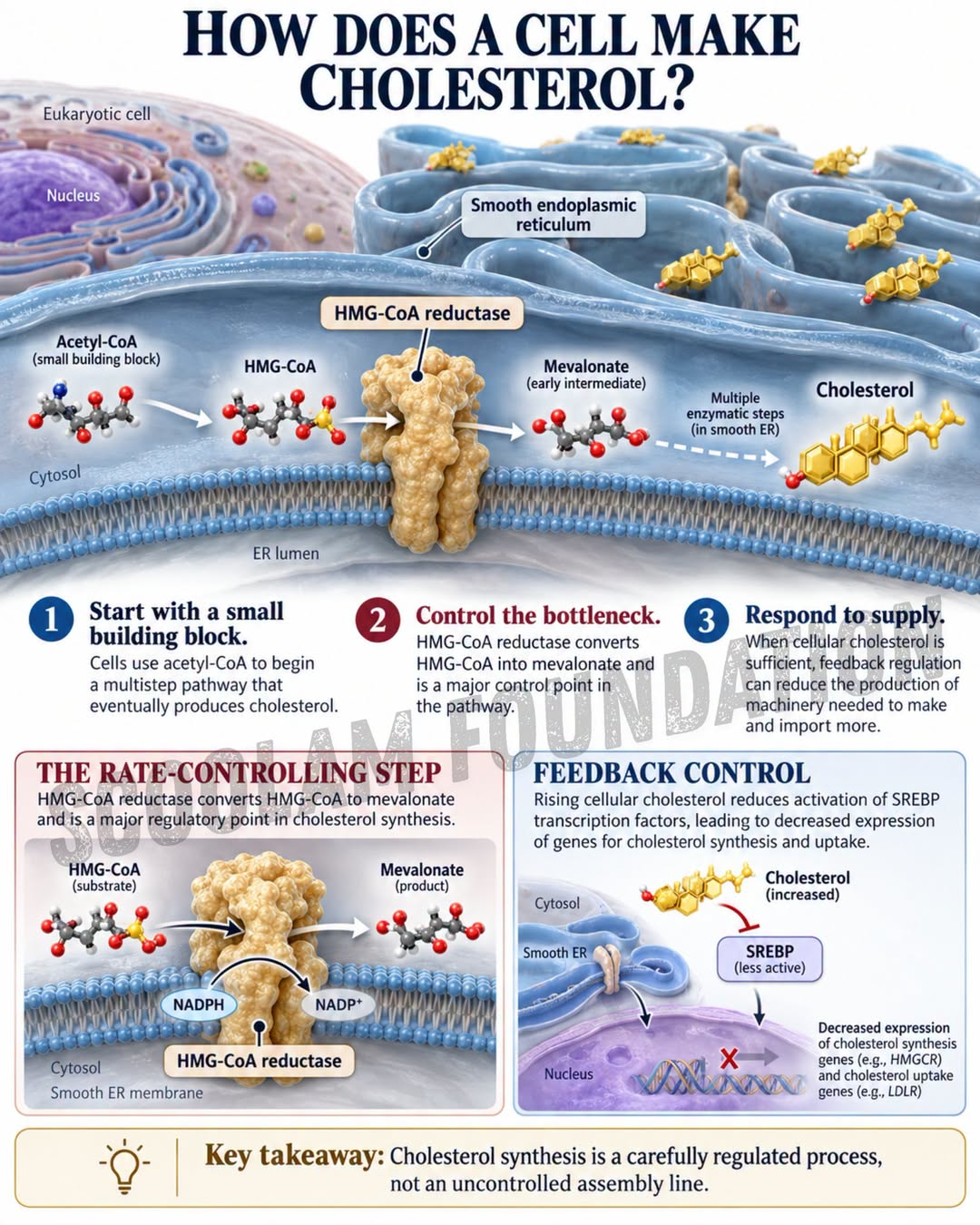
Your blood carries only about 2-5% of your body's total cholesterol pool. The remaining 95%+ lives inside your cells, building and maintaining cell membranes. Most cells synthesize virtually all of their required cholesterol internally, rather than relying on blood circulation. This is especially true in the brain, which is completely isolated from cholesterol circulating in the blood by the blood brain barrier.
#bbbHD #braincholesterolHD #bloodcholesterolHD #adrenalsHD #gonadsHD #hormonesHD #testosteroneHD #liverHD #totalcholesterolHD #cholesterolHD #lowldlHD
HOW MUCH CHOLESTEROL IN THE BLOOD IS USED BY YOUR CELLS?
Most people think the cholesterol in their blood is there because their body needs it delivered. It's not quite that simple.
Peter Megdal PhD just wrote a really thorough breakdown of this topic you should check out. Here are the key points:
Your entire body contains about 120-150 total grams of cholesterol at any one time. But your blood only carries about 3-7 grams of that total, or about 2-5%.
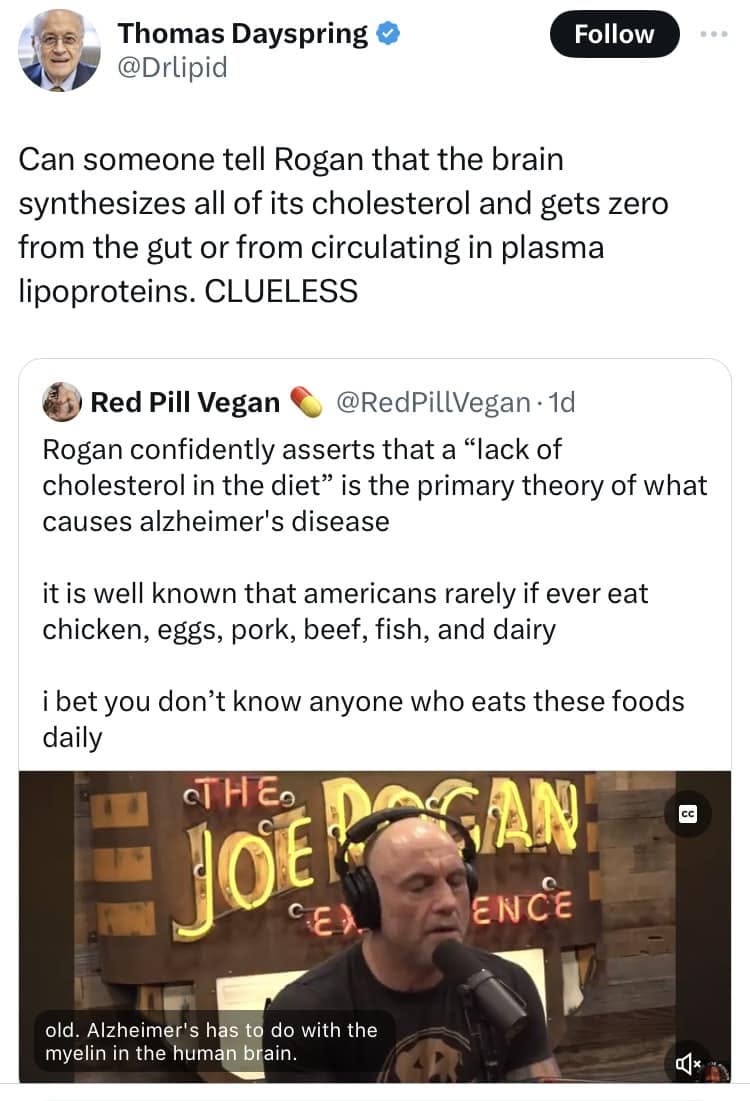
Your brain alone holds about 25% of your body's entire cholesterol supply, but NONE (as in ZERO) of it comes from your bloodstream. LDL particles cannot cross the blood brain barrier under normal conditions. In other words, brain cells make ALL THE CHOLESTEROL THEY NEED, so blood LDL levels give no reflection at all of what brain levels of cholesterol are, or how much it has access to.
You've also probably heard that the liver "makes 80% of your cholesterol". That's actually backwards. The liver only contributes about 10% of total body cholesterol synthesis in humans. Your skin, muscle, kidneys, and most other tissues make the vast majority of what they need themselves, locally, for their own use. This is a CRUCIAL POINT to make sure you understand. The 80% figure you might have heard about specifically refers to how much of the cholesterol that is IN THE BLOOD came from the liver, not how much the body tissues get. Those are two very different things.
So what's most of the cholesterol measured on blood tests (ie LDL-C) actually for? That cholesterol is mostly just along for the ride as a structural component of the lipoprotein particles themselves. It's not typically being actively delivered anywhere.. The net daily demand from tissues for cholesterol delivery via the blood is mostly from the adrenal glands and gonads, but it is only around 50mg/day. That is TINY, and easily met, even at very very low plasma LDL-C levels.
The modeling presented in this article suggests the body only needs about 50-90 mg/dL total cholesterol to keep the transport system functional. The US average is close to 200.
And to be clear, every excess apoB particle circulating that isn't actually needed provides one more opportunity for it to enter the arterial wall and act as the building block for a plaque. Why are there so many more particles than is actually needed? Typically it is due to a combination of many different types of genetic mutations that mostly affect LDL clearance, leading to a backlog, plus the negative effects of certain foods on the function of that clearance mechanism.
So, your body needs cholesterol. There is no doubt about that. But your blood doesn't need to carry nearly as much as it typically does. And conflating those two things is exactly how misinformation about LDL continues to thrive.
Full article worth reading 👇