AI summary & key facts
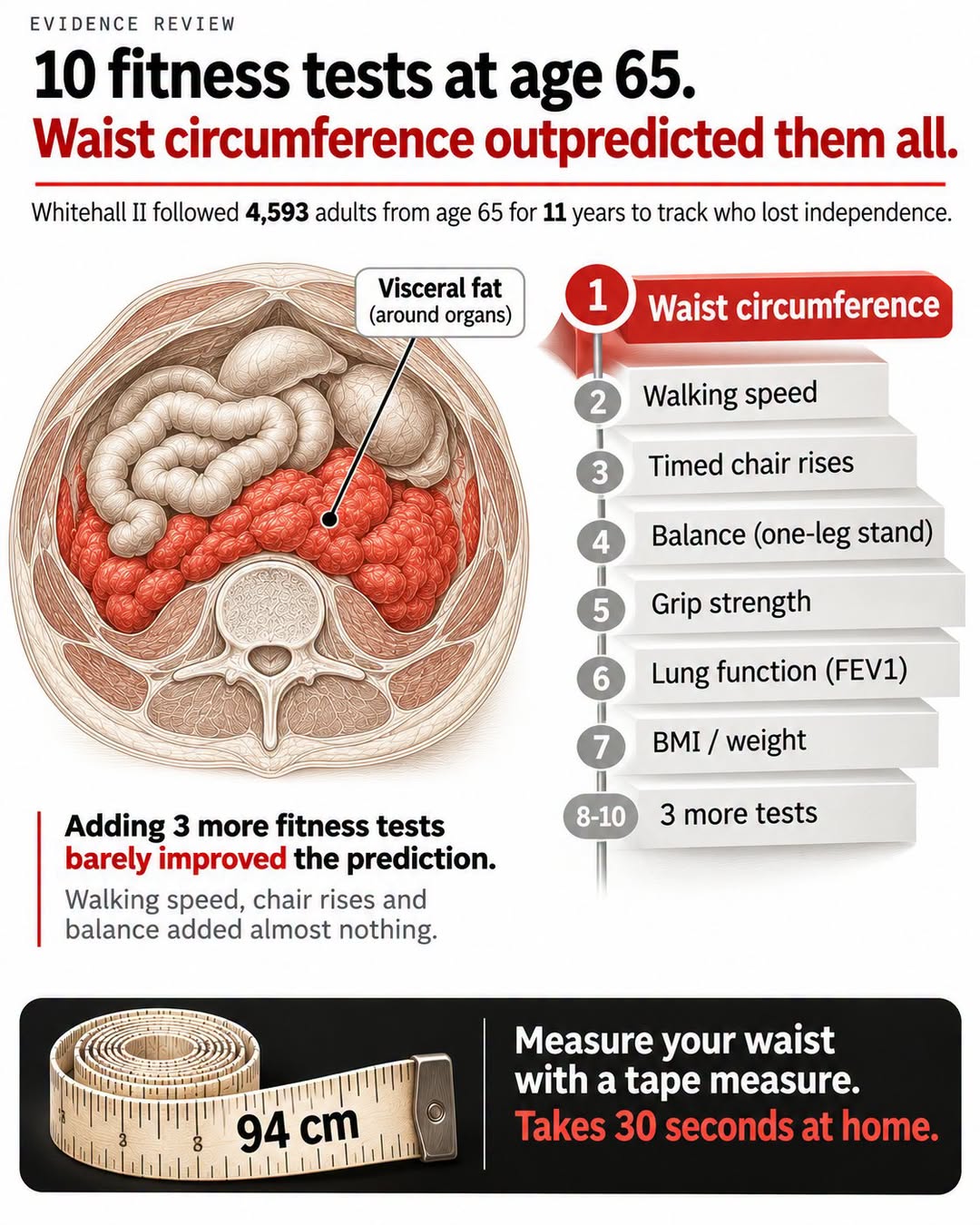
Whitehall II data on 4,593 UK adults (average age 65) followed for about 11 years compared 10 standard measures, including walking speed, chair rises, balance, grip strength, lung function and BMI. Waist size predicted disability, and severe disability, best, and adding other tests improved prediction only slightly. Waist reflects visceral fat, which drives inflammation, insulin resistance and liver fat.
- 4,593 UK adults, average age 65, about 11 years of follow-up
- Waist size beat 9 other measures including BMI, grip strength and walking speed
- Adding walking speed, chair rises and balance to waist helped only slightly
Your amount of visceral fat— as measured by waist size— predicts your future risk of disability better than 9 other commonly used metrics for aging and fitness.
#waistsizeHD #agingHD #longevityHD #visceralfatHD
At your next physical, they will probably weigh you and calculate your BMI without ever measuring your waist, and new 11-year data from the Whitehall II study suggests that is the wrong priority.
Researchers followed 4,593 UK adults with an average age of 65 for a typical span of 11 years to see who would lose the ability to handle basic daily tasks like dressing, bathing, getting out of bed, walking and eating. They compared 10 standard aging and fitness measures, including walking speed, chair rises, balance on one leg, grip strength, lung function and BMI.
Of all 10 measures taken one at a time, waist size predicted disability best, and it also predicted severe disability best, meaning needing help with two or more daily tasks. Adding walking speed, chair rises and balance on top of waist size improved the prediction only slightly.
Waist size works so well because it reflects visceral fat, the deep belly fat wrapped around your organs. Unlike the fat you can pinch, visceral fat releases inflammatory signals, makes the body more resistant to insulin and pushes fat into the liver, pancreas and muscles, which is why it is tied more closely to clogged arteries, type 2 diabetes, dementia and frailty than fat stored anywhere else.
BMI can't tell muscle from visceral fat. If you picture two 70-year-old men with a BMI of 27, one with a 40 inch (102 cm) waist and one with a 35 inch (88 cm) waist, the first has a much higher risk of heart disease and diabetes even though they sit in the same weight class.
Walking speed, grip strength and balance still matter, and training them helps you stay independent and avoid falls. This finding is about screening, and it shows that if you had to pick one measurement to flag who is more likely to decline over the next decade, waist size was the best single choice in this group.
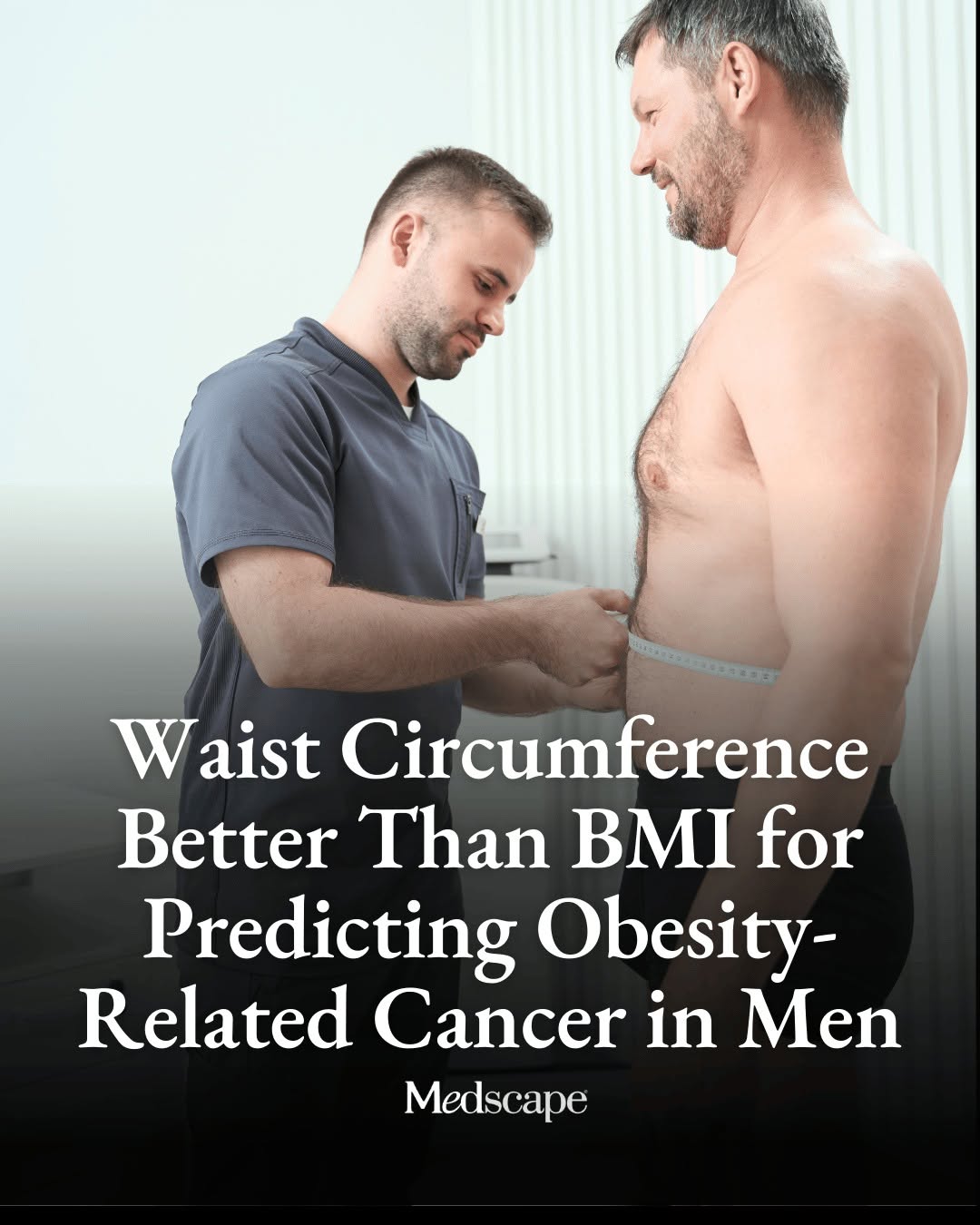
To track it, measure at your belly button with the tape level to the floor after breathing out normally, and check it every year. If your waist is growing while your weight stays the same, you are likely gaining deep belly fat, and BMI will miss that change entirely.
Ben Hassen et al., GeroScience, 2026. Whitehall II study, 4,593 adults, typical follow-up of 11 years.