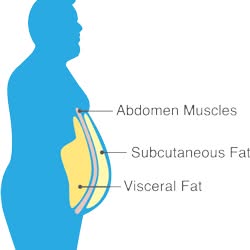
The likely reason is because waist circumference in men almost always reflects visceral fat.
In women, however, a lot of the fat around the waist tends to be stored subcutaneously.
It’s the visceral fat that is dangerous.
Louis shares a Swedish study showing that waist circumference was a stronger marker than BMI for obesity-related cancers in men but not women. He suggests the reason is that waist size in men mostly reflects visceral fat, whereas women store more waist fat subcutaneously, and visceral fat is the dangerous kind.
The likely reason is because waist circumference in men almost always reflects visceral fat.
In women, however, a lot of the fat around the waist tends to be stored subcutaneously.
It’s the visceral fat that is dangerous.
Waist circumference was shown to be a stronger marker than body mass index (BMI) for the risk of developing obesity-related cancers in men but not in women, a Swedish study showed: Waist Circumference Predicts Obesity-Related Cancer in Men (Medscape)
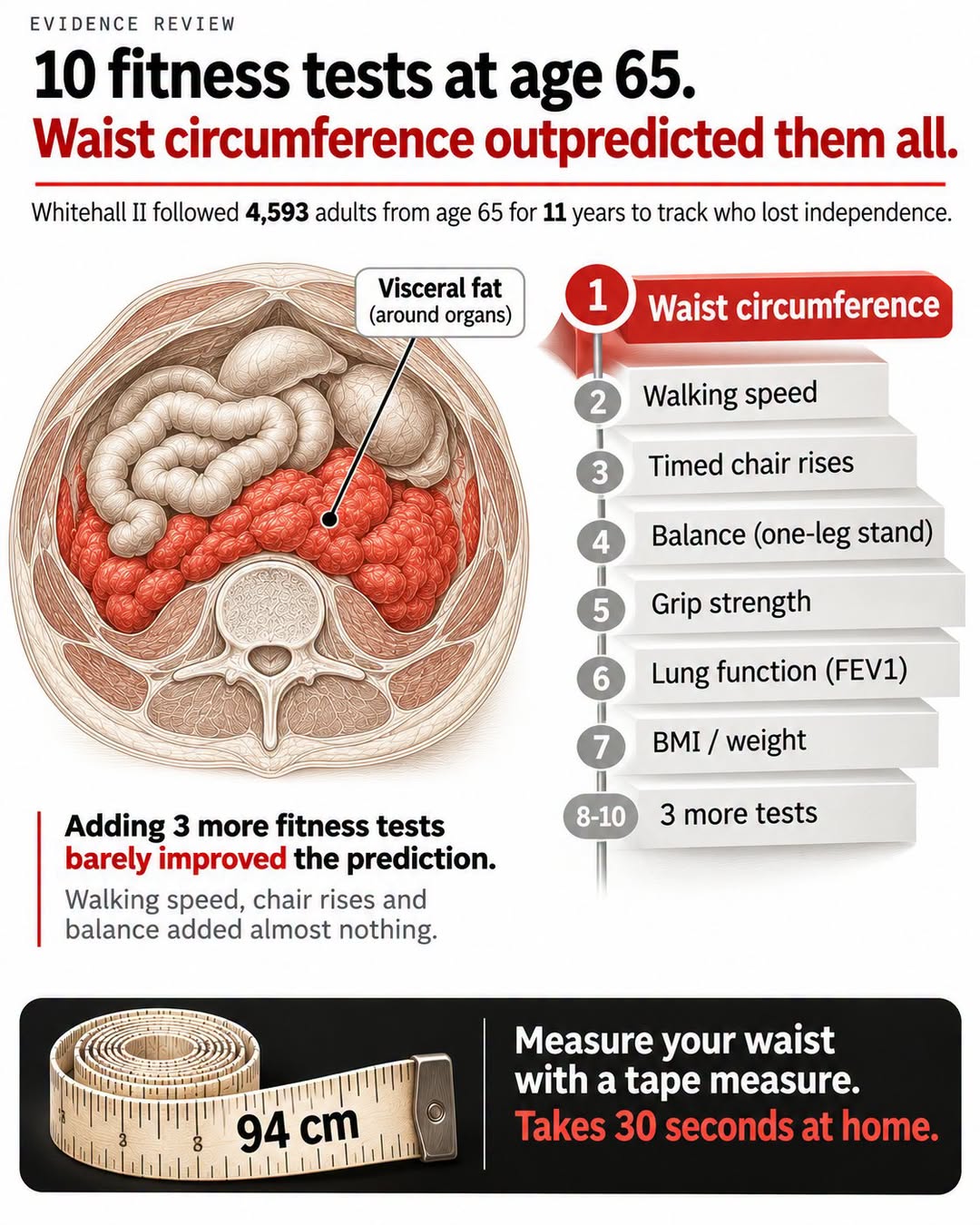
Whitehall II data on 4,593 UK adults (average age 65) followed for about 11 years compared 10 standard measures, including walking speed, chair rises, balance, grip strength, lung function and BMI. Waist size predicted disability, and severe disability, best, and adding other tests improved prediction only slightly. Waist reflects visceral fat, which drives inflammation, insulin resistance and liver fat.
Louis explains the video's method: waist circumference reflects abdominal fat and thigh circumference reflects subcutaneous fat, so waist minus thigh is a better visceral fat estimate than a DEXA number, avoiding radiation.
Louis shares the Luxembourg Institute of Health visceral fat calculator, which uses waist and thigh/hip tape measurements. He says it gives a good estimate and a study found it more accurate than a DEXA scan number.

The post names three simple measures of metabolic health (waist-to-height ratio as a visceral fat proxy, adiponectin, TG/HDL ratio) from a Christos Mantzoros podcast clip. Metabolic health means good insulin sensitivity and glycemic control, and metabolic syndrome adds to residual CVD risk.
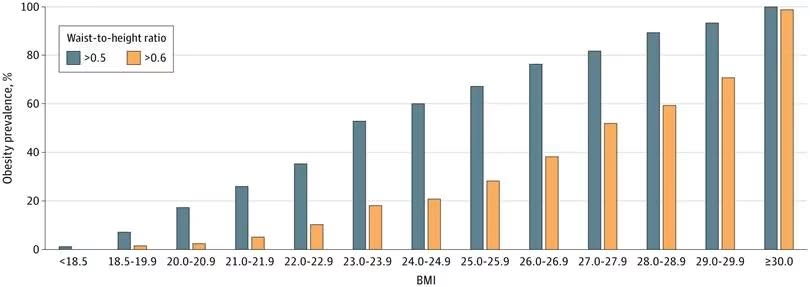
JAMA Network Open study using a new definition estimated 75.2% of US adults have obesity, including 38.5% with normal BMI, reclassifying an additional 34% of the study population.

Louis notes that overweight people may need more vitamin D. The shared summary describes a VITAL reanalysis in 16,515 participants showing a blunted rise in vitamin D biomarkers with higher BMI.