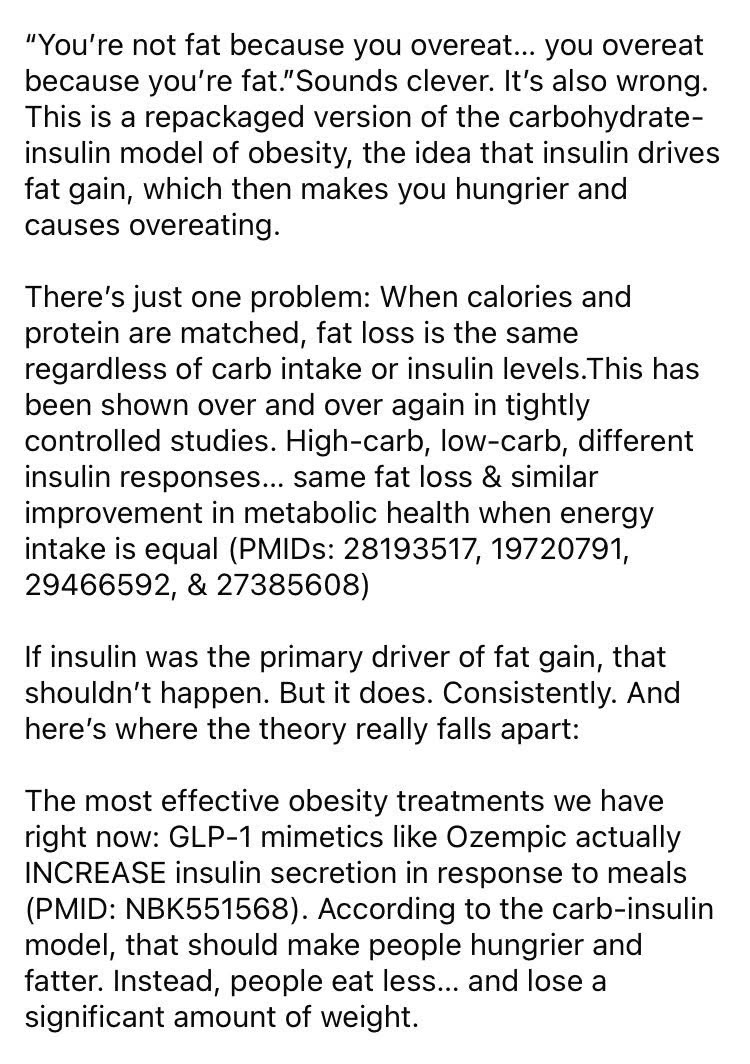
Normal physiological insulin spikes from eating healthy forms of carbohydrate do not drive hunger and overeating.
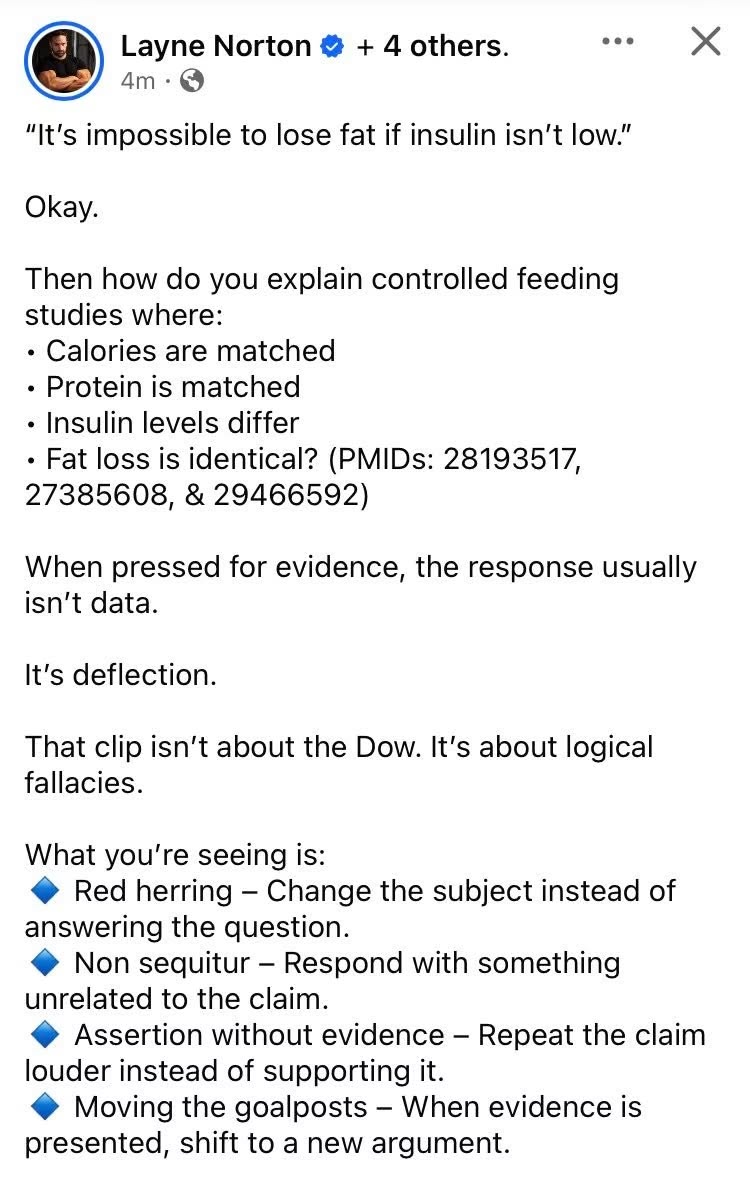
Carefully done metabolic ward studies have disproven this myth.
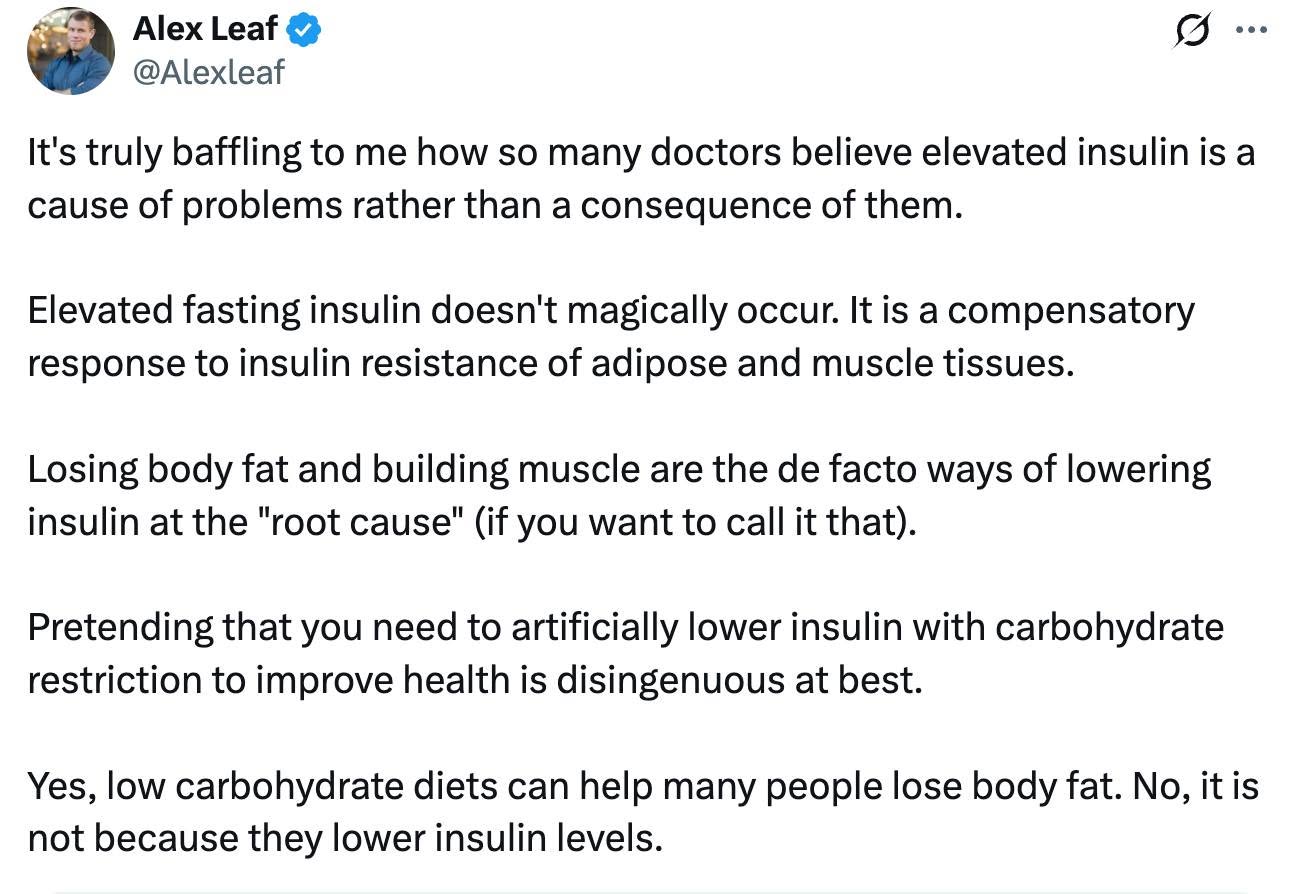
While excess insulin is bad for you, the idea that normal physiological spikes (from eating healthy food) make you fat is nonsense.
Quoted from the original post:
More carbs. Higher insulin. Nearly 700 FEWER calories eaten per day. 🤯
That’s an inconvenient finding if you believe insulin spikes inevitably make you hungry and drive overeating.
In this controlled NIH study, 20 adults lived in a research facility and consumed two different diets for two weeks each:
🥔 High carb, low-fat: ~75% carbohydrate.
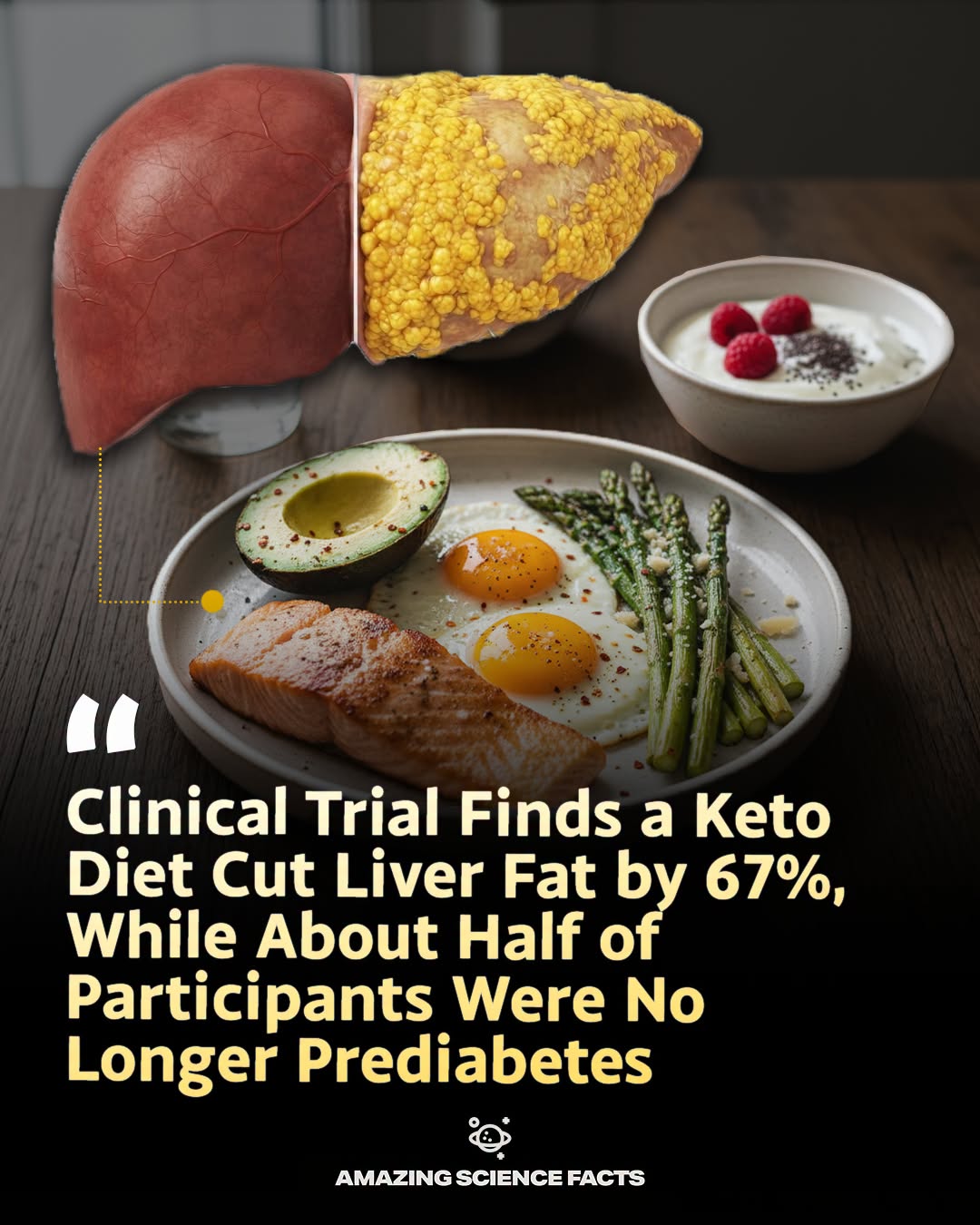
🥩 High fat, ketogenic: ~10% carbohydrate.
They could eat as much or as little as they wanted. Despite higher glucose and insulin levels, participants ate an average of 689 fewer calories per day on the high-carb diet (PMID: 33479499)
The carbohydrate-insulin model predicts that elevated insulin traps fuel in fat cells, leaving the rest of your body “starving” and driving you to eat more. These results went in the OPPOSITE direction.
Does this short study prove everyone should eat a high-carb, low-fat diet? No. The diets differed in several ways, so we can’t attribute the difference in food intake solely to carbs or insulin. But it’s a pretty big problem for the claim that higher insulin necessarily means more hunger and overeating. 🤷🏻♂️
Want the full breakdown of insulin, carbs, and fat loss?
👇 Comment “INSULIN” and we’ll send you the link to the full episode of The Dr. Layne Norton Podcast.
#insulinHD #carbohydrateinsulinmodelHD #wfpbnoHD #ketoHD #lowcarbHD #weightlossHD #obesityHD