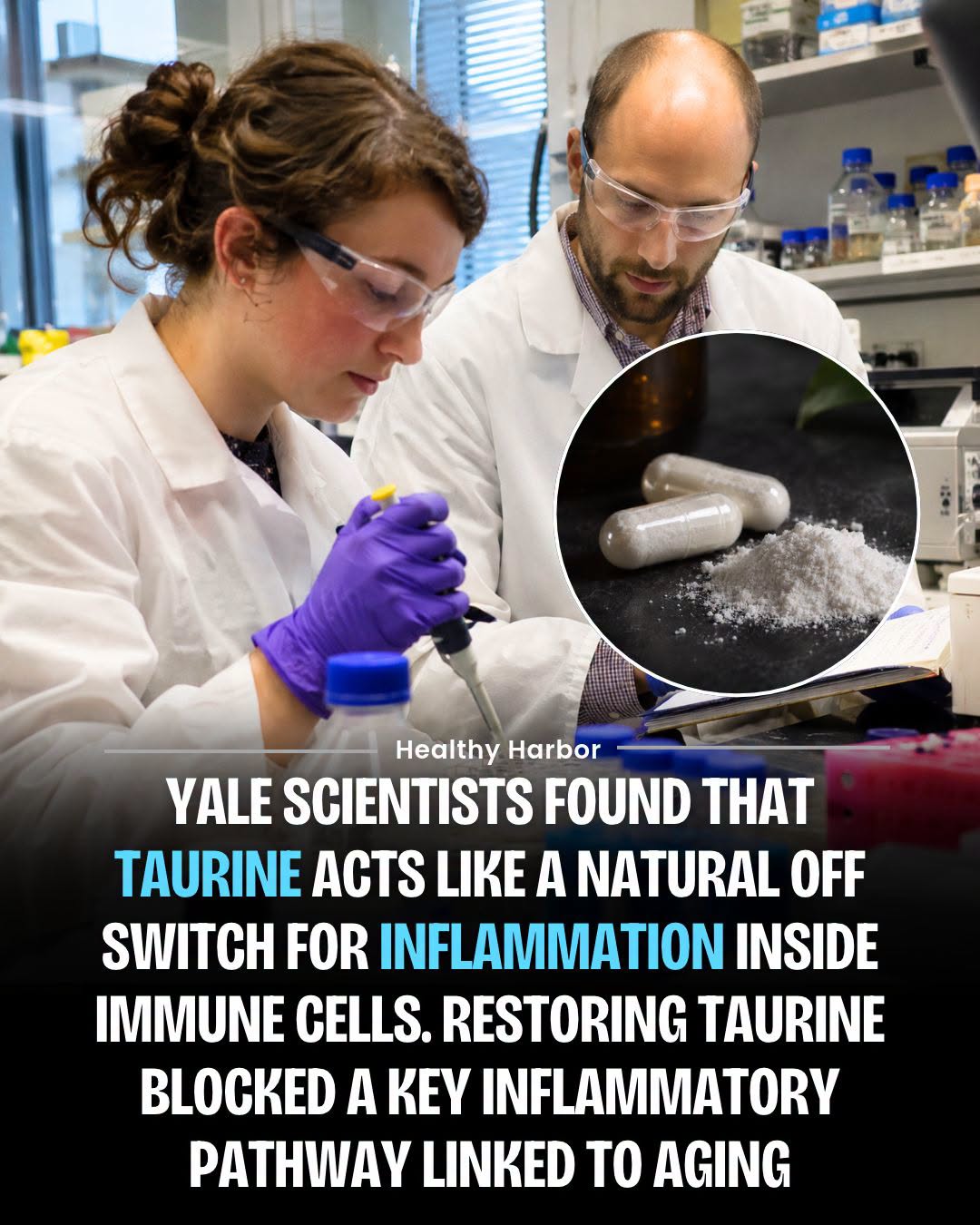
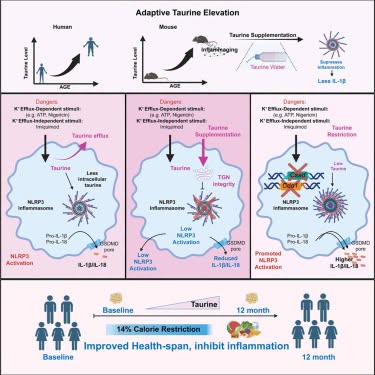
Researchers at Yale School of Medicine, led by Dr. Vishwa Deep Dixit and Dr. Chenyang Guan, discovered that taurine plays a previously unknown role in controlling inflammation inside immune cells. In their study, published in Cell on October 23, 2026, scientists examined macrophages, immune cells responsible for detecting infections, damaged tissues, and other danger signals. They found that exposure to inflammatory triggers, including bacterial toxins and cellular stress, caused macrophages to release up to 80% of their intracellular taurine. This rapid loss of taurine helped activate the NLRP3 inflammasome, a protein complex that triggers inflammation by activating caspase-1 and promoting the release of inflammatory molecules IL-1β and IL-18. Researchers discovered that restoring taurine inside macrophages prevented the breakdown of a cellular structure called the trans-Golgi network, suppressed NLRP3 activation, and reduced inflammatory signaling. Conversely, reducing taurine availability intensified inflammation, suggesting that taurine functions as an internal regulatory brake that prevents excessive immune activation.
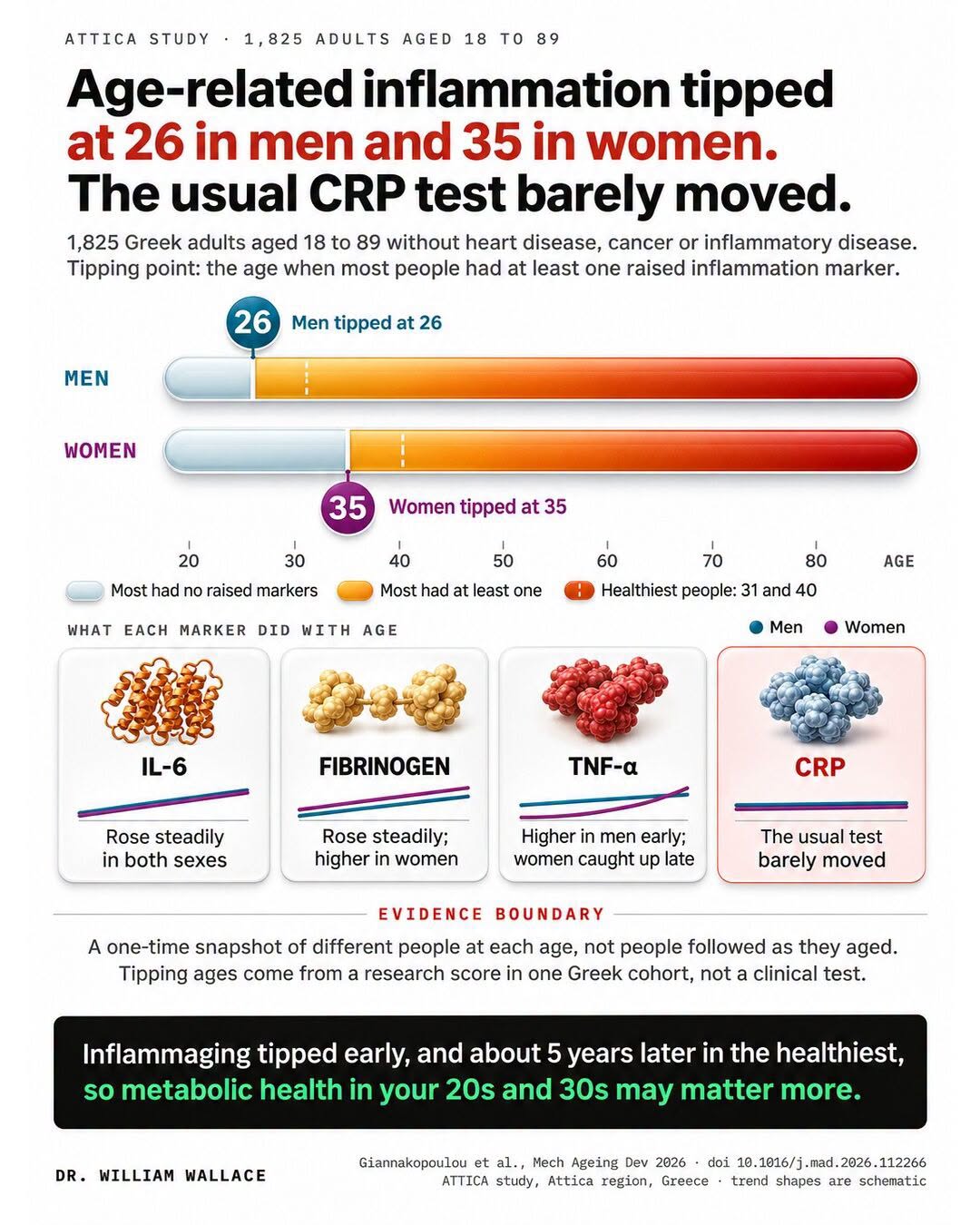
The researchers also investigated whether increasing taurine could protect against age-related inflammation, commonly known as inflammaging. In older mice, elevating taurine levels improved physical performance, including grip strength and motor coordination, improved certain measures of glucose regulation, and reduced inflammatory markers such as IL-1β, IL-18, and IL-6. Higher taurine also reduced mortality in experimental models of sepsis and inflammasome-driven inflammation. Interestingly, when scientists compared adults aged 20–40 with those aged 60–99, they found that circulating taurine levels increased with age rather than declined, suggesting a possible compensatory response to inflammation. They also examined human data from the CALERIE trial, where approximately one year of moderate calorie restriction increased taurine concentrations in fat tissue alongside reductions in inflammatory markers. These findings identify taurine as a potential target for controlling chronic inflammation associated with aging, although clinical trials are still needed to establish whether taurine supplementation produces similar benefits in humans.