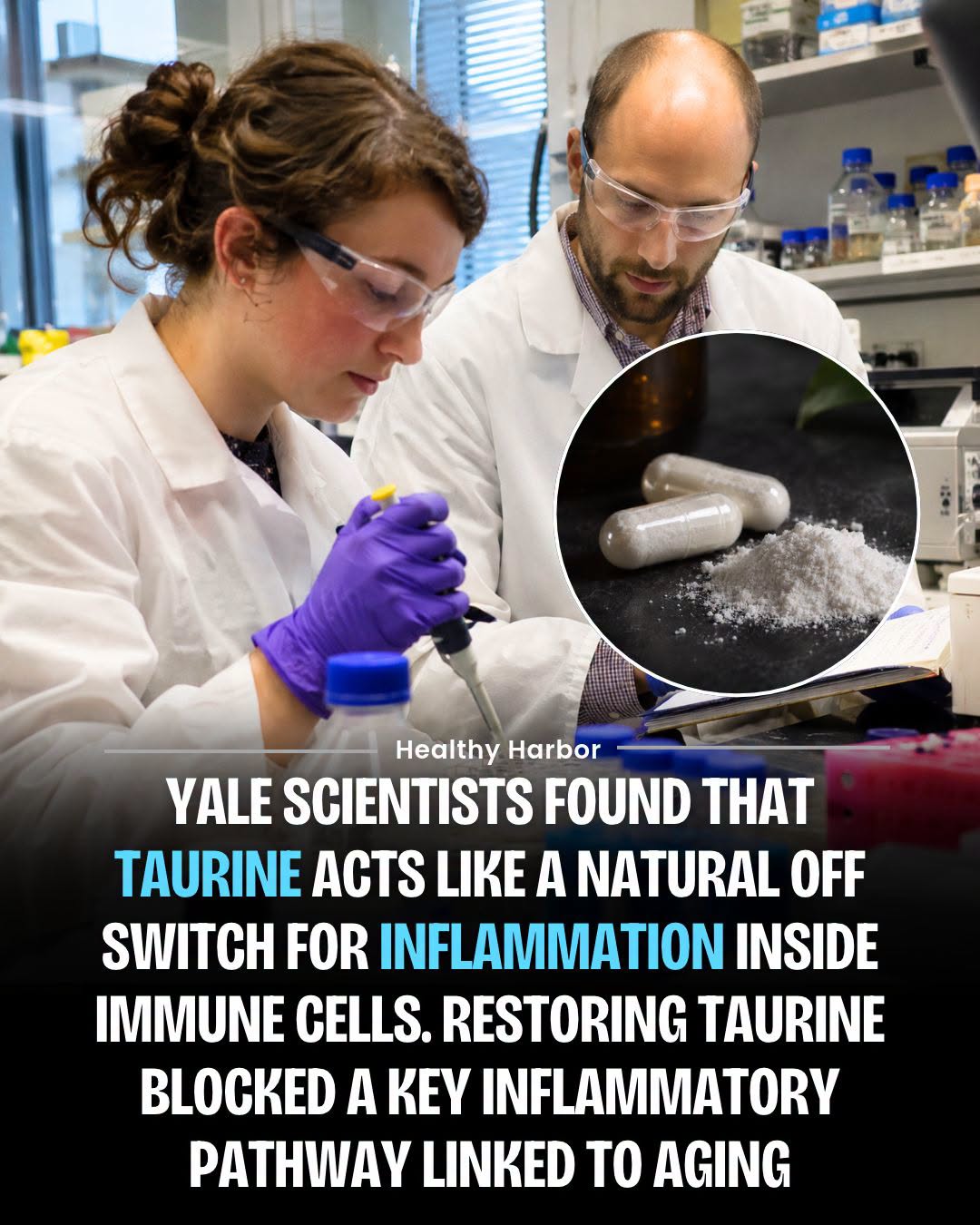
An exciting new study out of Yale University suggests that taurine levels in blood are central to how the human body protects itself against age-related inflammation (“inflammaging”).
Based on these newly discovered mechanisms, the researchers note that taurine supplements might be protective against age-related diseases. They are planning future studies to test this hypothesis.
Link to journal paper:
Paper · CellCell articlecell.comMy note:
Geroscientists became seriously interested in taurine as a possible intervention to slow aging after a high-profile 10 year study was published at Columbia University in 2023. This study suggested that taurine might fundamentally slow the aging process in both mice and monkeys, with supporting observational data in humans:
↪ Taurine deficiency may drive aging; Columbia study spans worms, mice, monkeys and humans
A subsequent study in 2025 by Rafael de Cabo’s group at the NIA challenged this research by proving that taurine levels do not decrease with age, as the original research had claimed:
↪ Nature study challenges the idea that taurine declines with age
↪ Taurine is not a reliable aging biomarker, says new multi-species study
This new research at Yale provides a good explanation for the discrepancy. Taurine levels may be increasing with age as the body’s natural defense mechanism against inflammaging.
There have been multiple past posts in the group about how taurine might be protective against CVD and metabolic disease. Emphasis on might, since this is unproven. Search the group for the tag #taurineHD.
Quoted:
Sustained low-level inflammation is a hallmark of the aging process. The accumulating damage persistently activates the innate immune system—the body’s first line of defense—leading to what is known as inflammaging, functional decline and chronic diseases of old age.
Unlike the adaptive immune system, which switches on and off based on the specific pathogens it recognizes, innate immune sentinels such as macrophages can recognize a diverse array of danger signals. The mechanism of this pattern recognition has remained an enigma, however.
In a new study published Oct. 23 in Cell, researchers at Yale School of Medicine found that the amino acid taurine is key to the way the innate immune system senses danger signals. Even more, boosting taurine levels may diminish the effects of inflammaging.
“Biology has lots of surprises” says senior author Vishwa Deep Dixit, PhD, Waldemar Von Zedtwitz Professor of Pathology and director of the Yale Center for Research on Aging (Y-Age) at Yale School of Medicine. “And the biggest surprise in this study is that taurine is controlling the innate sensing mechanism.”
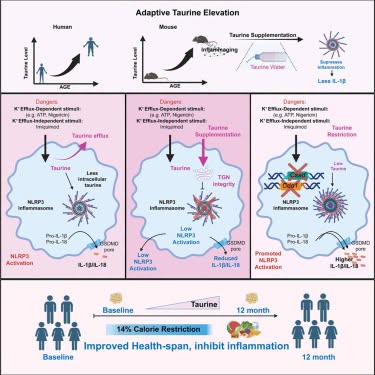
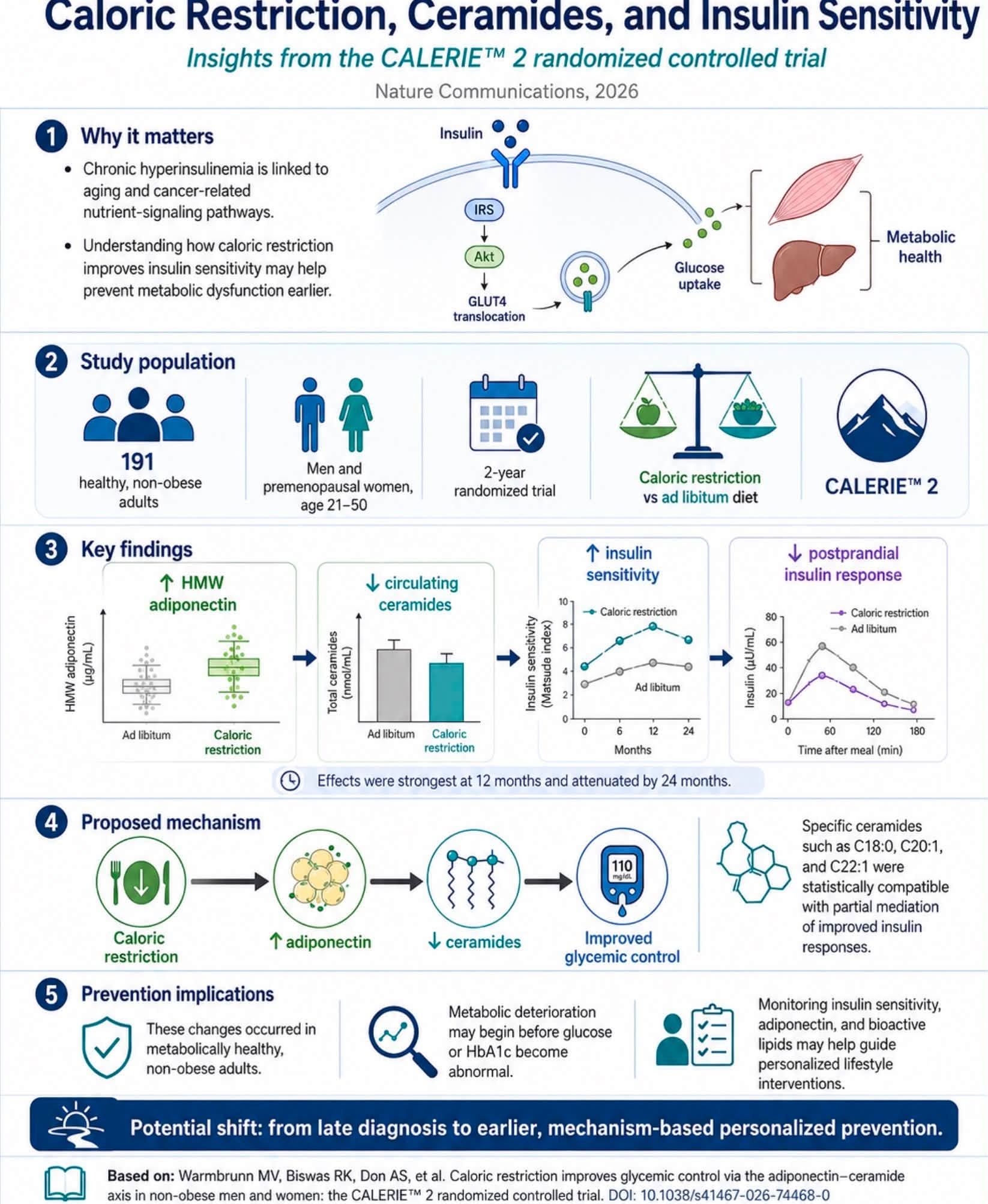
Dixit first became interested in taurine after finding that it increased as people restricted their calorie intake for up to one year as part of the CALERIE study. He and his team also found that moderate calorie restriction led to lower chronic inflammation—something that enhances healthy lifespan. But calorie restriction is not practical for most adults and there was little evidence as to whether taurine linked metabolism to the immune system.
“We wanted to test whether taurine is just a passenger or a driver of the reduction in inflammatory response caused by caloric restriction,” Dixit says.
Dixit expected that taurine levels might decrease with age. After all, aging is associated with an increase in inflammation. But that did not turn out to be true.
By comparing the blood serum of young (20- to 40-year-old) and older (60- to 99-year-old) people, his team found that taurine actually increased with age. The finding was surprising and suggested that taurine does not drive aging, says Chenyang Guan, PhD, the first author of the study and a postdoctoral associate in the Dixit lab.
The researchers then suspected that the increase in taurine with age may be a failed attempt to reduce inflammation.
The results of the study suggest that the innate immune system senses perturbation in cells’ internal environments through the loss of taurine, leading to activation of the NLRP3-mediated inflammation.
“Since the innate immune system does not have specific receptors for each and every different type of danger signal, this pattern recognition has always been a mystery,” Dixit says. “Now we know that taurine allows immune sensing and is one of the brakes within the cells that is keeping the inflammasome in check.”
If the release of taurine initiates NLRP3 inflammation, would supplementing the macrophages with taurine stop inflammation? The researchers wondered.
To answer that question, they supplied macrophages with fresh taurine and found that it inhibited the activation of the NLRP3 inflammasome. On the other hand, when they lowered taurine in macrophages, it accelerated NLRP3-driven inflammation even in young mice.
#taurineHD #agingHD #longevityHD #inflammationHD #inflammagingHD #calorierestrictionHD #calerieHD #yaleHD #innateimmunesystemHD #nlrp3HD #macrophagesHD