Carnivore influencers on social media have been lying about the diets of the Hadza for some time now.
The truth is that the diets of the Hadza have been very well studied. They eat an enormous amount of plant food, including fibrous tubers, berries, and a fiber-rich tree fruit called baobab. They also consume large amounts of simple sugar from honey.
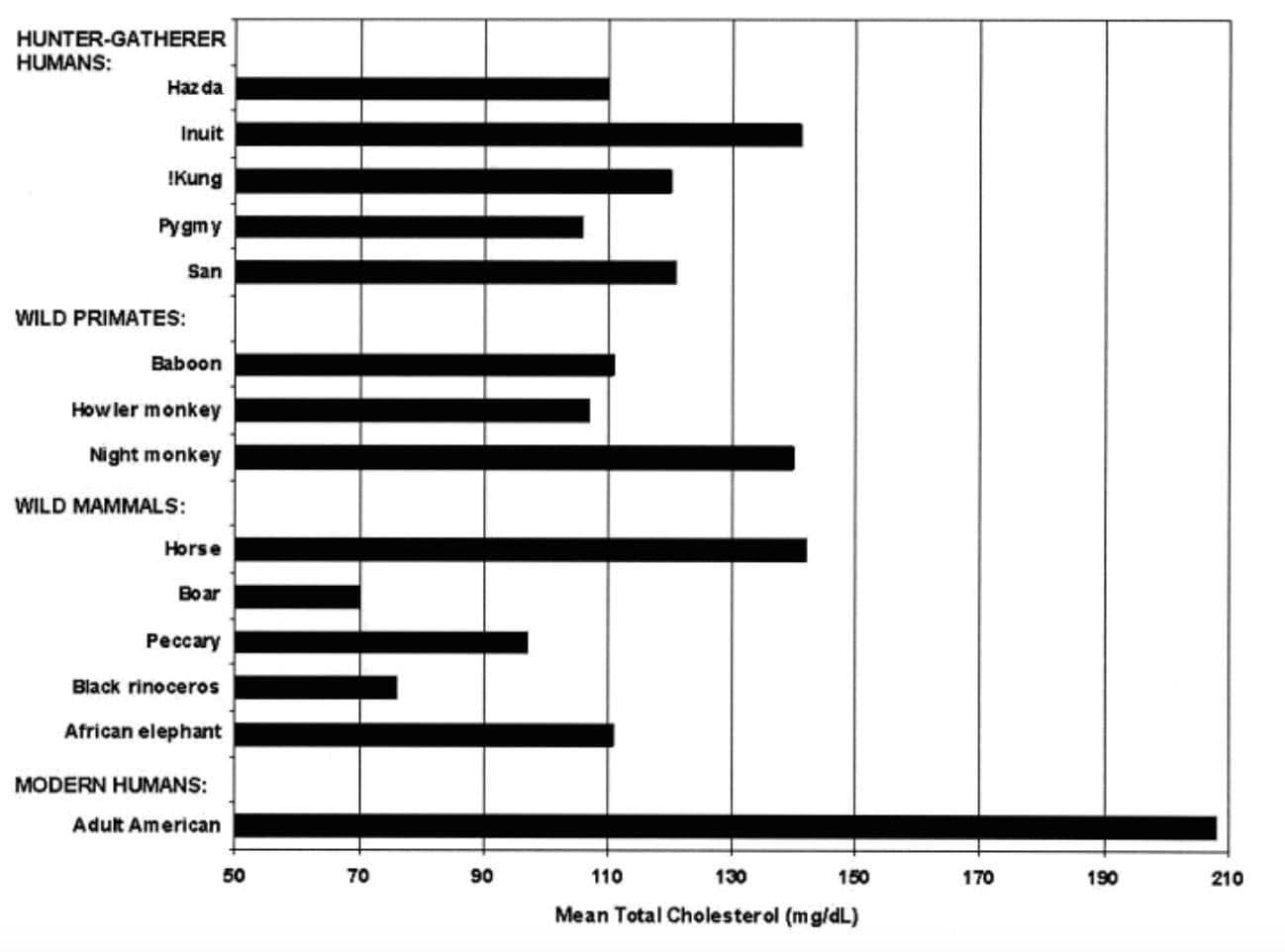
Yes, they eat meat, but they are very far from carnivores. The game meat they eat is very lean. Their diets are low in fat, moderate in protein, and high in naturally occurring sugar (from honey and fruit) and starch (from tubers). Definitely not a low carb diet. 70% of their calories come from plants. This is why their LDL cholesterol is so low (62 mg/dL). Unsurprisingly, their risk for heart disease is also very low.
The microbiomes of the Hadza have been rigorously studied. They have the microbiomes of plant eaters who consume large amounts of plant fiber.
——
“The Hadza diet consists of wild foods that fall into five main categories: meat, honey, baobab, berries and tubers (Supplementary Table 1 and Supplementary Fig. 1) 12,13,14.”
“Women selectively forage for tubers and plant foods, and spend a great deal of time in camp with children, family members and close friends. Men are highly mobile foragers and range far from the central camp site to obtain game meat and honey 18.”
“The Hadza GM [gut microbiome] has characteristic features that are consistent with a heavily plant-based diet. Besides the presence of several well-known fibre-degrading Firmicutes that are also shared with Italians—for example, members of Lachnospiraceae, Ruminococcaceae, Veillonellaceae, Clostridiales Incertae Sedis XIV and Clostridiaceae, the Hadza GM is enriched in Prevotella, Treponema and unclassified members of Bacteroidetes, Clostridiales and Ruminococcaceae. These xylan-degrading Prevotella26 and Treponema21 and the abundance of still unclassified Bacteroidetes and Clostridiales, groups known for their fibrinolytic capabilities, may provide the Hadza GM with specific glycan-degrading abilities for Hadza to deal with a vast array of refractory and resistant organic materials that are introduced through diet.”
“During our visit in January 2013, between two rainy periods, there were a variety of foods available and acquired, the majority of which were derived from plants. These included at least four species of tuber, small and large game, honey from stinging and stingless bees, leafy green foliage, baobab fruit and one species of berry (Supplementary Table 1). Tubers are an incredibly important food in the Hadza diet because they are consistently available and exploited year round, despite being the lowest-ranked food resource 14. Hadza tubers are uncultivated wild species belonging to the plant families Fabaceae (legumes), Convolvulaceae (morning glories and herbaceous vines) and Cucurbitaceae (squashes, melons and gourds). Only the underground root is harvested and consumed either raw or briefly roasted. It is noteworthy that most of the tubers consumed by Hadza contain high moisture and tough indigestible fibres that must be expectorated as a quid during chewing (Supplementary Fig. 1). The digestible fraction is thus incredibly variable but composed of largely water, simple sugars, starch and soluble fibre.”
“Several publications have outlined the basics of Hadza diet 12,13,15,28,29,30 and have converged on the following general characteristics. The majority of the annual Hadza diet (~70% of kilocalories) comes from plant foods 15. Birds, small, medium and large-sized game meat comprise ~30% of the annual diet 15. See refs 15 and 30 for an exhaustive list of all species targeted. Small variation exists between published sources depending on whether kilogram wet weight or kilocalories per gram were used to calculate percent contribution to diet. Resource availability—both plant and animal—is highly correlated with rainfall patterns; therefore, diet varies year to year as well as season to season. A general dietary pattern does emerge, however, and indicates that more meat is consumed during the dry season when people and game animals converge to target the same watering holes 31. Foods like baobab, tubers and honey are targeted year round. On the basis of these data, the resulting picture is a diet rich in simple sugars, starch and protein while lean in fat.”
Paper · Nat Commun · 2014Gut microbiome of the Hadza hunter-gatherersnature.com#hadzaHD #huntergatherersHD #carnivoreHD #carnivoreinfluencersHD