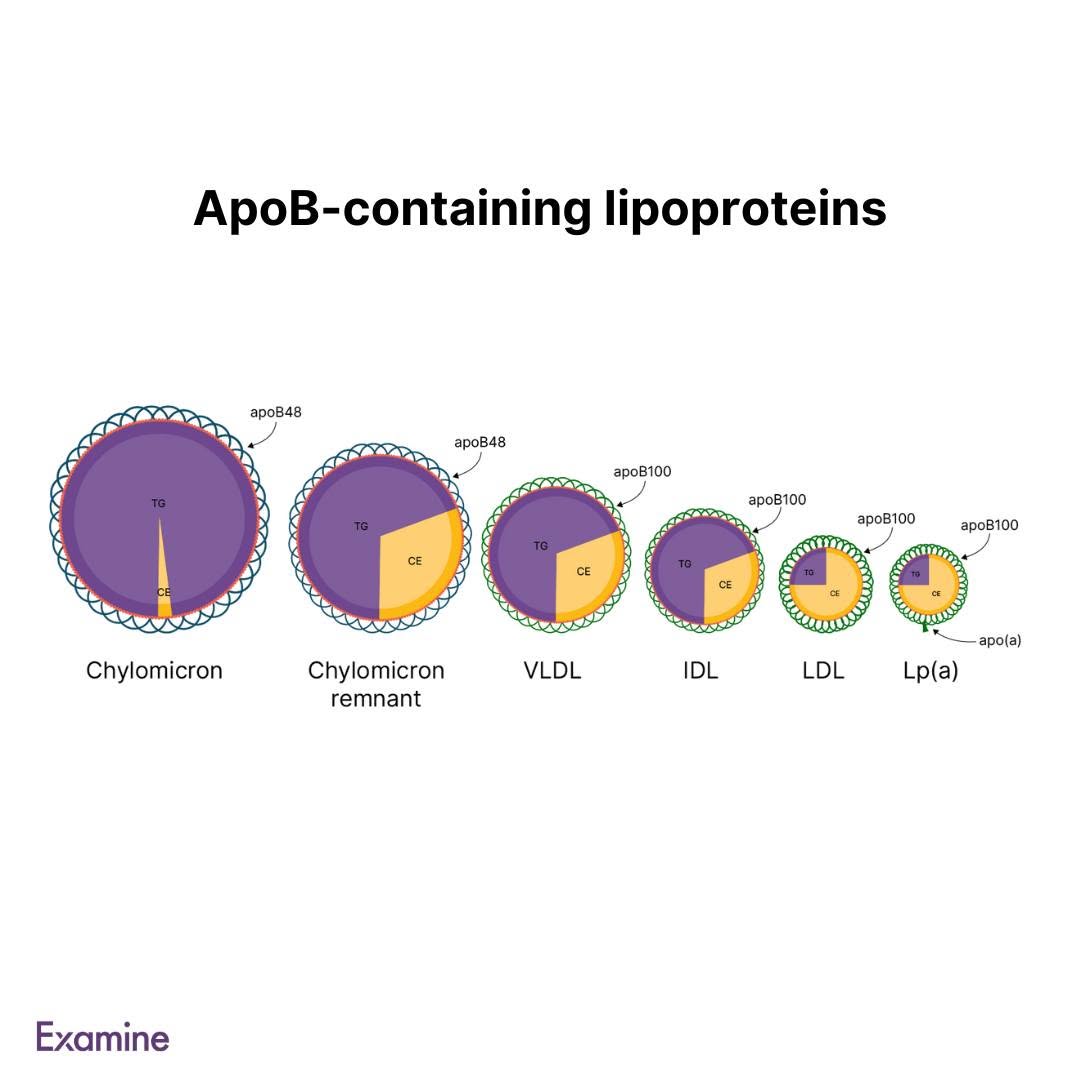
Full fat yogurt lowers ApoB (and LDL), while butter raises it.
This randomized crossover study compared full fat yogurt to low fat yogurt with butter mixed in. The idea was to match the total saturated fat in both.
For 4 weeks, participants consumed either 1.5-2 servings of full fat yogurt, or 1.5-2 servings of low fat yogurt with 10-15 grams of butter. Then there was a washout period, and they consumed the opposite for the next 4 weeks (crossover design).
The result was that the low fat yogurt with butter increased ApoB considerably more than the full fat yogurt, even though the amount of saturated fat in both were the same. In fact, the full fat yogurt lowered ApoB.
After 4 weeks, the low fat yogurt and butter increased ApoB by 10 mg/dL, while the full fat yogurt actually decreased it by 4 mg/dL.
The study demonstrated why:
“The varying effects of dairy fat on blood lipids are due to differences in the content of milk fat globule membrane (MFGM). Dairy products higher in MFGM (like full-fat yogurt) seem to affect blood lipids less than dairy products low in MFGM (like butter).”
This may explain, in part, why the epidemiology on yogurt is so much better than other dairy products.
The Milk Fat Globule Membrane (MFGM) is a complex layer surrounding the fat droplets in milk. It remains intact in yogurt but is physically broken and lost during the churning process to make butter.
#yogurtHD #apobHD #dairyHD #butterHD #saturatedfatHD #mfgmHD