Michael "Mike" Albert, MD:
KETO-CTA: A Teachable Moment in Scientific Transparency
- - -
- What happens when a highly publicized study FAILS to report its primary outcome?*
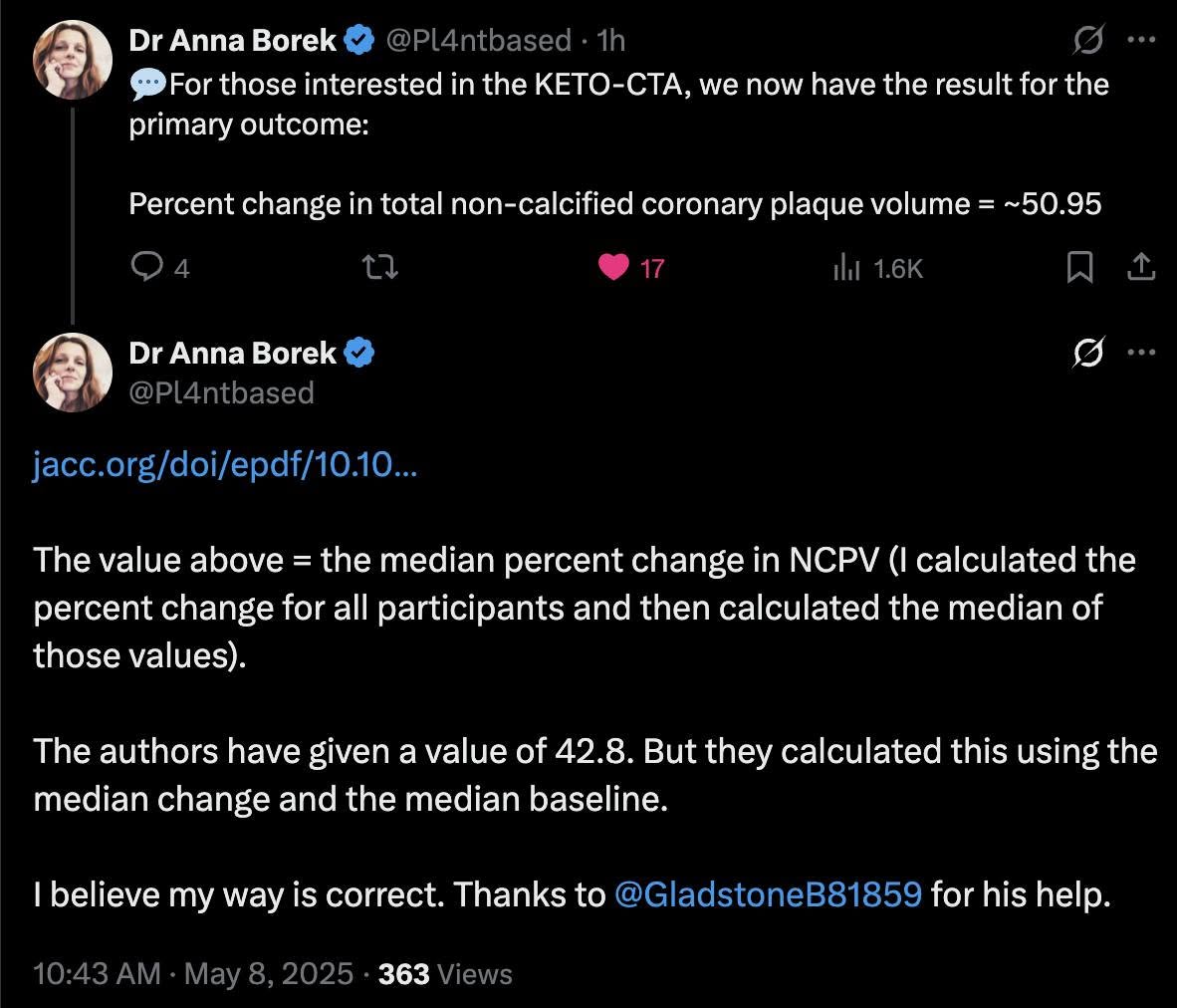
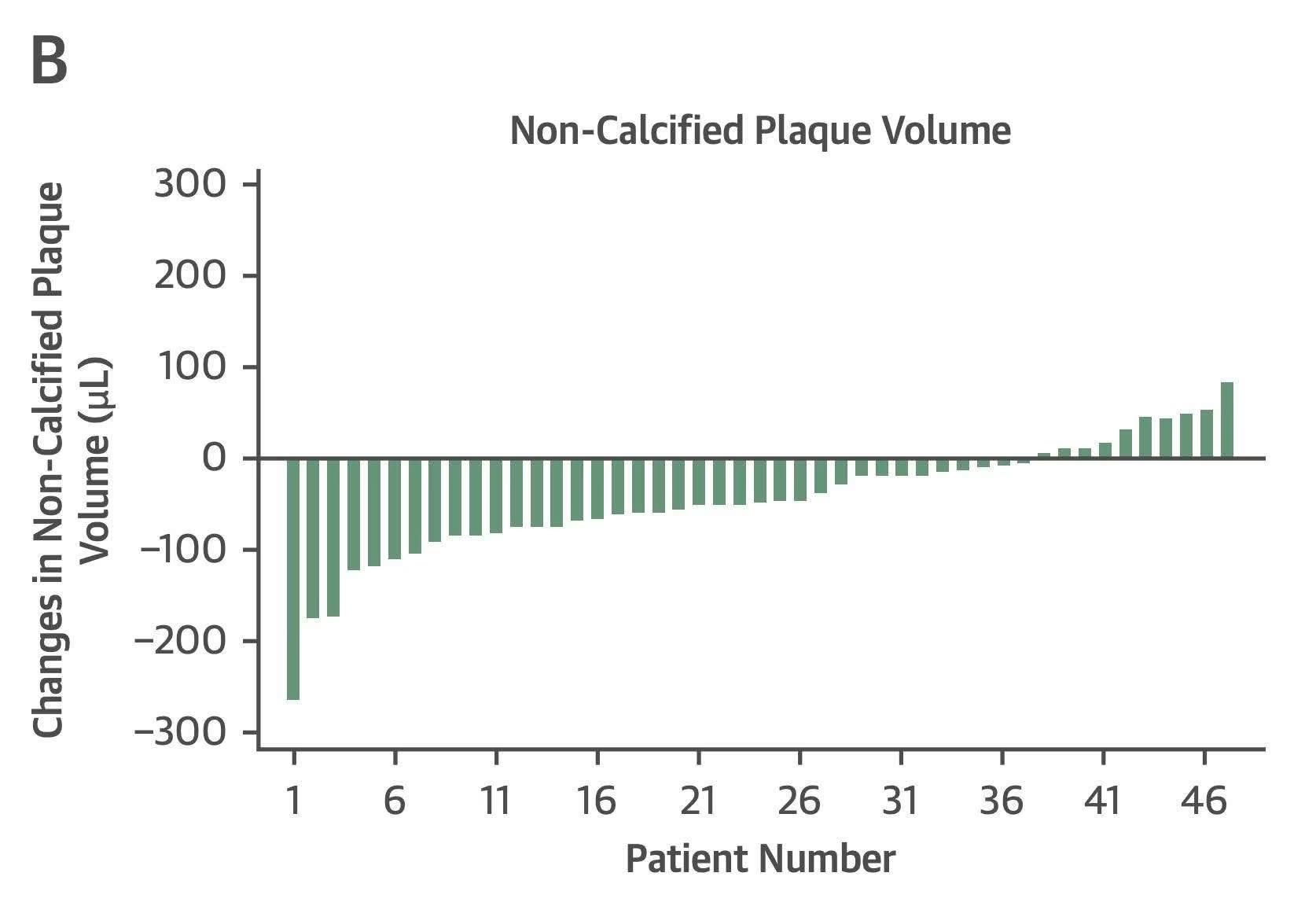
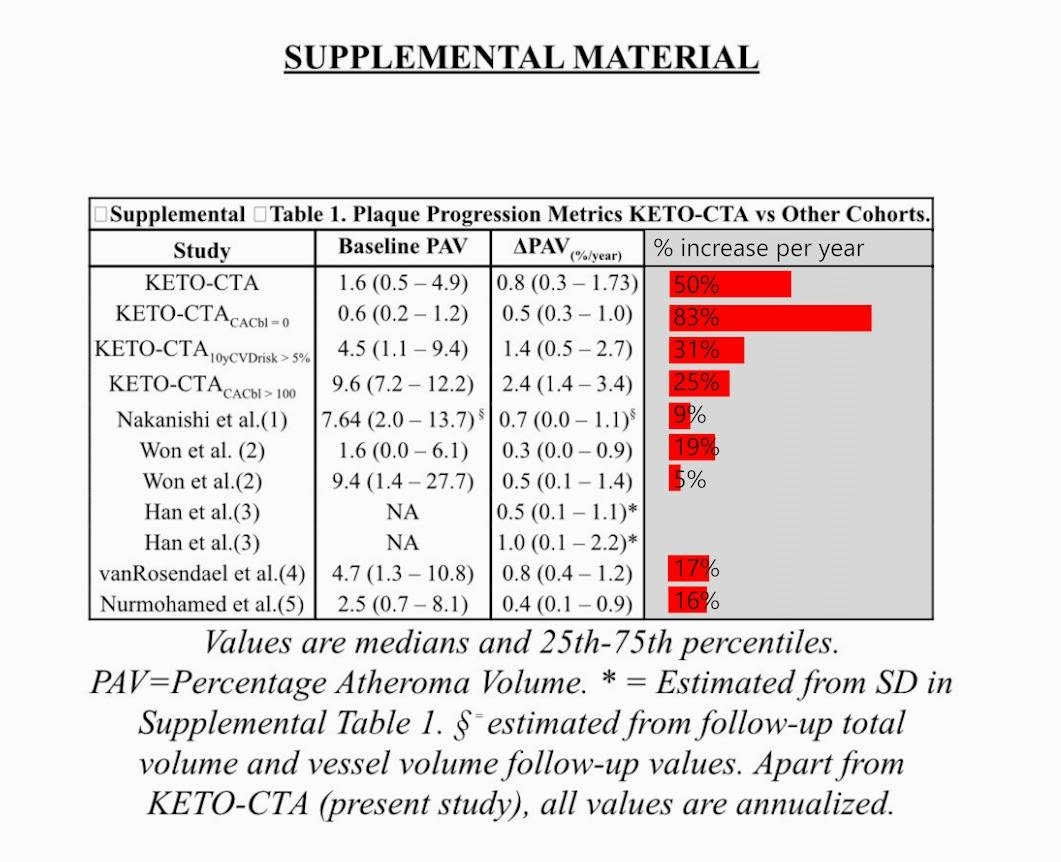
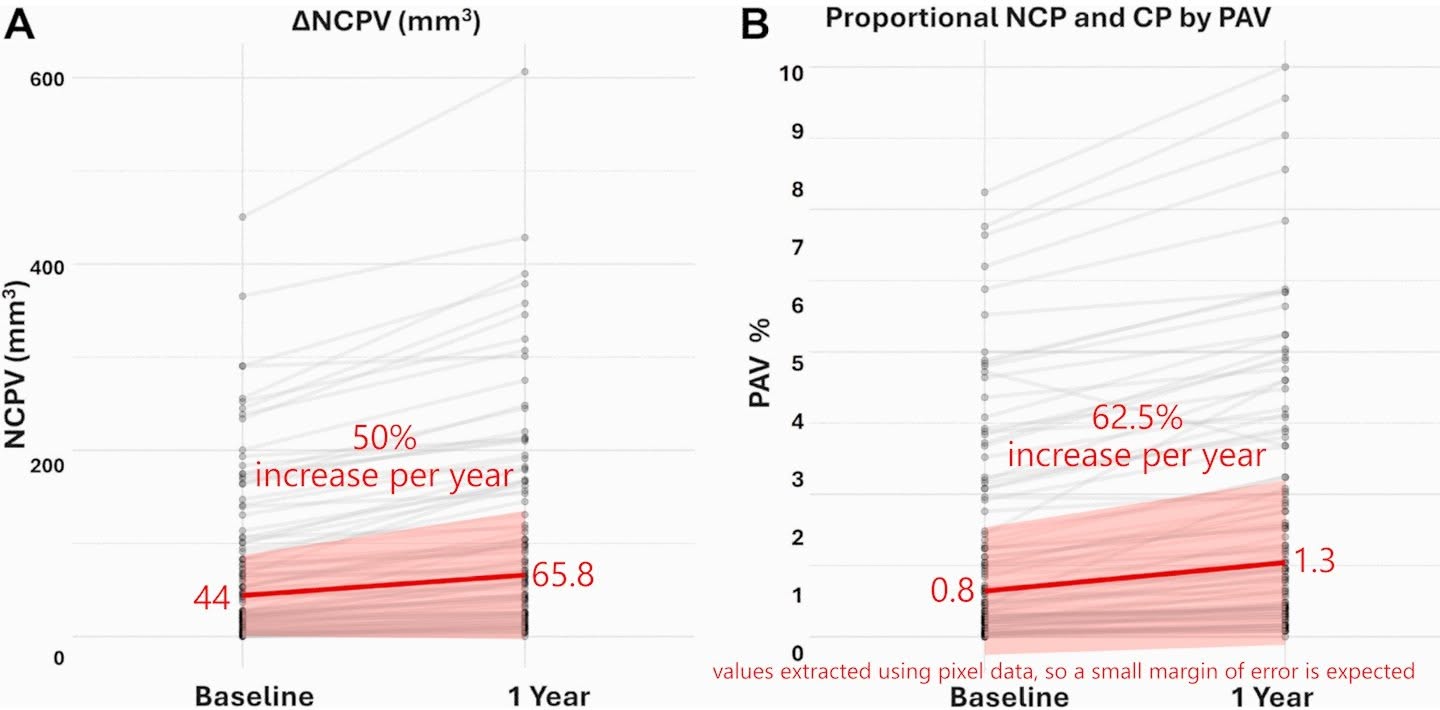
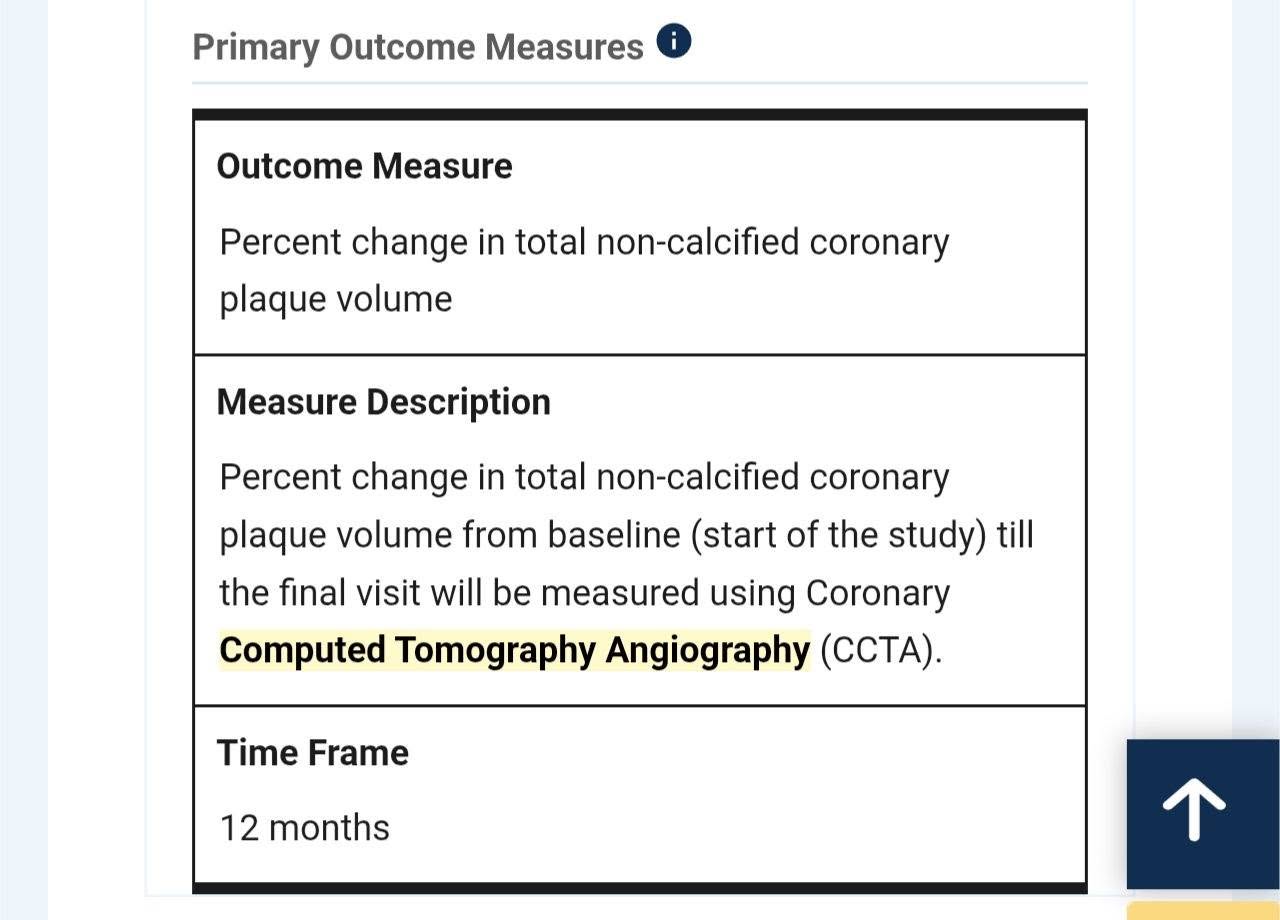
The KETO-CTA study, designed to evaluate the impact of diet-induced hypercholesterolemia on coronary plaque progression, has sparked interest—and concern. Despite preregistering % change in non-calcified plaque volume (ΔNCPV) as the primary endpoint (see image below), the investigators did not report this outcome directly in the manuscript. Instead, results appeared later...in a social media meme.
Why it matters:
Non-calcified plaque progression is not a trivial metric—it’s the most relevant measure of early atherosclerotic risk. In KETO-CTA, ΔNCPV was +18.8 mm³ in one year (according to the lead investigator--see below), a rate typically associated with much higher-risk cohorts (e.g., familial hypercholesterolemia or diabetes). This was a study of supposedly "low-risk" individuals.
Additional limitations include:
Short follow-up (1 year): Too brief to reliably detect meaningful progression in low-risk populations. Most longitudinal plaque imaging studies span 3–6 years.
Lack of control group: No comparator arm to contextualize imaging findings or isolate effects of diet-induced hypercholesterolemia.
Historical controls misapplied: Cross-study comparisons without accounting for differences in baseline risk, imaging protocols, or statistical methods.
This isn’t just about one study.
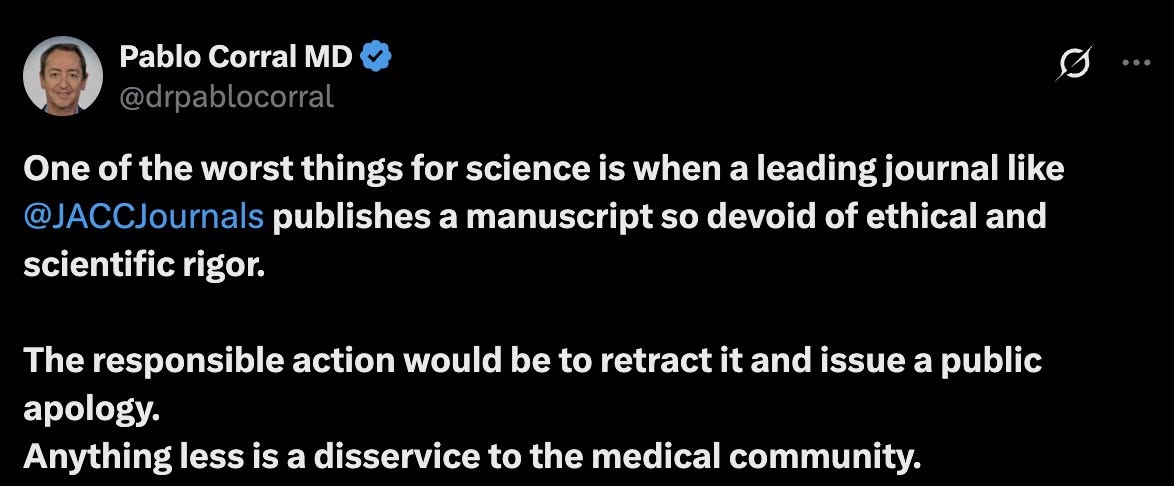
When primary outcomes vanish from manuscripts, it erodes trust. When clinical implications are downplayed, we risk misleading patients. The duty to report results transparently isn't optional—it’s foundational to scientific integrity.
Let’s be clear: ketogenic diets may offer benefits in select cases. But studies evaluating their cardiometabolic effects must be held to the same rigorous standards applied to all clinical research. In this case, the investigators appear to have fallen short—and possibly engaged in selective or misleading reporting to obscure unfavorable outcomes.
We need better, not louder. We need data, not dodges. Most importantly, we need to treat scientific integrity as non-negotiable.
Original:
Post on X · Michael Albert, MDMichael Albert, MD on X🚨 KETO-CTA: A Teachable Moment in Scientific Transparency - - - What happens when a highly publicized study FAILS to report its primary outcome? The KETO-CTA study, designed to evaluate the impact of diet-induced hypercholesterolemia on coronary plaque progression, has sparked…x.com