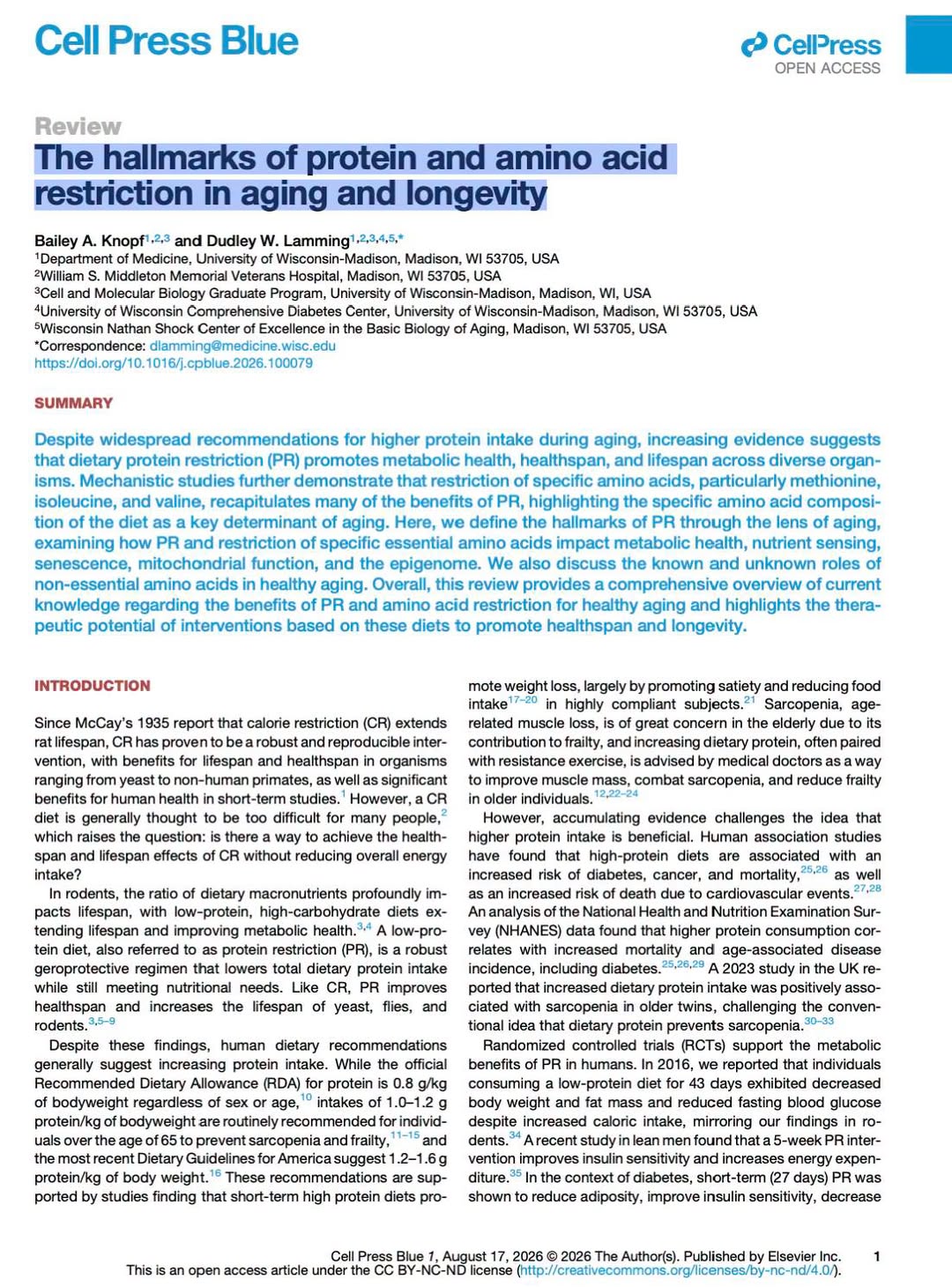
For those of you who put a lot of weight on lifespan studies in mice:
Alcohol (light to moderate amounts) extends lifespan in mice, in multiple studies. It works in other animal models, as well.
PaperScienceDirect articlesciencedirect.comThis is not surprising, given that it is a potent inhibitor of mTOR and an activator of FOXO3. These are pathways that are known to increase lifespan in animals.
Quoted:
“Ethanol interacts with numerous genetic targets that are already associated with aging (such as mitigation of the mechanistic target of rapamycin [mTOR] and activation of FOXO3A), and its dose-dependent lifespan extension depends on still poorly understood connections to these pathways. This review focuses on ethanol's relationship to aging and lifespan in multiple animal models, and it demonstrates how understanding the complicated role of this ubiquitous chemical could be vital in order to apply our knowledge of mechanisms mediating the aging process to the human population.”
Obviously mice are not humans, so take this all with a huge grain of salt.
The point is that there is biological plausibility for possible benefits in low doses, even if it is unproven in humans. It is not just as simple as saying that any dose of alcohol must be intrinsically harmful. That is a naive oversimplification. The biologal effects of low-dose alcohol are a lot more complicated than that.