Six powerful lines of scientific evidence converge on the same conclusion:
Favoring plant protein from whole foods over less healthy sources of animal protein, like red and processed meat, will likely extend your lifespan.
ageproof.orgThe Question of Protein – Ageproofageproof.orgThis article is written by our group member Mert Erogul MD: Mert Erogul, MD | Maimonides Health (Maimonides Health).
Cc: Trem Erogul
Quoted:
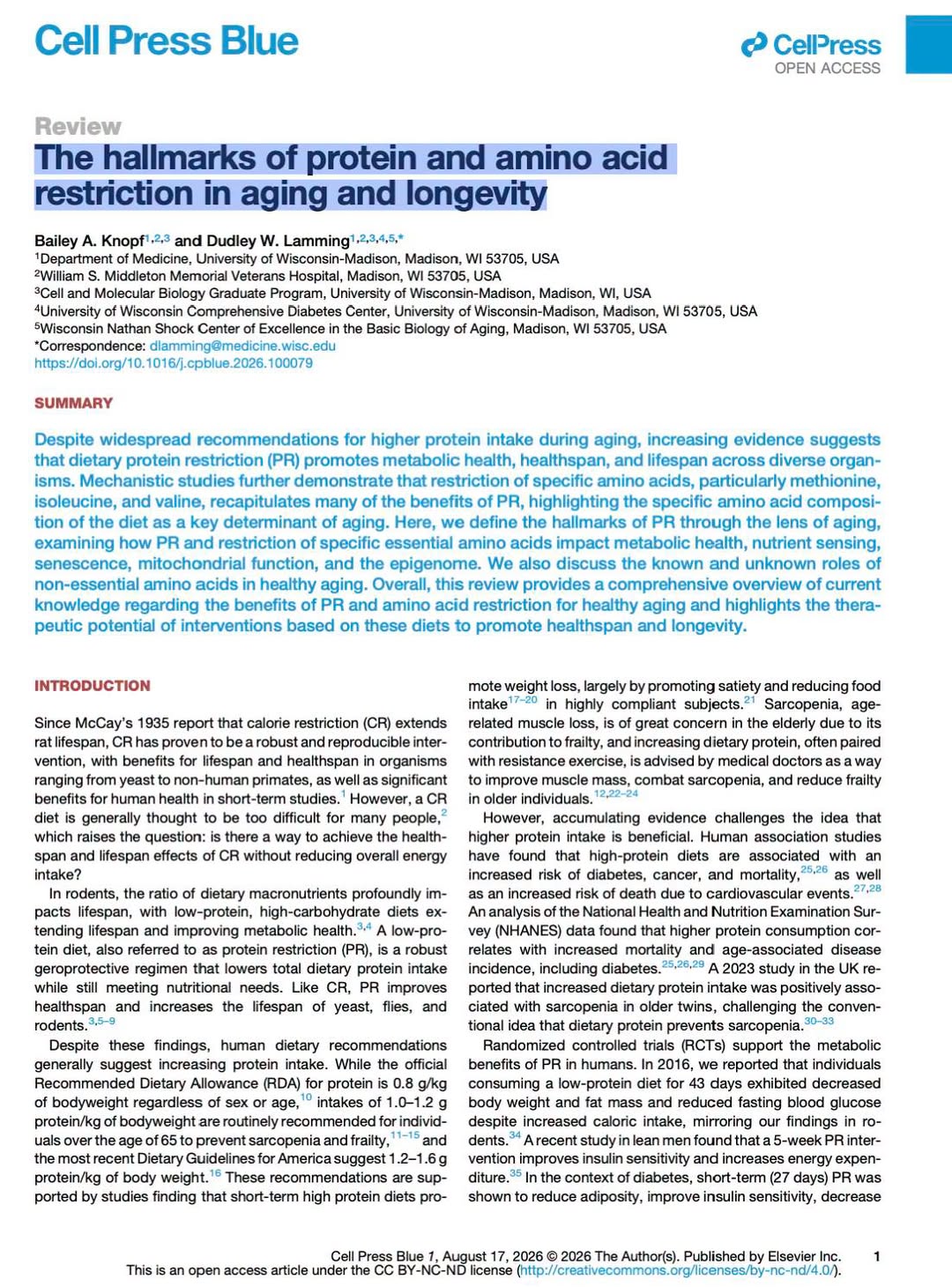
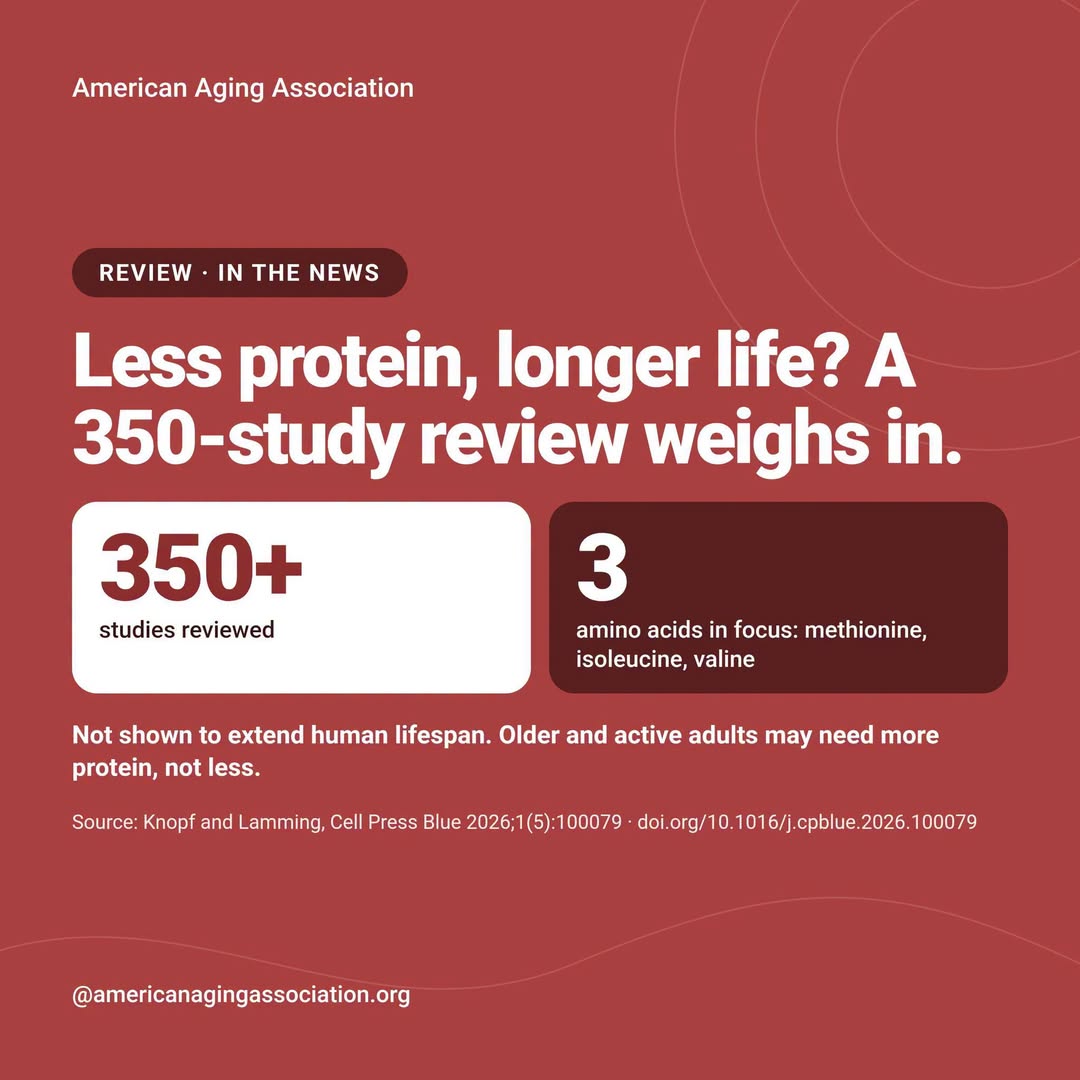
Six lines of evidence now converge. The genetics and pharmacology establish that growth signaling is causally involved in aging. The biomarker data show IGF-1 tracking epithelial cancers [prostate, breast, colorectal, etc.] along a U-shaped mortality curve. The rodent dietary experiments show that lowering protein reproducibly extends life, mediated substantially through FGF21 and mTORC1 rather than IGF-1. The amino acid decomposition shows the active ingredients are methionine, isoleucine, and valine. Not leucine, and not total protein as such. Short-term human trials show that protein and amino acid restriction improve metabolic surrogates within weeks. And human epidemiology shows that source is more important than amount, with plant protein favored and total protein, if anything, protective.
The reconciliation is that both literatures are describing composition. In the mice it is methionine, isoleucine, and valine. In the humans it is animal protein, red and processed meat, and the dietary pattern that travels with them.
Those are largely the same finding wearing different clothes, because the foods richest in methionine and BCAAs [particularly isoleucine & valine] are exactly the animal based foods that cohort studies have been flagging for thirty years.
What neither literature supports is eating less total protein while leaving the amino acid profile unchanged. That costs you muscle and buys you very little.
What this implies in practice:
- Change the composition before you change the quantity. Plant protein, minimal red and especially processed meat. This is the intervention with the most consistent mortality evidence behind it, and it is now the move with the most coherent mechanism behind it too. (There are other reasons to avoid beef, including bovine leukemia virus and the climate impact of the cattle industry).
If you’re supplementing with plant protein powder, make sure you’re not overdosing on heavy metals.
- Keep total protein adequate rather than maximal: roughly 1.0–1.6 g/kg/day depending on activity. Understand that the top of the range is to support training. Nothing in the literature suggests that eating more protein than you need extends life.
- Treat the protein-fortification of everything with suspicion. It is a marketing phenomenon riding on an evidence base that does not exist.
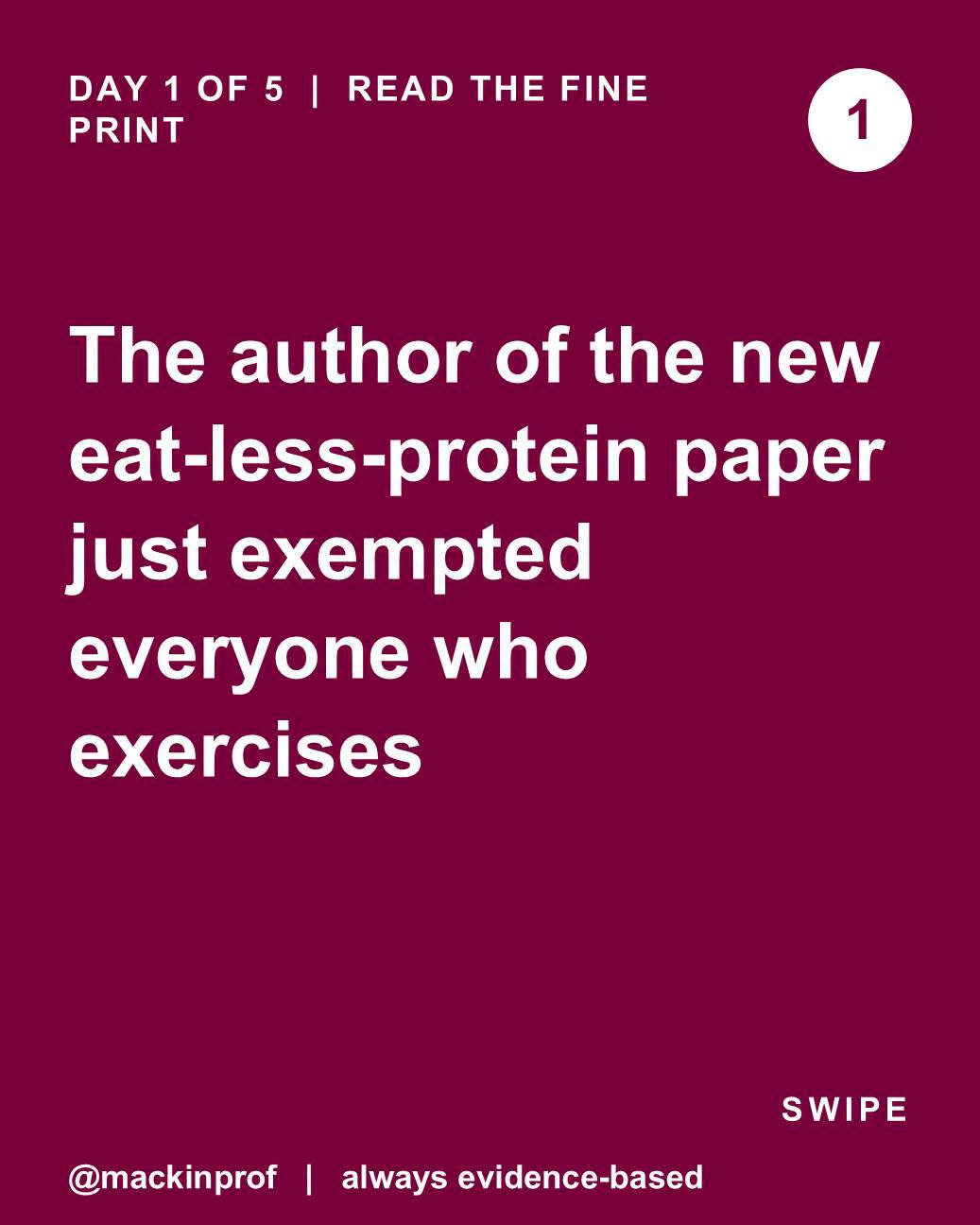
- Train against resistance. This is the least ambiguous recommendation in the whole post. Exercise lets you spend the anabolic signal building useful tissue instead of leaving mTORC1 idling, and it appears to let you hold muscle at a lower protein intake.
- Be genuinely cautious with isolated BCAA and whey supplementation beyond what you need to build the muscle you want, particularly if you are already insulin-resistant. Isoleucine and valine now have direct experimental anti-lifespan data behind them.
- At all costs avoid anabolic and androgenic steroids.
- If you are pregnant, growing, ill, injured, frail, or already under-eating, none of the restriction argument applies to you. Protein deficit is the danger.
- After roughly 65–70, or if you are in a catbolic state, or if you are recovering from illness, or in anyone showing early sarcopenia, I would still err on the side of protein albeit with noticeably less confidence previously. In all cases, a stronger preference for plant sources and resistance training as the first line rather than protein volume.
#proteinHD #proteinsummaryHD #isoleucineHD #valineHD #methionineHD #dudleylammingHD #fgf21HD #mtorHD #igf1HD #agingHD #longevityHD #plantproteinHD #animalproteinHD #merterogulHD