The Body's Superpower: How Exercise Protects Your Brain
We all know that regular exercise is good for building stronger muscles and a healthier heart. But what if your workout was also a powerful workout for your brain, protecting it from diseases like Alzheimer's and Parkinson's?
PaperMDPI articlemdpi.com
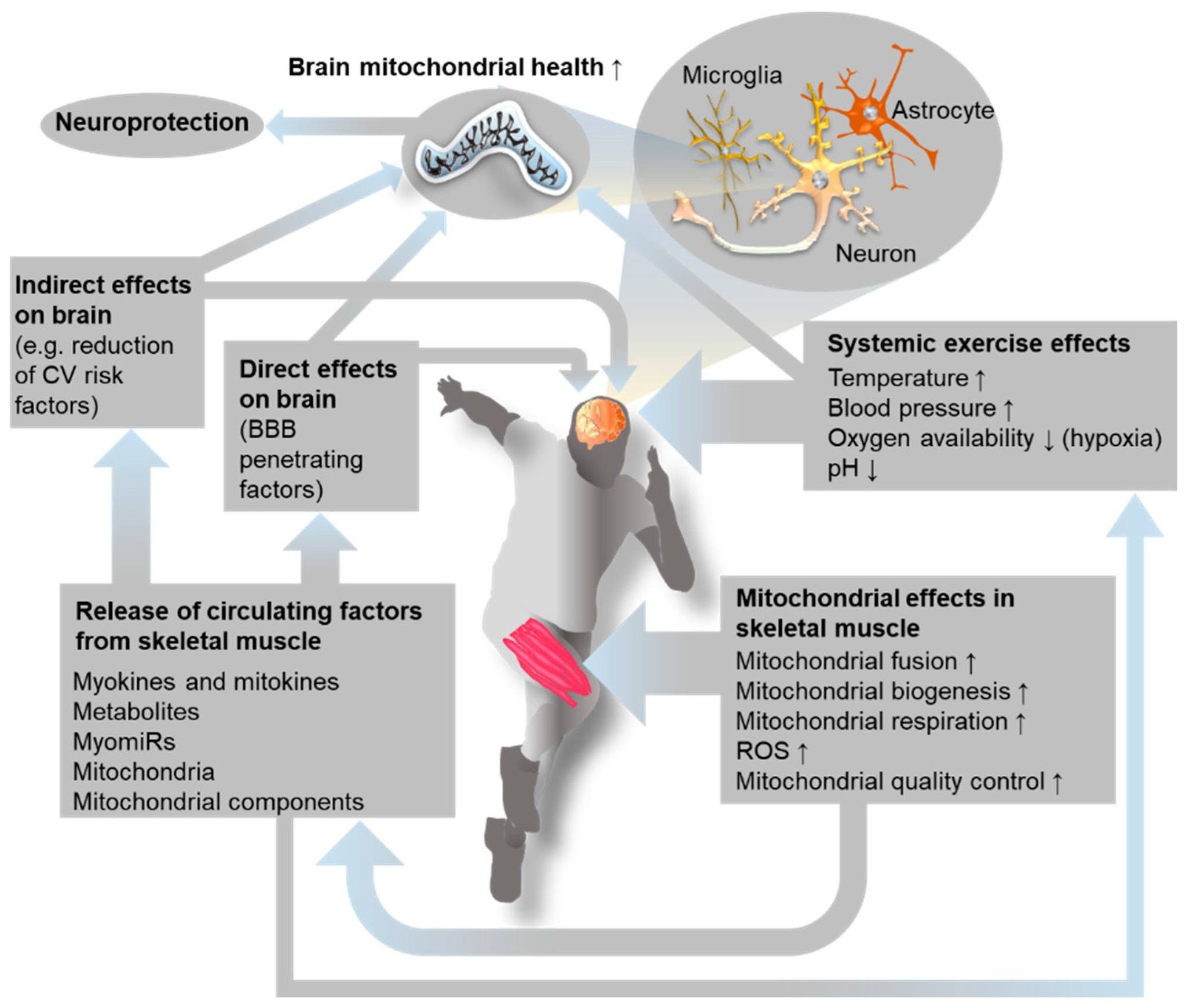
Scientists are beginning to understand this incredible connection, often called the "muscle-brain axis." Think of it as a communication highway where your muscles send vital signals to your brain every time you exercise.
The key players in this process are mitochondria—tiny power plants inside your cells that create energy. Exercise supercharges the mitochondria in your muscles, making them more efficient. But the benefits don't stop there.
This new research suggests that these super-powered muscle mitochondria act as a central command center, sending out messages to the brain. They do this in a few ways:
- Releasing "Text Messages" (Myokines): Your muscles release special molecules called myokines into your bloodstream. These molecules, which depend on healthy mitochondria to be released, travel to your brain and promote its health, acting like beneficial text messages.
- Sending Whole "Care Packages" (Mitochondrial Transfer): even a possibility that muscles might be able to send entire mitochondria themselves directly to the brain, like sending a fresh batch of batteries to recharge its cells.
The bottom line is that by improving your muscle mitochondria through exercise, you are actively helping to safeguard your brain. Different types of exercise—from a brisk walk to weight training—can tune these mitochondria in unique ways, all contributing to building a more resilient brain.
While there's still more to learn about this amazing internal communication system, one thing is clear: exercise is one of the most powerful tools we have to fight neurodegenerative diseases. So the next time you go for a run or a bike ride, remember—you're not just training your body; you're sending vital support to your brain.
image: University of Laussane
Exercise-induced benefits on skeletal muscle mitochondria. Regular moderate exercise promotes the indicated mitochondrial functions. ROS: reactive oxygen species; ATP: adenosine triphosphate.
#exercise #mitochondria #Neuroprotection #brainfitness