Diet & Aging
It is becoming increasingly clear that diet is capable of fundamentally slowing down the aging process itself.
This is why healthy eating doesn’t just lower the risk for one disease, like heart disease for example. Instead, it seems to lower the risk for many age-related diseases— all at the same time.
Recent developments in the field of geroscience are now making it possible to measure the rate at which people are actually aging. For the first time, we can actually measure the effect that diet has on aging.
This recent review article (in the Nature journal npj Aging) discusses what we currently know about diet and aging.
The full journal paper can be found here:
Paper · npj Aging · 2025Modulating biological aging with food-derived signals: a systems and precision nutrition perspectiveLifespan extension has not prevented age-related decline. We propose that diet acts as a molecular modulator of aging, influencing inflammation, the microbiome, and systemic resilience. Biological age markers and AI-powered multi-omics reveal actionable dietary targets, including food-derived signals and Nutrition Dark Matter. We highlight precision nutrition and the EIT Food Healthy Aging Think & Do Tank as…nature.comPerhaps unsurprisingly, the two dietary patterns that have thus far been shown to slow aging the most— according to these new geroscience metrics— are the traditional Mediterranean diet and DASH diet.
Quoted from the article:
“Diet doesn't just fuel the body, it sends molecular signals that can slow down or speed up biological aging, according to a new perspective in npj Aging. The authors explain that biological age, a measure of functional health, can diverge sharply from chronological age and that targeted nutritional and lifestyle choices can bend the trajectory toward healthier aging.”
“Nutrition is one of the strongest levers we have to influence the rate of biological aging and resilience against chronic disease," says Professor Carsten Carlberg of the University of Eastern Finland. "Our goal is to move from 'one-size-fits-all' advice to targeted dietary strategies that measurably shift biological age."
Summing up recent research, the authors propose that lifestyle choices like diet, physical activity, sleep and social engagement can bend the aging curve—enabling optimal aging. People aging optimally maintain a biological age younger than their chronological age, while unhealthy habits accelerate aging and heighten disease risk.
Biological age can be tracked using aging clocks—computational biomarker models based on epigenetic, proteomic or microbiome data. The article compares the applicability of different aging clocks in healthy aging research. For example, risk-predictive clocks like GrimAge can help identify and monitor interventions to slow aging.
Research has shown that long-term adherence to plant-rich healthy eating patterns such as the Mediterranean diet and the AHEI and DASH diets can up to double the odds of aging healthily, preserving cognitive, physical and mental function into older age.
"Think of this as precision geroprevention," adds Carlberg. "With validated biomarkers and pragmatic policies, we can guide everyday food choices that keep biological age below chronological age for longer."
Quoted from the full journal paper:
Aging is a natural biological process that affects everyone but differently. While it cannot be stopped, increasing evidence suggests it can be modulated, and potentially reversed, through lifestyle and environmental interventions. Among these, nutrition emerges as a major determinant of aging rate and resilience against non-communicable diseases (NCDs).
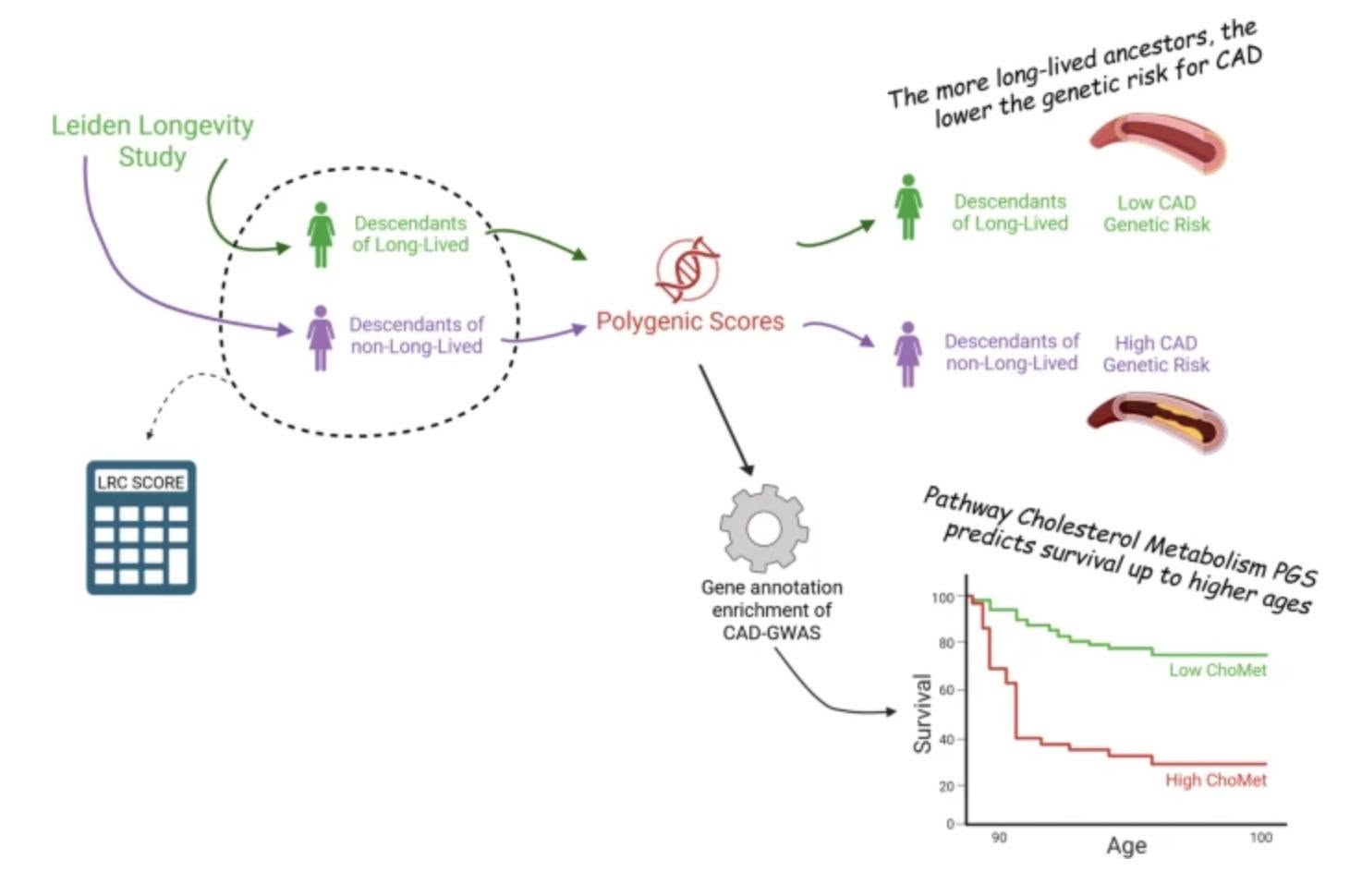
Research on centenarian populations suggests that plant-rich diets, balanced energy intake, and regular physical activity are linked to lower risks of chronic diseases and improved quality of life in older age. These findings are further supported by recent evidence from two major prospective US cohorts (Nurses’ Health Study and Health Professionals Follow-up Study) involving over 100,000 participants followed [prospectively] for 30 years. These findings extend existing knowledge by linking diet adherence to multi-domain aging metrics, including cognitive and metabolic function. The studies showed that higher adherence to several dietary patterns, including AHEI (Alternative Healthy Eating Index), aMED (Alternative Mediterranean Index), DASH (Dietary Approaches to Stop Hypertension), and PHDI (Planetary Health Diet Index), was strongly associated with increased odds of achieving healthy aging. This included preserved cognitive, physical, and mental function, as well as freedom from chronic diseases into older age. Among these, the AHEI showed the strongest association, nearly doubling the odds of healthy aging compared to the lowest adherence quintile.