We now have a huge 21,000 person RCT at Harvard Medical School (COSMOS) that showed high-dose polyphenols cut risk of dying of CVD by 27% over a 3.6 year period:
↪ Cocoa flavanol extract cut CVD death 27% in the 21,000-person COSMOS trial
(Specifically, the flavonols found in cocoa.)
It seems plausible that this whole class of molecules has cardiovascular benefits. Getting as wide a variety of polyphenols as possible from your diet seems to make a lot sense. The foods richest in polyphenols tend to be very heart-healthy anyway. The polyphenols are a bonus.
Foods that pack the most polyphenols:
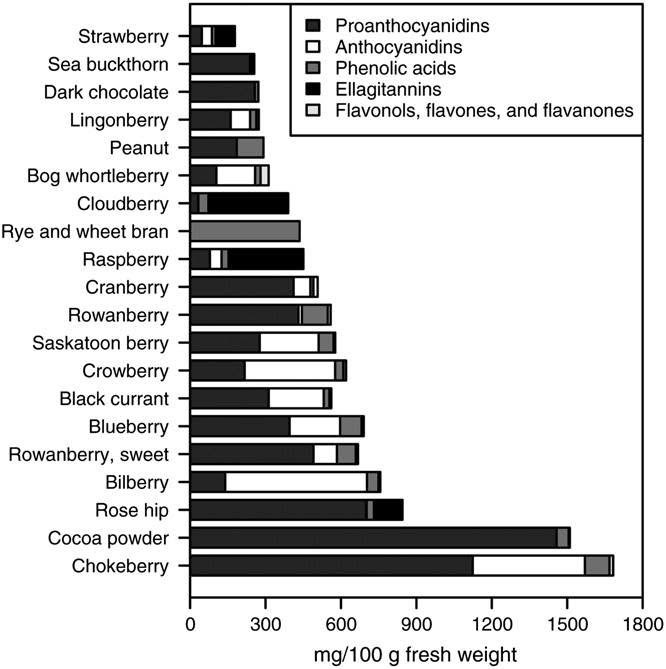
Polyphenols are plant compounds with antioxidant, anti-inflammatory, and gut microbiome–shaping effects. This chart shows how much (mg per 100 g fresh weight) different foods contain, and the breakdown of their types.
🔹 The Heavyweights
Chokeberry and cocoa powder dominate, packing over 1,500 mg/100 g.
Rich mainly in proanthocyanidins, the tannin-like compounds also found in wine and tea.
🟢 Example: A spoonful of cocoa powder has far more polyphenols than most fruits.
🔹 Berry Power
Bilberry, blueberry, black currant, crowberry, cranberry, and raspberry all fall in the 400–800 mg/100 g range.
They bring a mix of anthocyanidins (pigments giving blue/red colors) and flavonols.
🟢 Example: Blueberries are famous for anthocyanins, but black currants actually pack more.
🔹 Special Mentions
Rose hip: high in ellagitannins and phenolic acids.
Dark chocolate: respectable levels (~200–300 mg/100 g), mostly proanthocyanidins.
Rye and wheat bran: a grain source rich in phenolic acids.
🟢 Example: Even whole grains contribute significant polyphenols, not just fruits.
🔹 Lower Range
Strawberries, peanuts, lingonberries, sea buckthorn: lower per 100 g, but still meaningful, especially as they’re often eaten in larger portions.
Not all polyphenols are created equal. Different foods deliver different subclasses. Cocoa powder and chokeberry are off-the-charts, while berries, grains, and even chocolate make strong contributions. Eating a variety ensures you’re covering the full “polyphenol spectrum.”