Functional Foods in Preventing Human Blood Platelet Hyperactivity-Mediated Diseases—An Updated Review (Duttaroy-2024)
The reviewed article emphasizes the significance of natural dietary interventions to address blood platelet hyperactivity, a factor implicated in numerous diseases, including cardiovascular disease (CVD), diabetes, cancer, and inflammatory disorders. Platelet hyperactivity, linked to conditions such as obesity, smoking, diabetes, hypertension, and pollution exposure, contributes to disease processes through mechanisms like inflammation, thrombosis, and immune dysregulation. This review systematically explores functional foods and bioactive compounds as safer alternatives to antiplatelet drugs, which are unsuitable for primary prevention due to bleeding risks and other side effects.
Key Conclusions and Observations
- Platelet Hyperactivity and Disease
- Hyperactive platelets play pivotal roles in both hemostatic (e.g., thrombosis) and non-hemostatic diseases (e.g., immune disorders, cancer metastasis, Alzheimer’s).
- Platelet hyperactivity leads to sustained release of inflammatory factors, angiogenic mediators, and microparticles, exacerbating pathological reactions.
- Conventional antiplatelet drugs like aspirin are effective but unsuitable for broad public use due to bleeding risks and aspirin resistance, observed in 25-30% of individuals (Cai et al., 2016).
- Natural Antiplatelet Strategies
- Natural dietary compounds, such as omega-3 fatty acids, polyphenols, and extracts from tomato (Fruitflow®) and kiwifruit, demonstrate promising antiplatelet activity without the adverse effects of drugs.
- Functional foods target platelet hyperactivity by modulating platelet signaling, aggregation, and adhesion pathways, supporting cardiovascular health and potentially reducing risks of non-CVD diseases.
Bioactive Compounds in Focus
1. Omega-3 Fatty Acids
- Long-chain omega-3 polyunsaturated fatty acids (LCPUFAs), especially EPA (eicosapentaenoic acid) and DHA (docosahexaenoic acid), reduce platelet aggregation by:
- Inhibiting cyclooxygenase (COX-1) activity and the production of thromboxane A2 (TxA2), a pro-aggregatory mediator.
- Enhancing membrane fluidity and increasing nitric oxide (NO) synthesis (Parent et al., 1992; Larson et al., 2011).
- Clinical Studies:
- Fischer et al. (1983): EPA (4g/day) reduced platelet aggregation over 25 days in healthy males.
- Eschen et al. (2004): Supplementation with EPA (3g) and DHA (2.9g) reduced platelet activation markers like P-selectin in 60 healthy adults over 12 weeks.
- Meta-analyses: Omega-3 LCPUFAs consistently demonstrated reduced platelet aggregation and improved cardiovascular outcomes, though results varied based on dose and population heterogeneity (Gao et al., 2013; Aung et al., 2018).
2. Plant Polyphenols
- Polyphenols, found in fruits, vegetables, cocoa, and tea, reduce platelet aggregation by:
- Neutralizing reactive oxygen species (ROS), inhibiting inflammatory pathways, and modulating platelet signaling cascades (Wright et al., 2010).
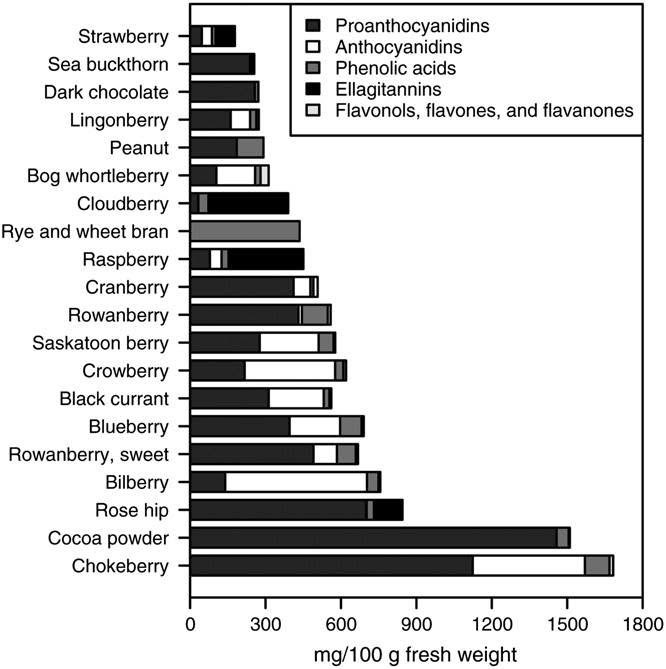
- Examples include quercetin, epicatechin, and anthocyanins, which inhibit platelet adhesion and granule release (Hamed et al., 2008).
- Clinical Studies:
- Rein et al. (2000): Cocoa polyphenols inhibited platelet aggregation and reduced the expression of platelet activation markers in healthy adults.
- Hermann et al. (2006): Dark chocolate (40g) improved endothelial function and reduced platelet adhesion in smokers.
- Heptinstall et al. (2006): Cocoa drinks with ≥600 mg flavonoids significantly inhibited platelet aggregation.
3. Water-Soluble Tomato Extract (Fruitflow®)
- Fruitflow® is a patented, water-soluble tomato extract with bioactive compounds like flavonoids, nucleosides, and phenolic derivatives.
- Mechanisms include inhibition of integrin αIIbβ3 (GPIIb/IIIa), reduction of P-selectin expression, and modulation of platelet signaling pathways (Dutta-Roy et al., 2001).
- Human Trials:
- Dutta-Roy et al. (2004): Fruitflow® consumption reduced platelet aggregation by 25% within 3 hours, with effects lasting up to 18 hours.
- O’Kennedy et al. (2021): Platelet aggregation reduction comparable to 75 mg of aspirin, but with reversible effects, making it suitable for daily consumption.
- Approved by EFSA in 2009 for maintaining healthy blood flow and platelet activity.
4. Kiwifruit Extract
- Kiwifruit contains polyphenols, vitamins, and bioactive compounds that inhibit platelet aggregation and reduce blood pressure (Dutta-Roy et al., 2004).
- Mechanisms include inhibition of thromboxane synthesis and PF4 release.
- Human Trials:
- Dutta-Roy et al. (2004): Two or three kiwifruits daily reduced platelet aggregation and plasma triglycerides in healthy adults.
- Karlsen et al. (2011): Three kiwifruits daily for eight weeks reduced systolic (10 mmHg) and diastolic (9 mmHg) blood pressure in hypertensive smokers.
Key Numerical Results
- Omega-3 LCPUFAs reduced platelet aggregation by ~20-40% across trials.
- Polyphenols in cocoa inhibited platelet aggregation by up to 25-40% with acute consumption.
- Fruitflow® reduced platelet response to ADP and collagen by ~17-25%.
- Kiwifruit reduced platelet aggregation by ~15-18% with two fruits daily and improved blood pressure.
Numerical Results from Referenced Studies:
- Omega-3 Fatty Acids:
- (Fischer et al., 1983): 4 g/day EPA supplementation for 25 days reduced platelet aggregation.
- (Gibney and Bolton-Smith, 1988): 2.25 g EPA + 1.35 g DHA/day for 6 weeks did not significantly affect platelet aggregation at low ADP levels but increased aggregation at higher ADP levels.
- (Li and Steiner, 1991): 3-9 g/day EPA for 3 weeks reduced platelet adhesion.
- (Pirich et al., 1999): 216 mg EPA + 140 mg DHA/day for 6 weeks reduced TxB2 synthesis and increased platelet survival time.
- (Svaneborg et al., 2002): 10 g/day fish oil significantly decreased TxA2 production.
- (Eschen et al., 2004): 3 g EPA + 2.9 g DHA/day for 12 weeks decreased plasma P-selectin levels.
- (Din et al., 2008): 500 g/day mackerel for 4 weeks reduced platelet-monocyte aggregation by ~35%.
- (Larson et al., 2011): 1.86 g EPA + 1.5 g DHA/day for 4 weeks decreased GPIIa/IIIb activation and P-selectin expression.
- (Guillot et al., 2009): 400 and 800 mg/day DHA for 2 weeks reduced platelet reactivity and TxA2 production, but 1600 mg/day reversed this effect.
- Plant Polyphenols:
- (Rein et al., 2000): Cocoa beverage with 18.75 g procyanidin and 897 mg epicatechin inhibited platelet aggregation and suppressed GPIIa/IIIb expression.
- (Heptinstall et al., 2006): Cocoa drinks containing 600 or 900 mg cocoa flavanols significantly inhibited platelet aggregation.
- (Hermann et al., 2006): 40 g dark chocolate improved flow-mediated dilation and decreased platelet adhesion.
- (Hamed et al., 2008): 100 g dark chocolate (70% cocoa; 700 mg flavonoids) for one week decreased GPIIb/IIIa expression.
- (Zhou et al., 2017): Anthocyanin cyanidin-3-glucoside attenuated thrombin-induced platelet activation and ATP secretion.
- Tomato Extract (Fruitflow®):
- Studies have shown a platelet suppression of up to 25% relative to baseline after Fruitflow® consumption.
- (O'Kennedy et al., 2017): A single dose of Fruitflow® provided similar antiplatelet effects as a 75 mg dose of aspirin.
- (Rehman et al., 2023): 4 week Fruitflow supplementation lowered trimethylamine-n-oxide.
- Kiwifruit Extract (KFE):
- (Duttaroy and Jorgensen, 2004): 2-3 kiwifruits daily for 28 days reduced platelet aggregation by 15-18% and lowered plasma triglycerides.
- (Skeaff and Miller, 2008): 1 kiwifruit/day for 4 weeks reduced whole-blood platelet aggregation.
- (Gambert et al., 2013): 3 kiwifruits/day for 8 weeks reduced systolic blood pressure by 10 mmHg, diastolic blood pressure by 9 mmHg, whole-blood aggregation by 15%, and ACE activity by 11%.
- (Duttaroy et al, 2001): KFE at 1.68 mg/ml reduced platelet aggregation and TxB2 synthesis.