A guide to understanding how Omega-3s affect muscle
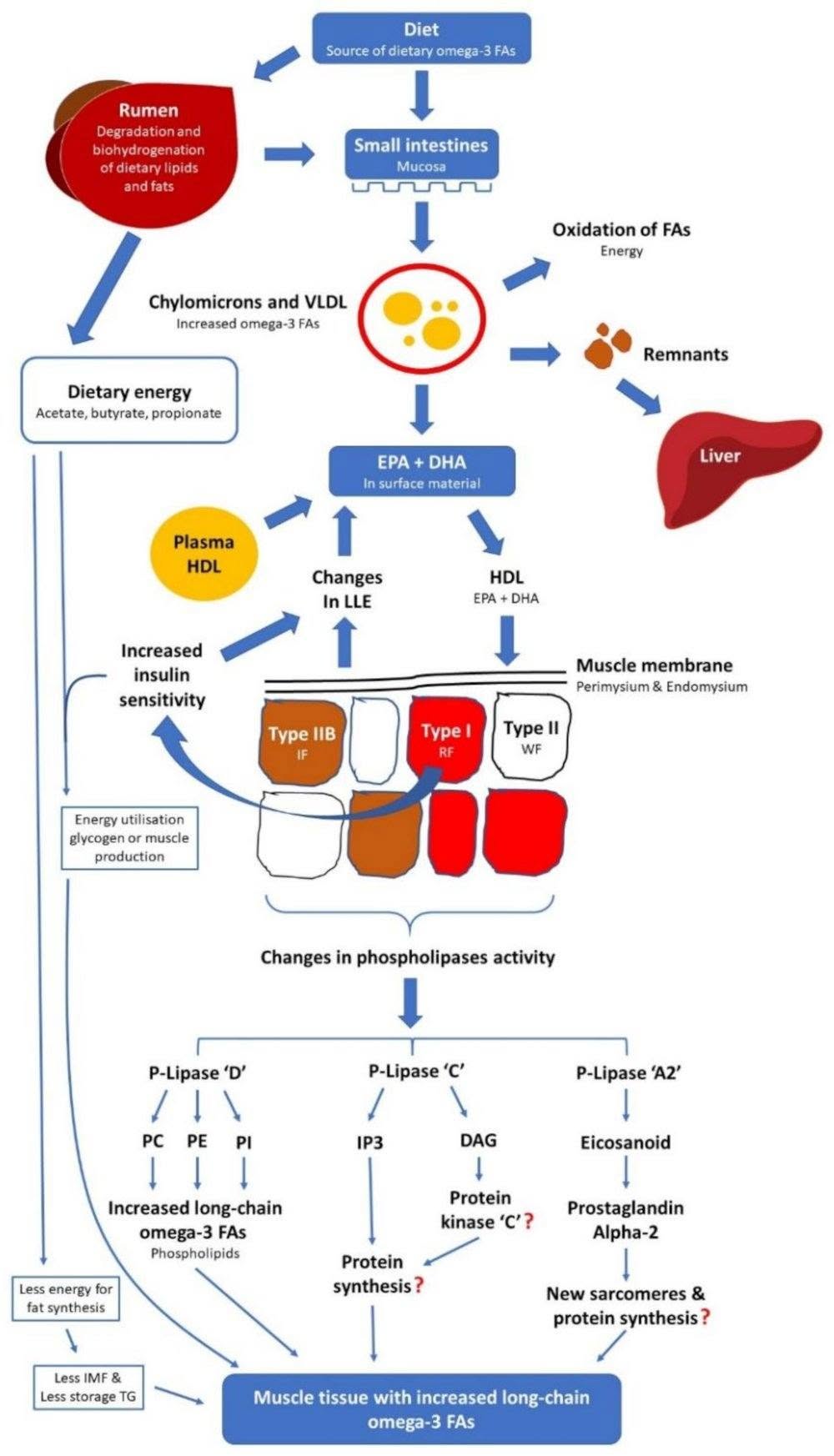
Omega-3 fatty acids (EPA and DHA), found in foods like fish, seeds, and certain oils, don’t just support heart and brain health. They also shape how your muscles use energy and build protein.
1️⃣ Omega-3s Start with Diet
You eat omega-3s in foods or supplements.
They’re absorbed in the small intestine and packaged into fat-carrying particles called chylomicrons and VLDL.
🟢 Example: Eating salmon delivers EPA and DHA into circulation quickly.
2️⃣ Distribution in the Body
These particles circulate in the blood, delivering omega-3s to liver, muscles, and fat tissue.
Some omega-3s are burned for energy, others are stored in cell membranes.
3️⃣ Integration into Muscle Membranes
EPA and DHA are built into muscle cell membranes (perimysium, endomysium).
This changes how membranes behave, making them more flexible and responsive to signals.
🟢 Example: Athletes often supplement omega-3s to improve recovery and performance.
4️⃣ Improved Insulin Sensitivity
With omega-3s in membranes, muscles respond better to insulin.
This means more glucose enters muscles, fueling glycogen storage and reducing fat buildup.
🟢 Example: Omega-3 intake has been linked to better blood sugar control.
5️⃣ Phospholipase Activity (Signaling Enzymes)
Enzymes break down membrane phospholipids into signaling molecules.
These molecules may:
Trigger protein synthesis (muscle growth).
Promote new sarcomeres (structural units of muscle fibers).
Reduce fat storage in muscle.
🟢 Example: This is one way omega-3s may enhance muscle repair after exercise.
6️⃣ Big Picture Outcomes
More long-chain omega-3s in muscle tissue.
Less fat storage in muscle (healthier muscle composition).
Improved energy use and potential benefits to protein synthesis.
Omega-3s integrate into muscle cells, improve insulin sensitivity, and may support recovery and muscle protein synthesis. Eating fish, flax, chia, or supplementing with fish oil helps fuel not just your brain, but your muscles too.