(no text — see the shared post below)
 Neuroscience NewsOver 99% of Heart Attacks Linked to At Least One Known Risk Factor - Neuroscience NewsA massive international study shows that nearly all heart attacks, strokes, and cases of heart failure occur in people with at least one known cardiovascular risk factor.neurosciencenews.com
Cardiovascular disease, which remains the leading cause of death in the U.S. and worldwide is a known risk for ApoE4 carriers. Now a major study in the US and Korea highlights several factors that may be key to reducing that risk.
A massive international study shows that nearly all heart attacks, strokes, and cases of heart failure occur in people with at least one known cardiovascular risk factor. More than 9 million South Korean adults and thousands of U.S. adults were tracked, revealing that over 99% had nonoptimal blood pressure, cholesterol, blood sugar, or tobacco use years before their first event.
Hypertension emerged as the most common contributor, affecting over 93% of patients in both cohorts. The results strongly underscore the need to focus on prevention by controlling these modifiable risks early in life.
The findings were published on September 29 in The Journal of the American College of Cardiology.
“We think the study shows very convincingly that exposure to one or more nonoptimal risk factors before these cardiovascular outcomes is nearly 100%,” said senior author Dr. Philip Greenland, professor of cardiology at Northwestern University Feinberg School of Medicine.
“The goal now is to work harder on finding ways to control these modifiable risk factors rather than to get off track in pursuing other factors that are not easily treatable and not causal.”
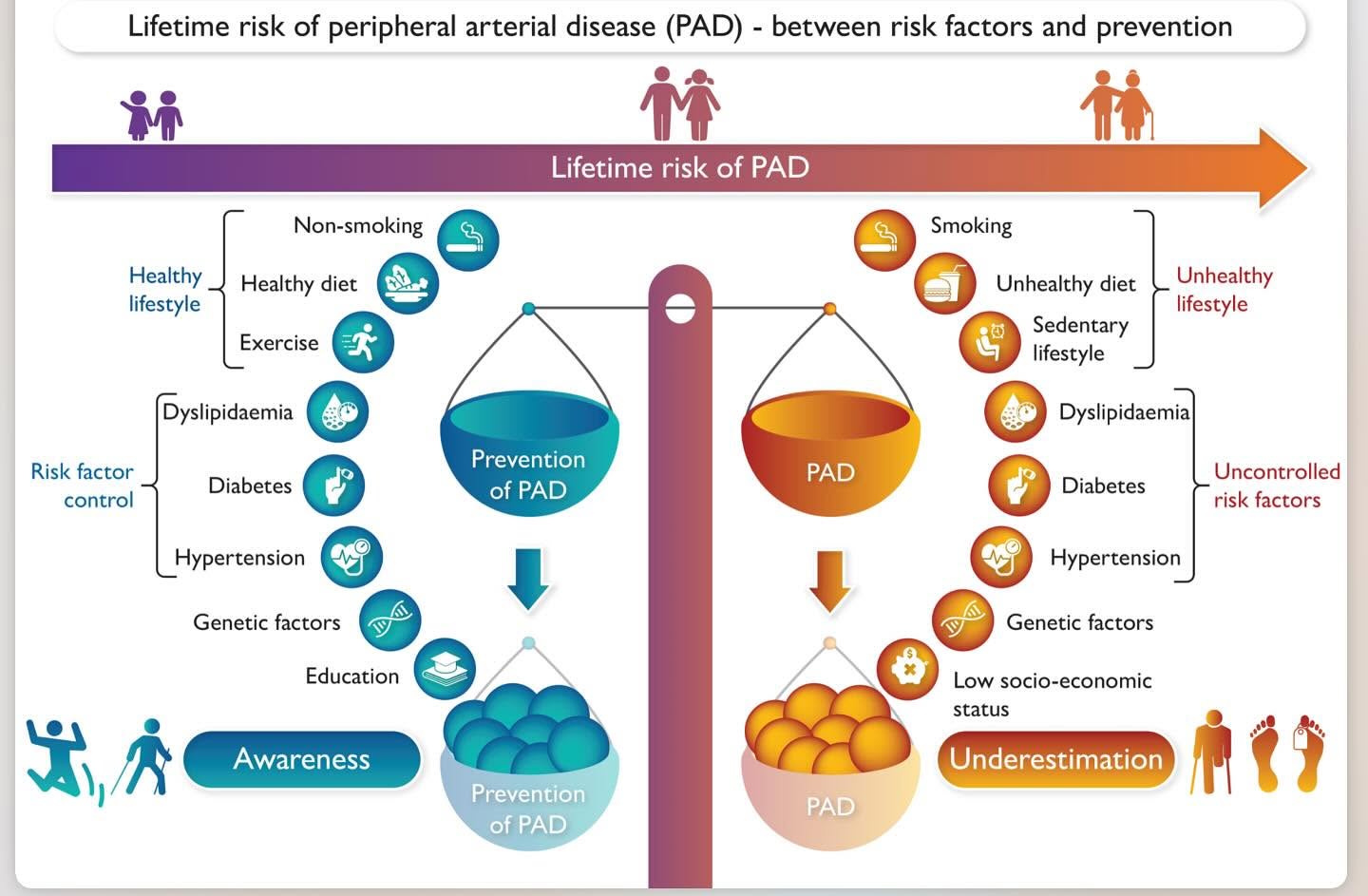
Greenland and his colleagues selected four major cardiovascular risk factors: blood pressure, cholesterol, blood sugar and tobacco use. They used the American Heart Association’s ideal cardiovascular health definitions, which describe non-optimal levels as:
Blood pressure ≥120/80 mm Hg or on treatment
Total cholesterol ≥200 mg/dL or on treatment
Fasting glucose ≥100 mg/dL, diagnosis of diabetes or on treatment
Past or current tobacco use
In a secondary analysis, the team also looked at clinically elevated risk factors, the higher thresholds doctors often use for diagnosis: blood pressure ≥140/90, cholesterol ≥240, glucose ≥126 and current smoking.
The scientists analyzed health data from more than 9.3 million Korean adults and nearly 7,000 U.S. adults followed for up to two decades. Because these cohorts included repeated health screenings, the research team could see what levels of blood pressure, cholesterol, glucose and smoking exposure people had years before their first cardiovascular event.
Across both the Korean and U.S. cohorts, the results were definitive: More than 99% of people who developed coronary heart disease, heart failure or stroke had at least one nonoptimal risk factor before their event. Over 93% had two or more risk factors.
High blood pressure, or hypertension, was the most common culprit, affecting over 95% of patients in South Korea and more than 93% in the U.S.
Even in women under 60 — the group often assumed to be at lowest risk — more than 95% still had at least one nonoptimal factor before heart failure or stroke.
When the researchers raised the bar to clinically elevated levels, the pattern held. At least 90% of patients still had at least one major risk factor before their first cardiac event. The authors noted: "These results not only challenge claims that coronary heart disease events frequently occur without antecedent major risk factors but also demonstrate that other cerebrovascular disease events, including heart failure or stroke, rarely occur in the absence of nonoptimal traditional risk factors, highlighting the importance of prevention efforts."
The study was funded by the National Research Foundation of Korea.