Her case is almost certainly a combination of both forward and reverse causality.
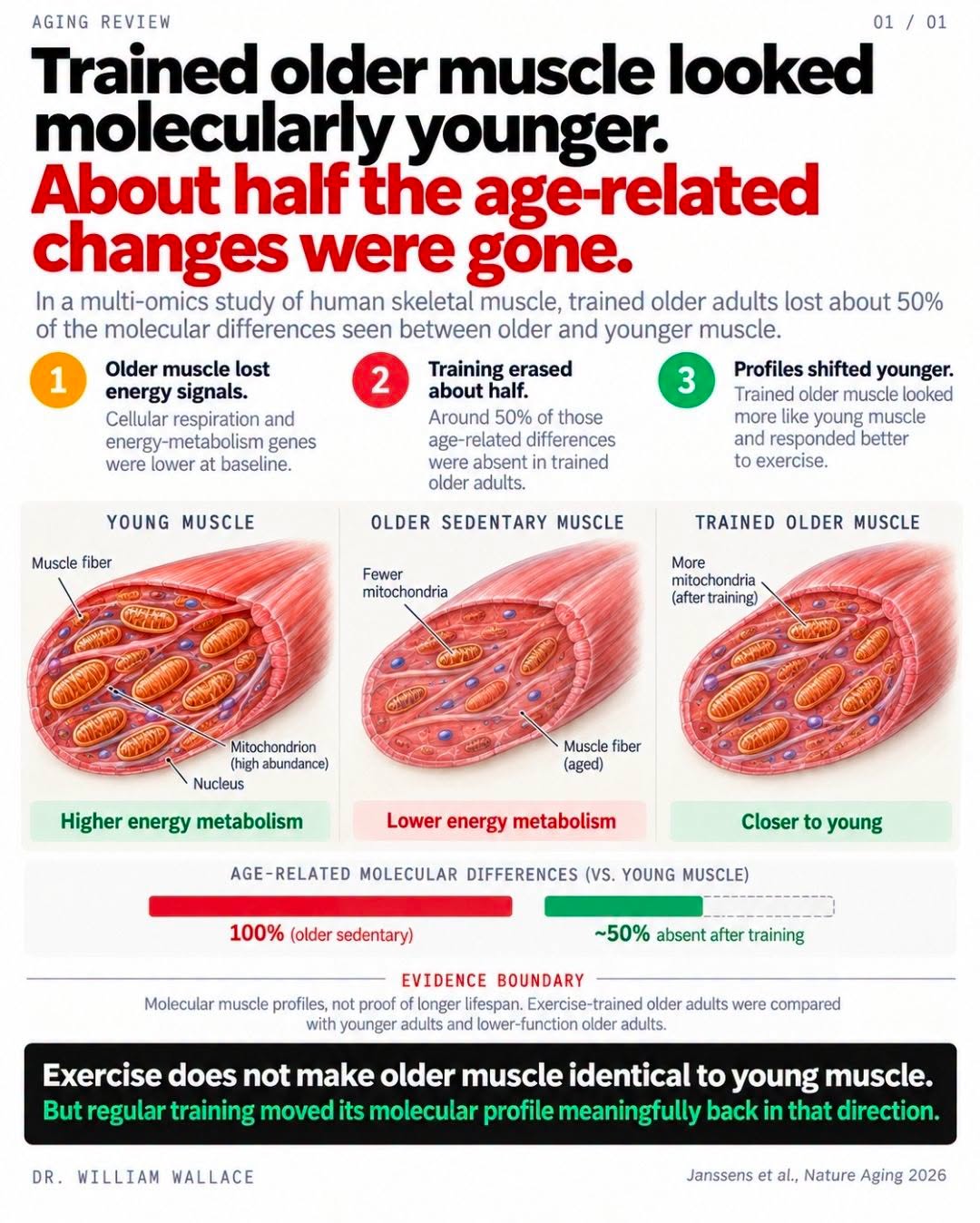
The exercise is a big part of the reason why she is doing so well at 92. This is the forward causality.
But her genetics (and perhaps other aspects of her lifestyle) are likely a major reason why she is capable of exercising so intensely at 92yo. This is the reverse causality.
Sorting out the relative contributions of each of these directions of causality is one if the reasons why they are doing this study.
Unfortunately, many observational studies on exercise involve a large degree of reverse causality, which inflates their results:
↪ Finnish twin study suggests exercise's mortality benefit is partly reverse causality
Studies in people her age also involve a good deal of what statisticians call survivorship bias:
↪ Centenarians' higher LDL is survivorship bias, not evidence that high LDL is protective
↪ Victorian-diet longevity claim is survivorship bias from excluding deaths under age 5
Most people are not aware of this.
I’m glad scientists are now working to sort this out, so we can quantify precisely the true causal effect that exercise has on longevity in humans.
#exerciseHD #reversecausalityHD #survivorshipbiasHD #longevityHD #agingHD