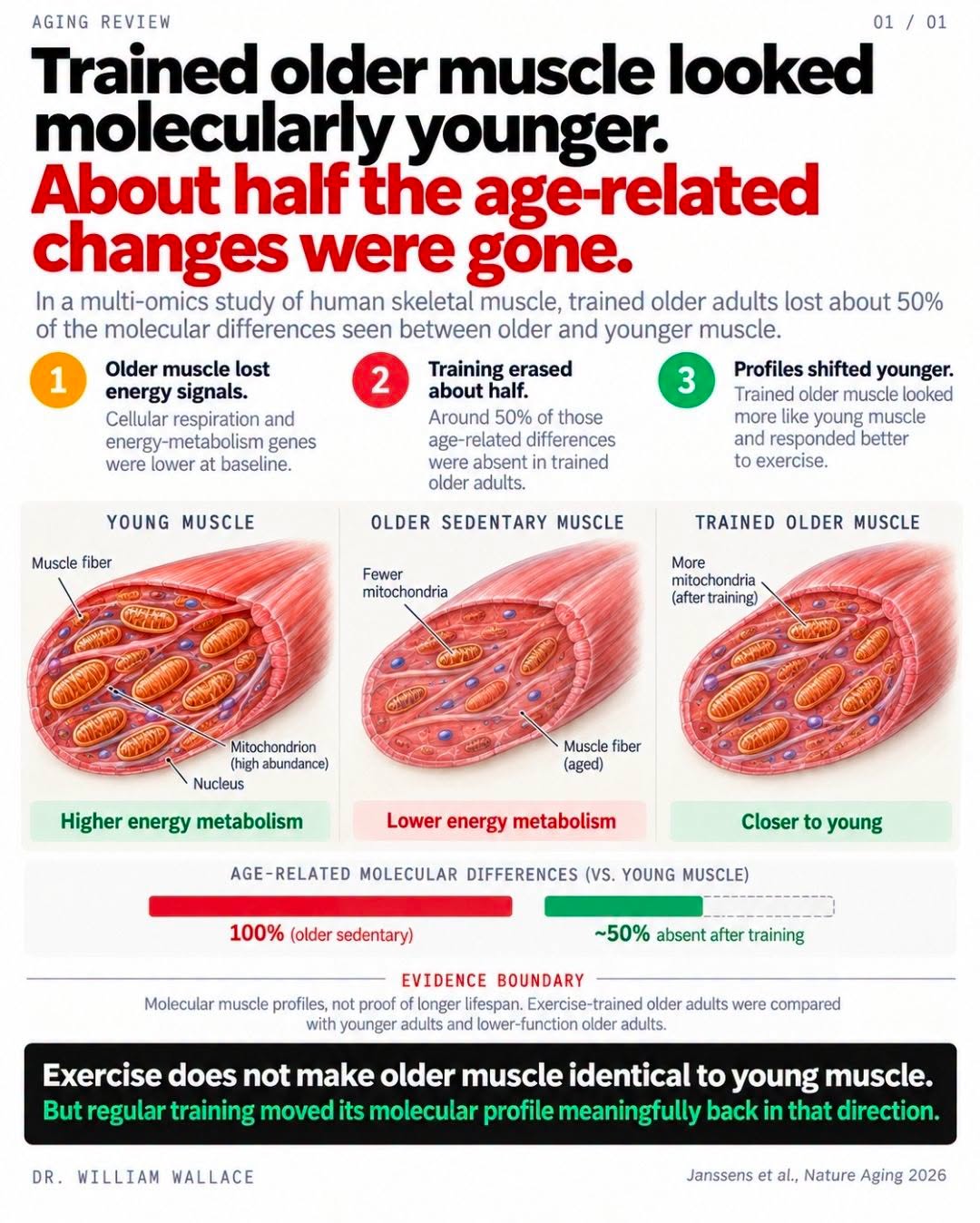
Exercise is good for you. There is no question about that.
But the extent of the benefits for longevity in humans may be hyperbolized.
The recently released results of a very large twin study (22,750 people) strongly hint that much of the human literature on exercise and mortality suffers from some degree of reverse causality. In other words, exercise doesn’t just cause good health, but the reverse is true as well— good health causes exercise. People who are healthier to begin with are much more likely to have the motivation and energy to exercise, explaining a large part of the association between exercise and health. This means that the benefits of exercise may be overstated.
The advantages of large twin studies like this is that they make it much easier to separate out reverse causality.
Quoted:
“Objectives: The association between leisure-time physical activity (LTPA) and a lower risk of mortality is susceptible to bias from multiple sources. We investigated the potential of biological ageing to mediate the association between long-term LTPA and mortality and whether the methods used to account for reverse causality affect the interpretation of this association.”
“Methods: Study participants were twins from the older Finnish Twin Cohort (n=22,750; 18–50 years at baseline). LTPA was assessed using questionnaires in 1975, 1981 and 1990. The mortality follow-up lasted until 2020 and biological ageing was assessed using epigenetic clocks in a subsample (n=1,153) with blood samples taken during the follow-up.”
“Conclusion: Being active may reflect a healthy phenotype instead of causally reducing mortality.”
Paper · medRxiv · 2023The associations of long-term physical activity in adulthood with later biological ageing and all-cause mortality - a prospective twin study.Conclusion: Being active may reflect a healthy phenotype instead of causally reducing mortality.pmc.ncbi.nlm.nih.gov