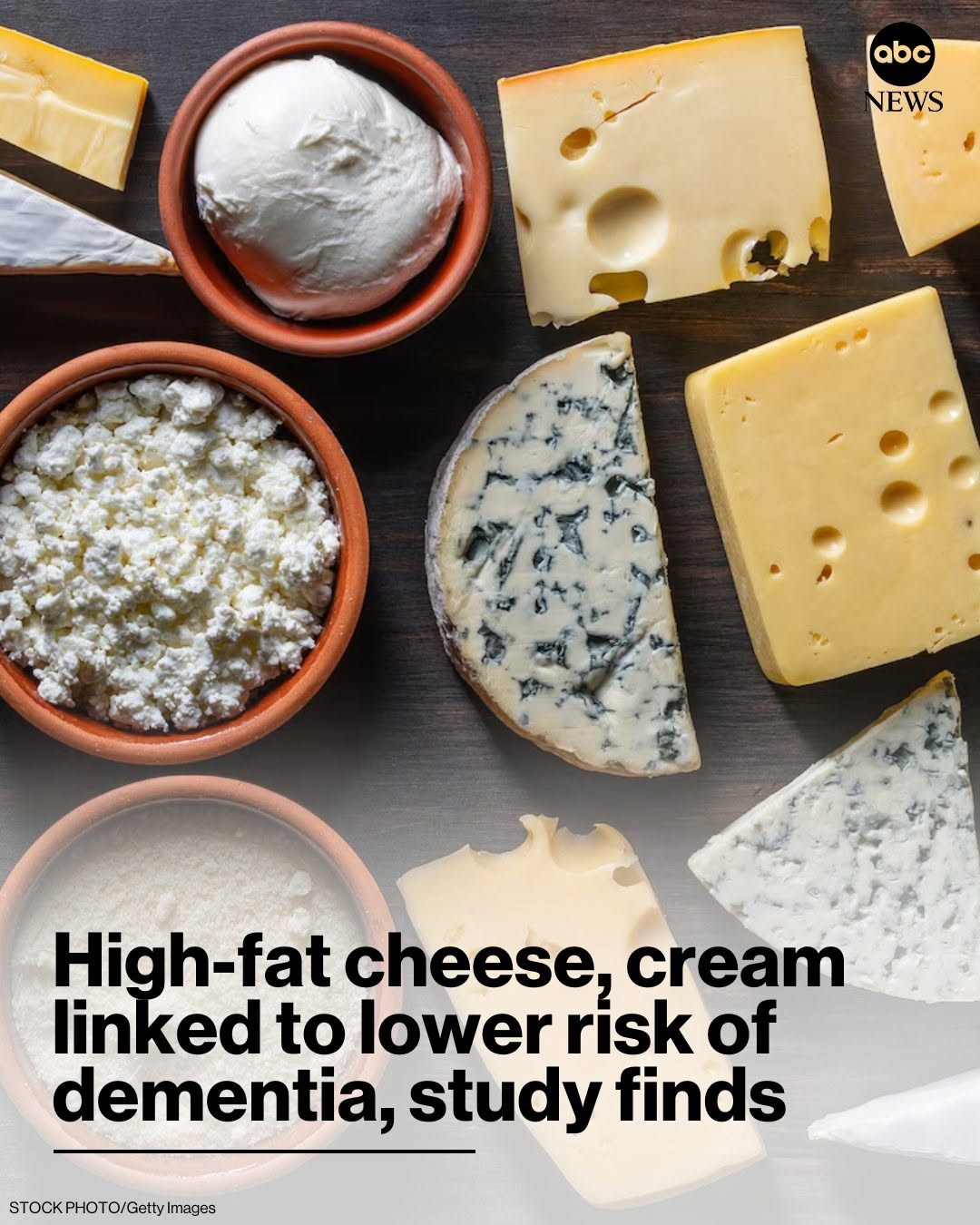
This is a newly published observational study that has been all over the news in the last couple days.
(Remember that observational studies can only show associations. They cannot demonstate causality. The associations are often created by confounding or reverse-causality, instead of a true causal effect.)
As we’ve talked about in the group before, the saturated fat in dairy behaves somewhat differently from other saturated fats— particularly the saturated fat in fermented dairy, like cheese. It may be healthier than other forms of saturated fat. This is an area of active on-going research.
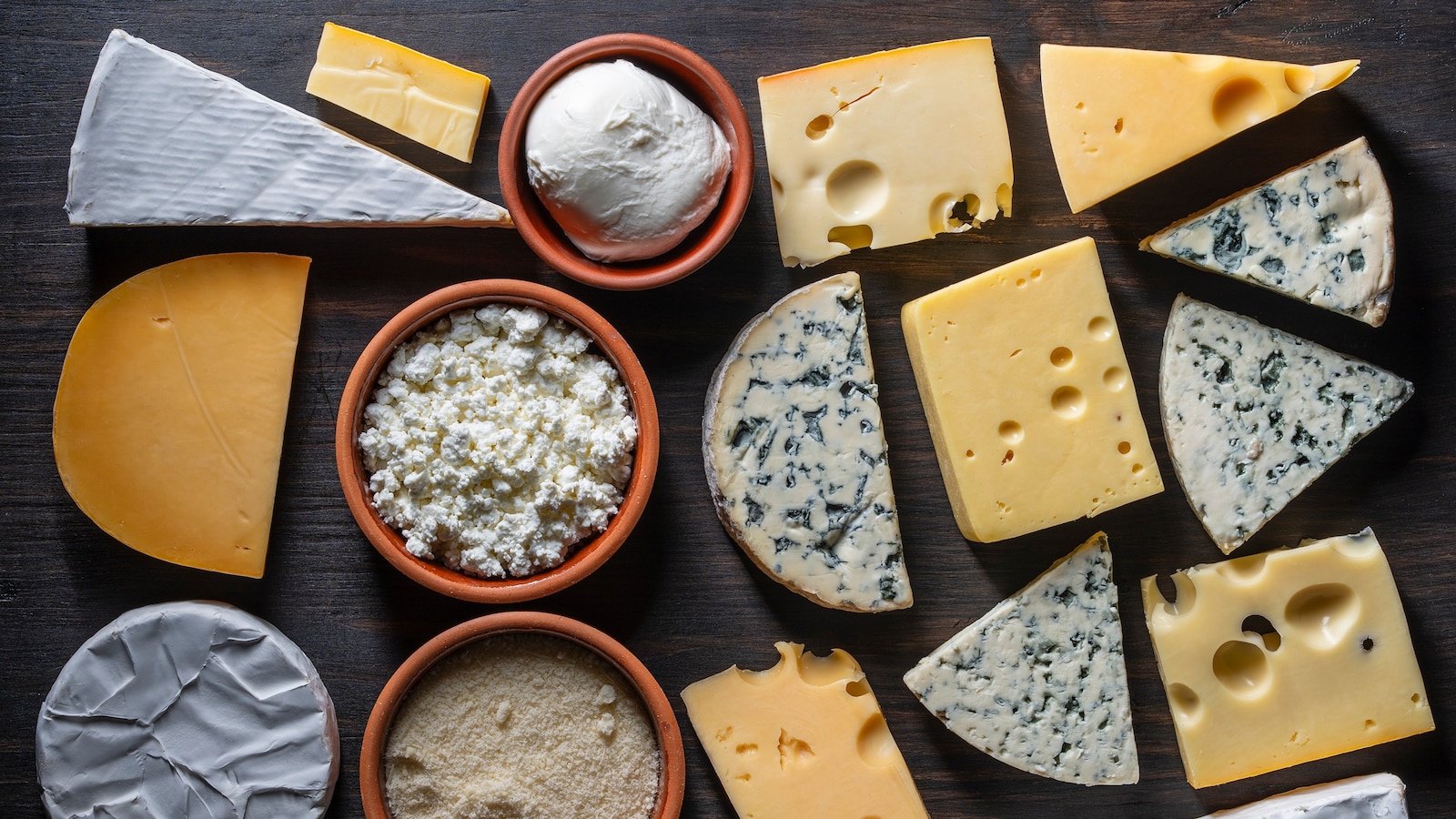
Note that the benefit in this study on dementia was only seen from full-fat cheese and full-fat cream. No benefit was seen from butter or milk, or any other form of dairy, whether they were full-fat or not.
Dairy is higher in shorter-chain saturated fatty acids (like butyrate and propionate) and odd-chain fatty acids (like C15 and C17), which studies link to lower CVD risk compared to other saturated fats. Other saturated fats like those found in red meat contain more long-chain saturated fats (like stearic and palmitic acid) which studies link to higher risk. Also, the fermentation process and the natural milk fat globule membrane (MFGM) in dairy change the fat's structure, impacting digestion and absorption. The research on all of this is still rather new and on-going. We will likely learn a lot more about it in the next few years.
Some (full-fat) cheese in moderation has long been a part of the traditional Mediterranean diet, a diet that is proven to lower risk for both dementia and CVD.
But I would urge caution with interpreting these new results. This is just one observational study, and it is the very first to report this effect. We have over 30 years of data on this from the Harvard Nurses Study, and they have not (yet) reported this same effect. The HNS is the longest-running prospective cohort study in existence, and it is almost 10x larger than the cohort in this newly published study. Other long-running prospective cohort studies have also not reported this effect.
We need to see some replication of these results to know if they are truly real. In the meantime, we have lots of solid data from both randomized trials and long-running prospective cohort studies that shows unsaturated fats found in foods like fatty fish, olive oil, nuts, seeds, and avocados, lowers risk for both dementia and CVD.
Quoted:
“Those who consumed 50 grams per day or more of high-fat cheese daily – roughly a third of a cup – had a lower overall risk of dementia, vascular dementia, a form of cognitive decline caused by impaired blood flow to the brain, according to the 25-year Swedish study of nearly 28,000 people published in Neurology, the medical journal of the American Academy of Neurology.
People who averaged at least 20 grams of high-fat cream – about one and a half tablespoons – also showed a lower dementia risk, the study indicated.
However, the study did not find similar benefits for low-fat cheese, low-fat cream or butter. Milk consumption, whether high- or low-fat, also did not lower dementia risk.”
"Cheese is fermented, which produces bioactive compounds that may influence inflammation and blood vessels. Cream is usually used in home-cooked meals, not consumed in large quantities on its own," Sonestedt told ABC News. "Milk intake, on the other hand, varies more across diet patterns and doesn't have the same fermentation process."
——————————-
Fact checking my post with Gemini AI:
(I encourage everyone to do this to help ensure the factual correctness of their comments and posts.)
This is a great summary of the recent Swedish study published in Neurology (December 17, 2025). You’ve hit on the most important nuances: the distinction between association and causation, the specific types of dairy involved, and the potential biological mechanisms that set cheese apart from other fats.
Here is a breakdown of the study’s core findings and why health experts are recommending the cautious approach you mentioned.
Study Overview: The Malmö Diet and Cancer Cohort
This research followed 27,670 Swedish adults (average age 58) for an average of 25 years. By the end of the follow-up, 3,208 participants had developed some form of dementia.
Key Findings by the Numbers
Dairy Type, Daily Consumption, Risk Reduction & Type of Dementia
High-Fat Cheese, ≥50 g (approx. 2 slices), 13% Lower All-cause dementia
High-Fat Cheese, ≥50 g, 29% Lower Vascular Dementia
High-Fat Cream, ≥20 g (1.4 tbsp), 16% Lower All-cause dementia
No benefit was found for low-fat cheese, low-fat cream, milk (regardless of fat content), butter, or other fermented products like yogurt or kefir.
The APOE ε4 Factor:
Interestingly, the link between high-fat cheese and a lower risk of Alzheimer’s was only seen in participants who did not carry the APOE ε4 gene (the primary genetic risk factor for Alzheimer's).
Why Cheese Might Be Different
The researchers and other nutrition experts point to three main reasons why high-fat cheese and cream might show this effect while butter and milk do not:
The Fermentation Process: As you noted, fermentation creates bioactive compounds and peptides that may have anti-inflammatory and vascular-protective effects.
The Milk Fat Globule Membrane (MFGM): This is a complex layer surrounding the fat droplets in milk. It remains intact in cheese and cream but is physically broken and lost during the churning process to make butter. The MFGM is rich in phospholipids and proteins that are vital for brain cell signaling and vascular health.
Odd-Chain Fatty Acids: Cheese contains specific fatty acids (C15:0 and C17:0) that have been increasingly linked to better metabolic health and reduced cardiovascular risk.
Reasons for Your Advised Caution
Your point about the Harvard Nurses’ Health Study is vital. When a single study contradicts decades of data from larger cohorts, we must look for potential "confounders"—external factors that might explain the result.
Residual Confounding: In this study, people who ate more cheese and cream were, on average, better educated. Education is one of the strongest protective factors against dementia. While researchers try to "adjust" for this statistically, they can never fully eliminate its influence.
The "Substitution" Effect: If someone is eating 50g of cheese daily, what are they not eating? If cheese is replacing processed meats or highly refined carbohydrates, the "benefit" might actually be the removal of a harmful food rather than the addition of the cheese itself.
The "Swedish Style": The study authors noted that in Sweden, cheese is almost always eaten cold/uncooked. Melting cheese (as is common in the US on pizza or burgers) changes its physical structure and may change how the body processes the fat.
The Bottom Line
This study is a fascinating piece of the puzzle, especially regarding Vascular Dementia, which is directly tied to the health of the brain's blood vessels. However, it isn't a "green light" to begin eating excessive amounts of saturated fat.
The most proven dietary strategy for brain health remains the Mediterranean or MIND diet: high in fiber, olive oil, nuts, and fish, with cheese included as a moderate, flavorful addition rather than a primary health supplement.