💊🧠 Statin side effects: separating signal from noise
Even though this is a highly debated topic and there is a high level of polarization in this domain we have to stick to evidence.
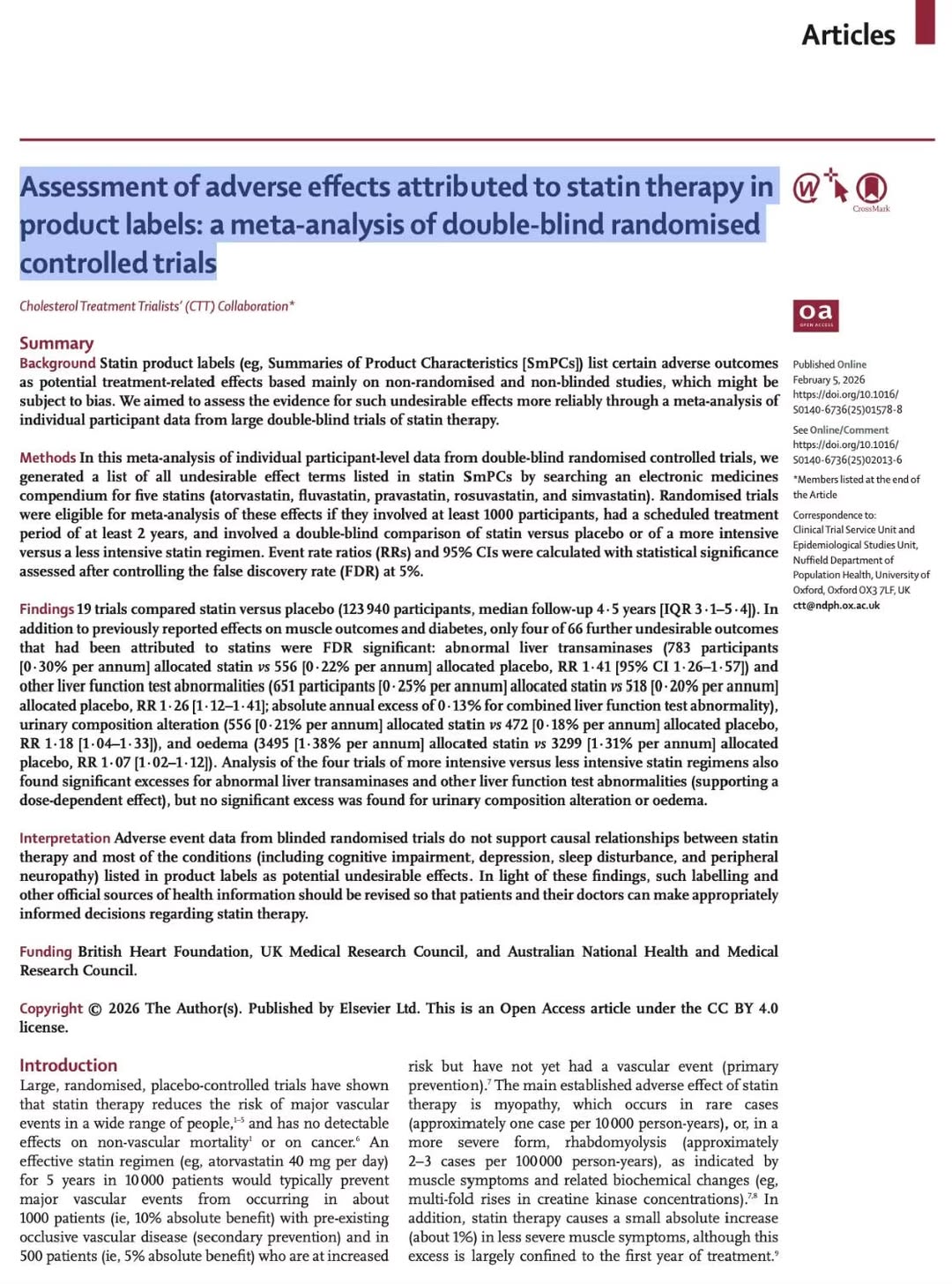
Statins save lives—but concerns about side effects remain a major barrier to their use. This landmark CTT Collaboration meta-analysis, published in The Lancet, tackles the issue head-on by asking a simple but crucial question: which adverse effects attributed to statins are actually causal?
🔬 What makes this study different
Individual participant data from 23 large, double-blind RCTs
154,000 participants, median follow-up ~5 years
Focused exclusively on events listed in statin product labels
Rigorous control for multiple testing using false discovery rate (FDR)
📊 The results are striking
Of 66 adverse outcomes commonly attributed to statins:
❌ 62 showed no causal association
✅ Only four reached statistical significance:
Mild liver enzyme elevations (dose-dependent, clinically small)
Urinary composition changes (very small absolute effect)
Oedema (minimal excess risk)
Well-known effects were confirmed:
Muscle symptoms (mostly mild, early)
New-onset diabetes (modest, mainly in predisposed individuals)
🚫 What was not supported by randomized evidence
No causal link was found for:
Cognitive impairment or dementia 🧠
Depression or sleep disorders 😴
Sexual dysfunction
Peripheral neuropathy
Kidney injury or interstitial lung disease
🧠 Why this matters
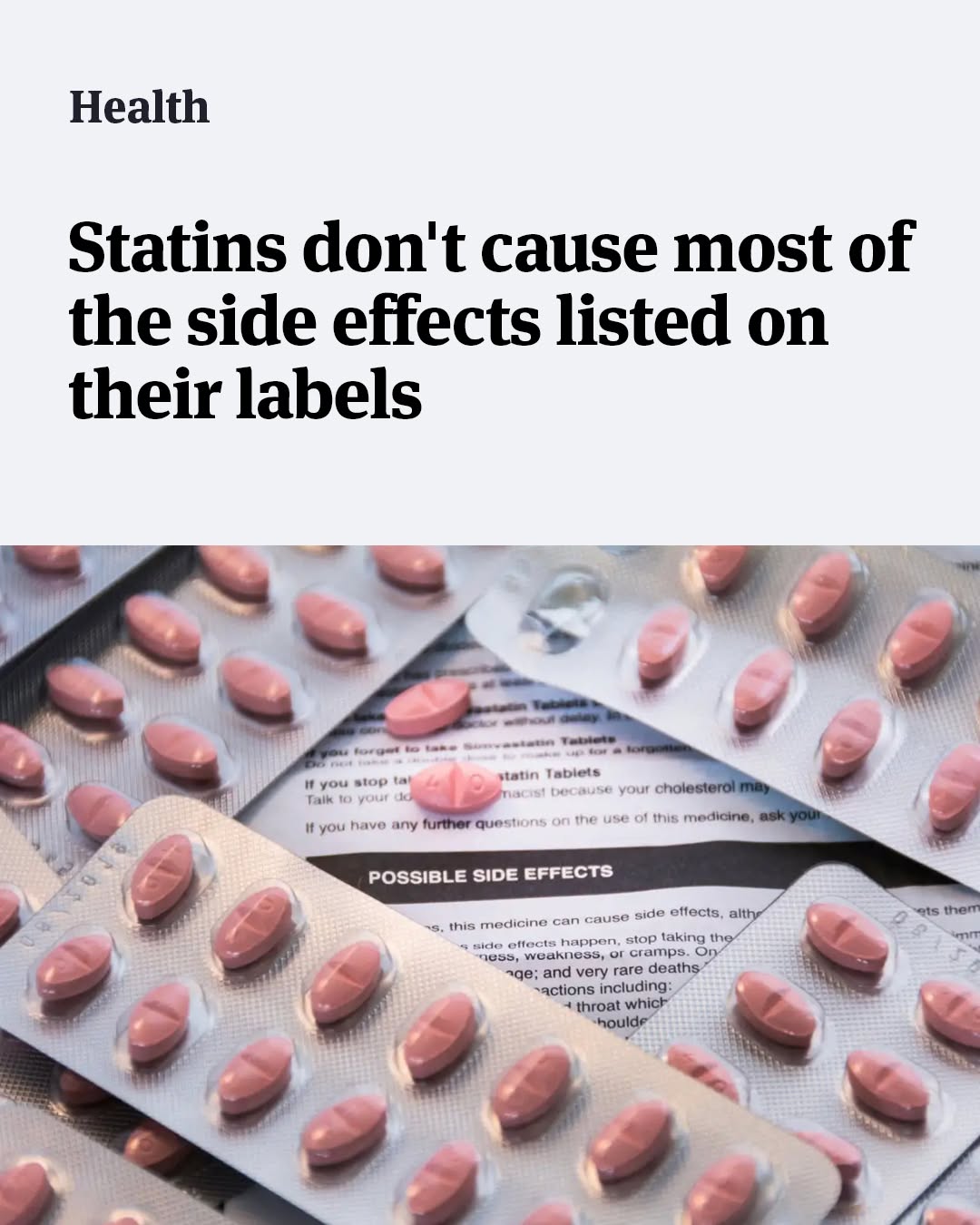
Many side effects listed on statin labels stem from observational or unblinded data, where expectation and attribution bias are powerful. This study shows that such labeling likely overstates harms, contributing to fear, discontinuation, and avoidable cardiovascular events.
⚖️ The balance is clear
The cardiovascular benefits of statins—preventing heart attacks, strokes, and death—overwhelmingly outweigh the small, well-defined risks.
📌 Bottom line
Statins are among the most evidence-tested drugs in medicine.
This paper reminds us: robust randomized data should guide both prescribing—and labeling.
Less myth.
More evidence.
Better prevention. ❤️