HD-OPM Archive
Topics › Insulin resistance & diabetes

Reducing B-cell insulin signaling extended mouse lifespan about 36%

Louis Nervegna · Feb 08, 2026 · ♥ 10 reactions · 0 comments · original Facebook post
Insulin resistance & diabetesAging & longevity
AI summary & key facts

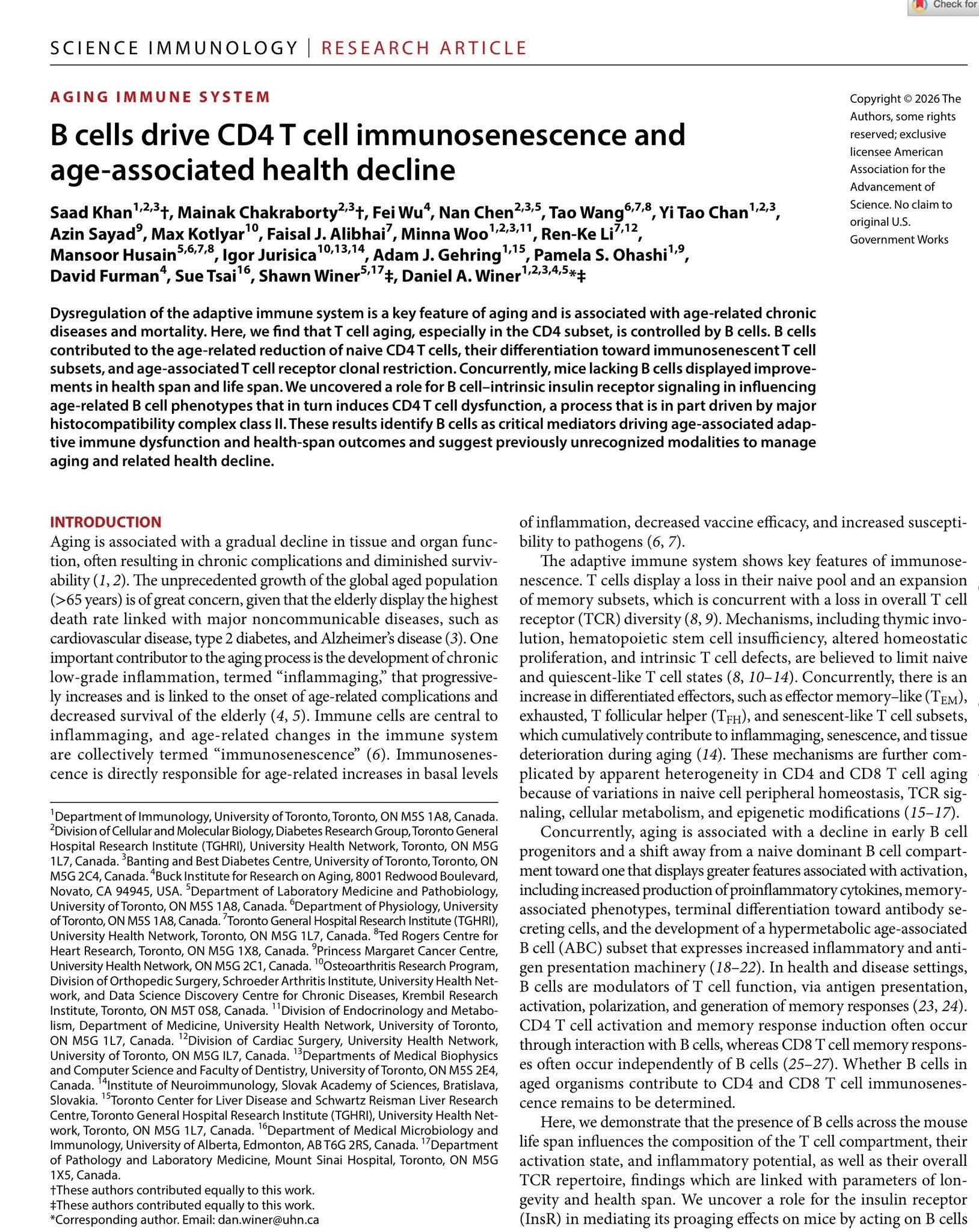
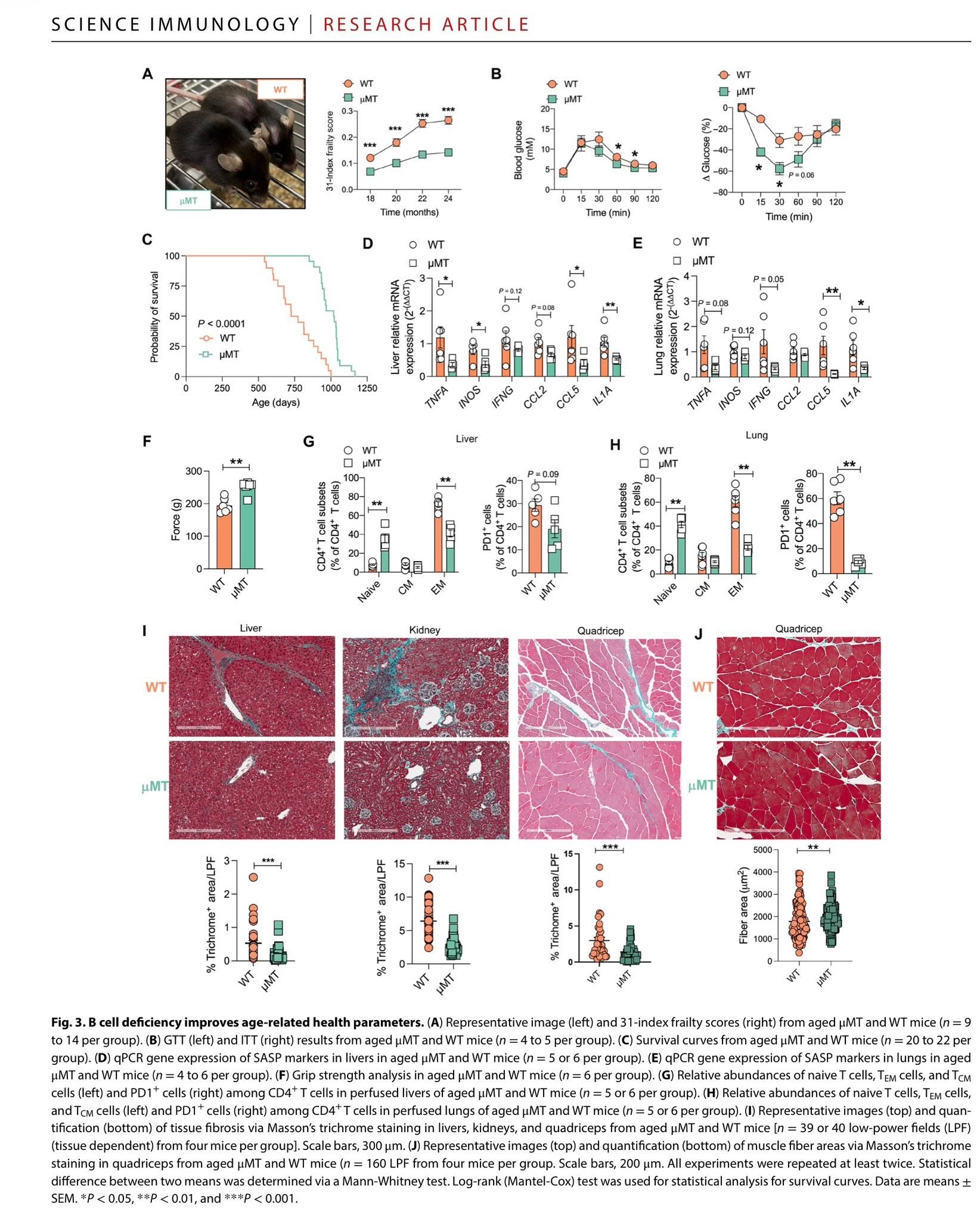
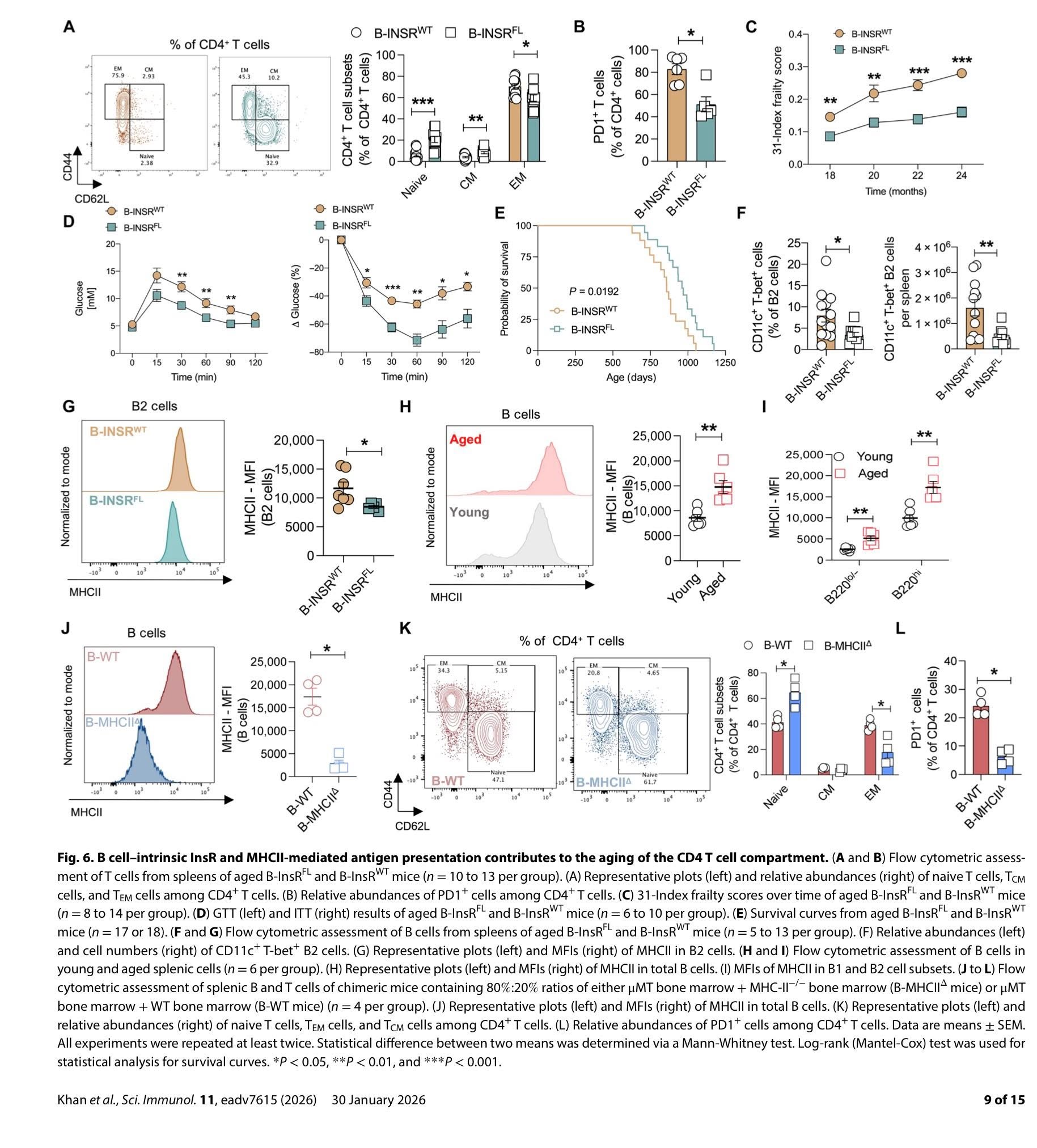
Louis cites a Science Immunology paper (Khan et al. 2026) showing that with aging B cells become insulin-responsive and drive chronic T cell overstimulation. He argues avoiding insulin resistance and high insulin is key to lowering risk for age-related diseases like CVD. Mouse data.

Yet another study shows that the pathological growth-promoting effects of insulin directly drives aging and age-related diseases.

Avoiding insulin resistance (and the high levels of insulin that it causes) is one of the most important things you can do to lower the risk for age-related diseases like CVD.

#insulinHD #mtorHD #igf1HD #agingHD #longevityHD #insulinresistanceHD
Research cited

🧬 Insulin drives immune aging and markedly shortens lifespan

We already know that insulin accelerates aging of multiple metabolic organs:

Paper · Science · 2010Extending healthy life span--from yeast to humans.When the food intake of organisms such as yeast and rodents is reduced (dietary restriction), they live longer than organisms fed a normal diet. A similar effect is seen when the activity of nutrient-sensing pathways is reduced by mutations or chemical inhibitors. In rodents, both dietary restriction and decreased nutrient-sensing pathway activity can lower the incidence of age-related loss of function and disease,…pubmed.ncbi.nlm.nih.gov Paper · Nat Rev Mol Cell Biol · 2022Molecular mechanisms of dietary restriction promoting health and longevity.Dietary restriction with adequate nutrition is the gold standard for delaying ageing and extending healthspan and lifespan in diverse species, including rodents and non-human primates. In this Review, we discuss the effects of dietary restriction in these mammalian model organisms and discuss accumulating data that suggest that dietary restriction results in many of the same physiological, metabolic and molecular…pubmed.ncbi.nlm.nih.gov

This new Science Immunology paper shows something even more important:

👉 insulin is a major driver of immune aging.

PaperScience articlescience.org

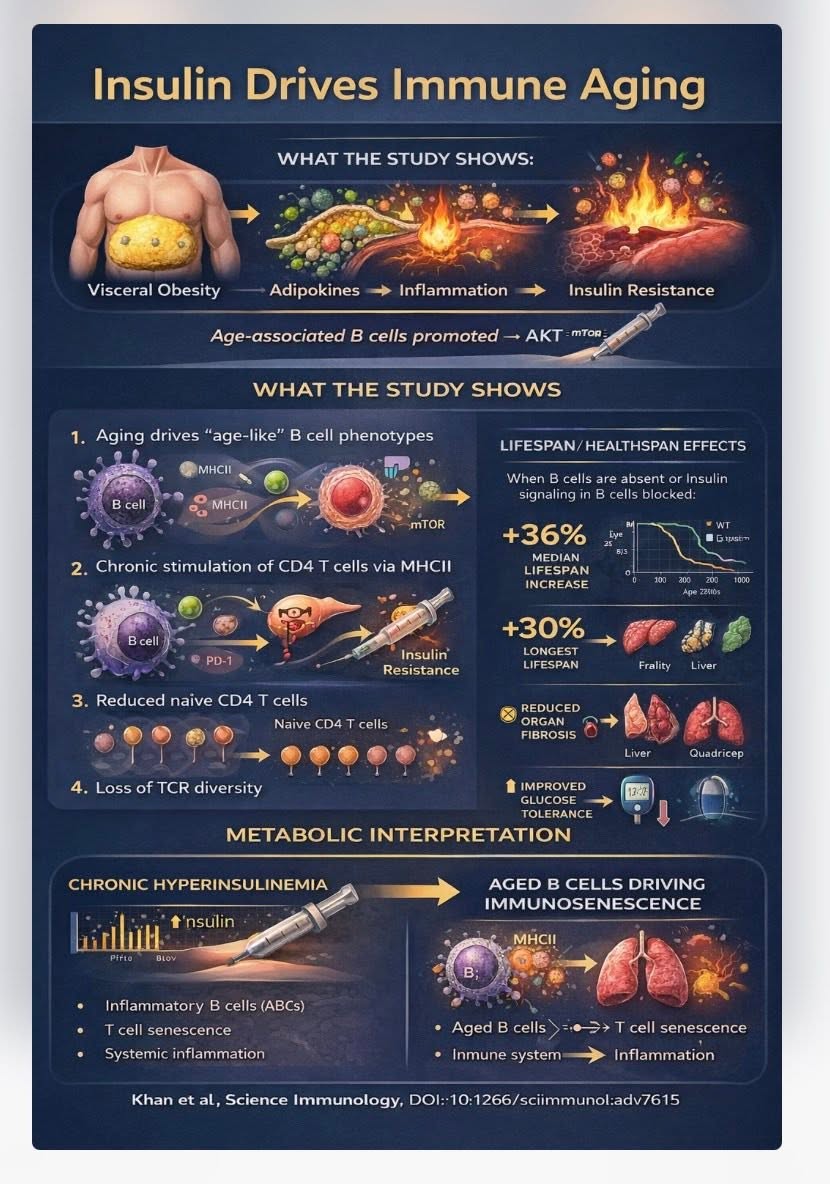
What the study shows

Khan et al. (2026) demonstrate that with aging, B cells become insulin-responsive, “age-like” immune cells.

Through insulin receptor signaling (InsR → AKT/mTOR), B cells:
acquire a pro-inflammatory, age-associated phenotype:

The result:

👉 The immune system itself ages, increasing vulnerability to infections and chronic disease.

The striking result

When insulin signaling in B cells is reduced — without removing B cells:

The mechanism
Insulin turns B cells into metabolic sensors that translate chronic hyperinsulinemia into:
➡️ chronic antigen presentation
➡️ CD4 T-cell immunosenescence
➡️ systemic aging

The broader message
Visceral obesity → inflammation → insulin resistance → compensatory hyperinsulinemia

And insulin becomes a primary driver of aging, including immune aging.

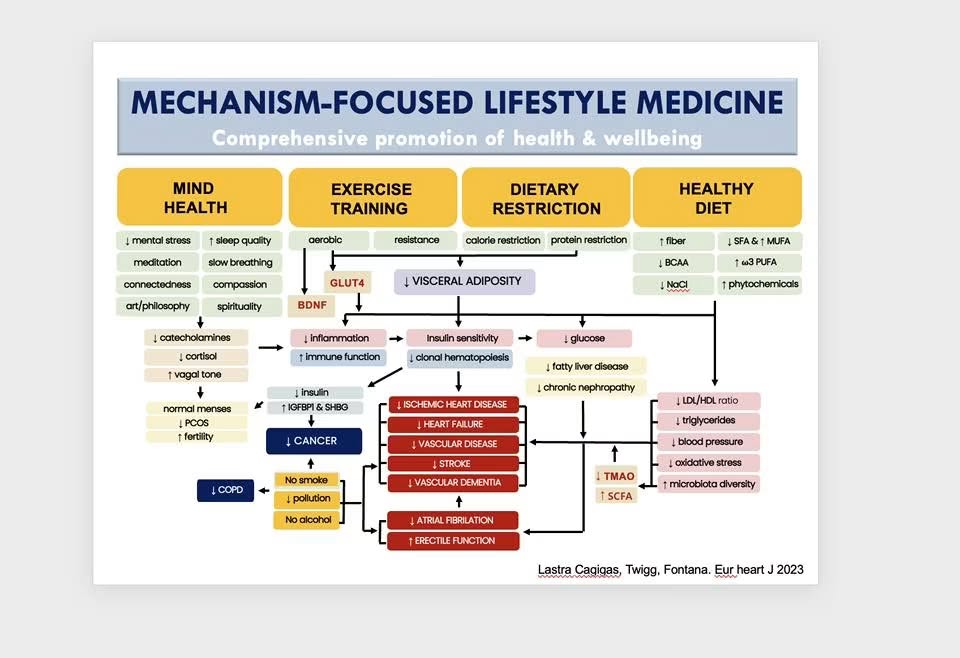
The intervention is upstream

Lower insulin:
➡️ moderate caloric restriction with high fiber whole plant based diet
➡️ daily physical activity (resistance and endurance)
➡️ reduction of visceral fat

Paper · Am J Clin Nutr · 2006Improvements in glucose tolerance and insulin action induced by increasing energy expenditure or decreasing energy intake: a randomized controlled trial.Conclusion: Weight loss induced by exercise training or calorie restriction improves glucose tolerance and insulin action in nonobese, healthy, middle-aged men and women. However, it does not appear that exercise training-induced weight loss results in greater improvements than those that result from calorie restriction alone.pubmed.ncbi.nlm.nih.gov Paper · Lancet Diabetes Endocrinol · 20192 years of calorie restriction and cardiometabolic risk (CALERIE): exploratory outcomes of a multicentre, phase 2, randomised controlled trial.Conclusion: 2 years of moderate calorie restriction significantly reduced multiple cardiometabolic risk factors in young, non-obese adults. These findings suggest the potential for a substantial advantage for cardiovascular health of practicing moderate calorie restriction in young and middle-aged healthy individuals, and they offer promise for pronounced long-term population health benefits.pubmed.ncbi.nlm.nih.gov Paper · Trends Endocrinol Metab · 2025Dietary and pharmacological energy restriction and exercise for healthspan extension.Extending healthspan - the years lived in optimal health - holds transformative potential to reduce chronic diseases and healthcare costs. Dietary restriction (DR), particularly when combined with nutrient-rich diets and exercise, is among the most effective, evidence-based strategies for enhancing metabolic health and longevity. By targeting fundamental pathways, it mitigates the onset and progression of obesity,…pubmed.ncbi.nlm.nih.gov

Lower insulin → younger B cells → preserved T-cell function → longer healthspan and lifespan.

#Insulin #ImmuneAging #Immunosenescence #Aging #Longevity #Metabolism #Healthspan

No photo description available.No photo description available.No photo description available.No photo description available.No photo description available.
← newer: CTT meta-analysis: of 66 label-listed statin side effects, 6older: Raw milk exosomes activate mTOR and IGF1; fermenting milk de →