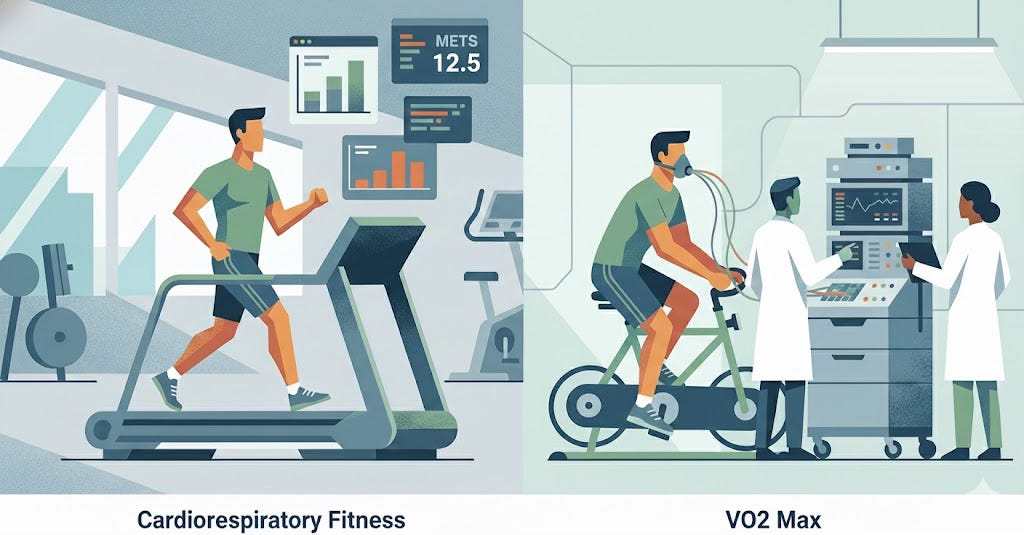
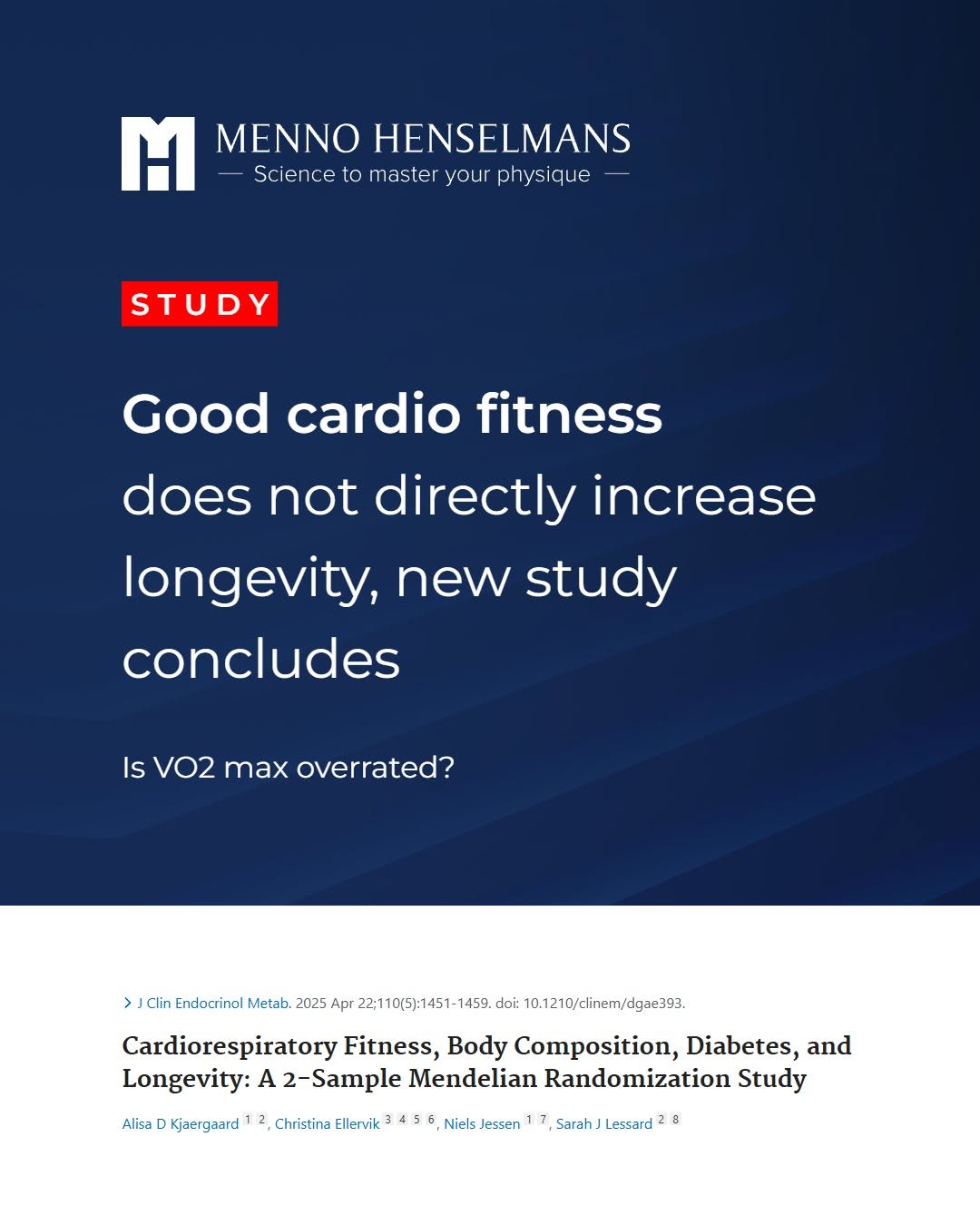
Cardiologist Eric Topol just wrote an article calling out all the BS claims made by Peter Attia about VO2-max and longevity.
See this other post in the group: facebook.com/share/p/1aYiEUJpYu.
The 6-minute video clip that Topol refers to in his article can be found here: facebook.com/share/v/17Yawc1cf3.
His central point:
It’s been known for many years that cardiorespiratory fitness is linked with lower risk for heart disease and other diseases. VO2-max and cardiorespiratory fitness are absolutely NOT the same thing. VO2-max is only one of many aspects of cardiorespiratory fitness. That is to say, VO2-max is only one of many variables that goes into how well someone performs on a functional test that measures overall cardiorespiratory fitness. Nearly all the studies quoted to support longevity claims for VO2-max are on cardiorespiratory fitness as a whole, not on VO2-max. There is no credible supportive data for measuring VO2-max per se as a means for the average person to extend lifespan. Instead, people should be focused on tracking broader functional measures of their cardiorespiratory and overall fitness.
Quoted:
The leading proponent of using V02 max in recent years has been Peter Attia, through his podcast The Drive and book Outlive. He has consistently asserted “V02 max is the singular most powerful marker for longevity.” But the problem is conflation. He cites all of the studies of CRF [cardiorespiratory fitness] without measuring V02 max and extrapolates to a V02 max result (see side-by-side Kokkinos study Table and Outlive Figure footnote below) and throughout his discussion of exercise in Chapter 11 of Outlive. For example, he writes: “this number [V02max] turns out to be highly correlated with longevity” citing all studies that did not measure V02 max.
In a recent YouTube video by Joseph Everett and Nick Norwitz entitled “Hidden Data: How the Top Longevity Doctor Tricked Us All” there is a segment about V02 max and this significant issue of conflation, discussed by Chris Masterjohn. Below is the relevant 6 minute clip within the longer video. It includes a bit of the 60 Minutes segment with CBS correspondent Nora O’Donnell doing a V02 max text and Peter’s assertion: “We don’t have a single metric of humans that we can measure that better predicts how long they will live than how high their V02 max is.”
As Masterjohn aptly points out, the fixation on V02 max, which is not actually supported by the data, also misses out on our ideal goal of diversity of exercise, including strength and balance training. Indeed, Kim et al, analyzing over 70,000 UK Biobank participants, for both CRF (submaximal bicycle test) and grip strength with all-cause mortality and concluded: “Improving both CRF and muscle strength, as opposed to either of the two alone, may be the most effective behavioral strategy to reduce all-cause and cardiovascular mortality risk.”
I’ve never done a V02 max and see no reason to do it with the issues of cost, inconvenience, and the pain. As Attia correctly states about going to maximal exhaustion to get V02 max: “If you’ve ever had this test done, you will know just how unpleasant it is.” For spartan, Olympic, high performance athletes who are in high intensity training, or in patients with heart failure or pulmonary hypertension there may be a place for serial V02 max measurements, providing highly objective “goal standard” physiologic metrics. Otherwise, there are no supportive data for people going out and getting a V02 max and making this the focus of their exercise training. That is the reason I didn’t even mention V02 max in my Super Agers book.
My comments:
Over the last few years, I have written about this VO2-max nonsense in multiple past posts. It is a blatant example of charlatanism. The mainstream medical community is finally starting to call it out. You can find links to those past posts below: