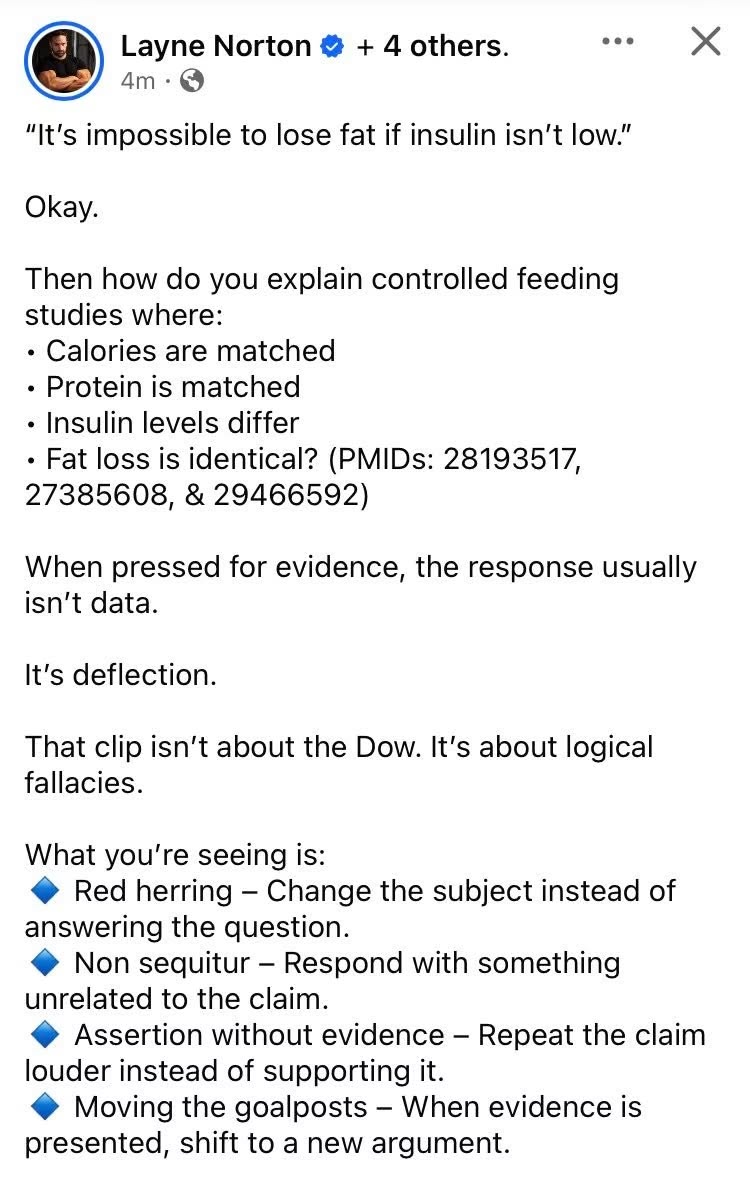
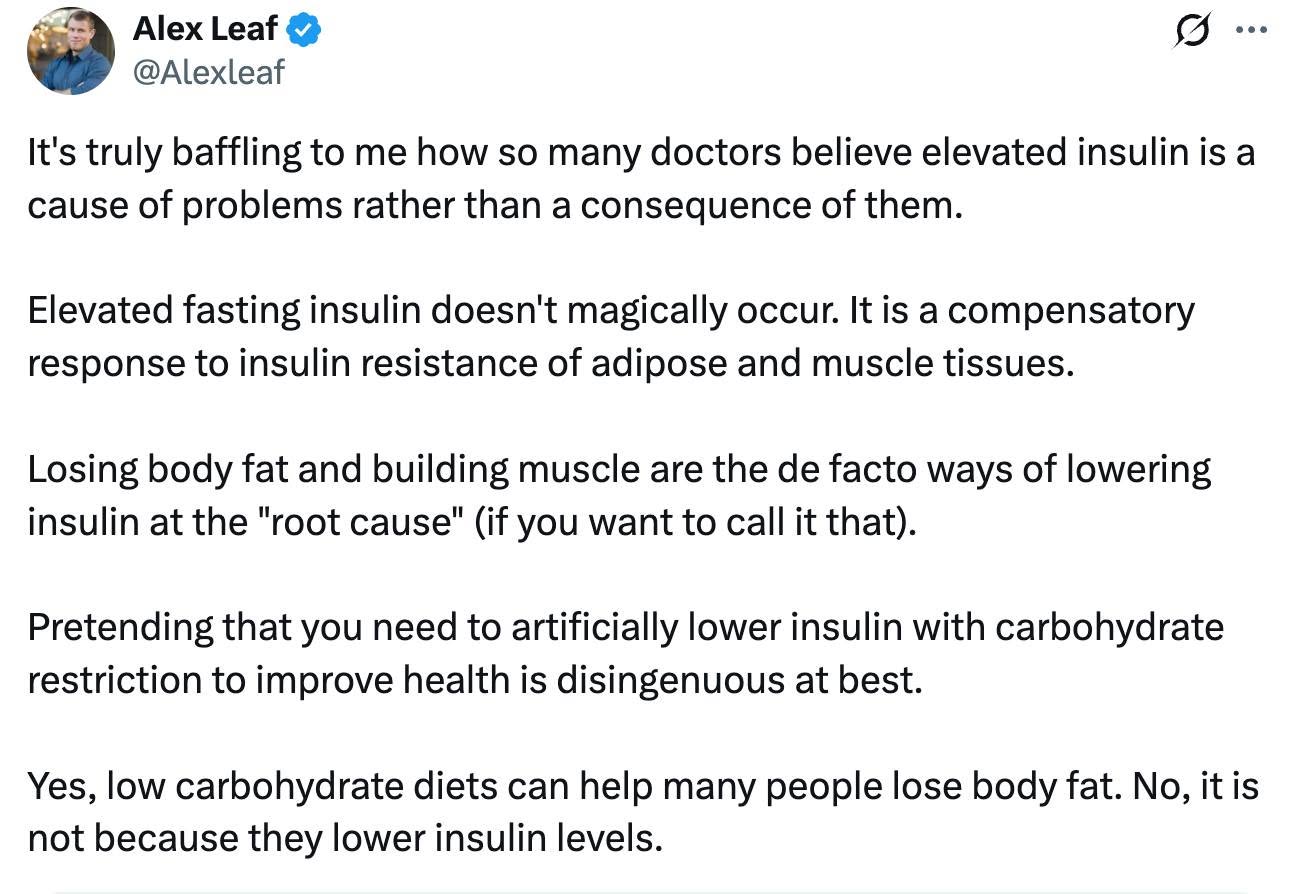
How many times have you heard influencers claim that insulin matters more than calories when it comes to weight loss?
There is a mountain of evidence demonstrating this is nonsense.
Also see this previous post: ↪ High insulin is bad, but you can lose weight without low insulin.
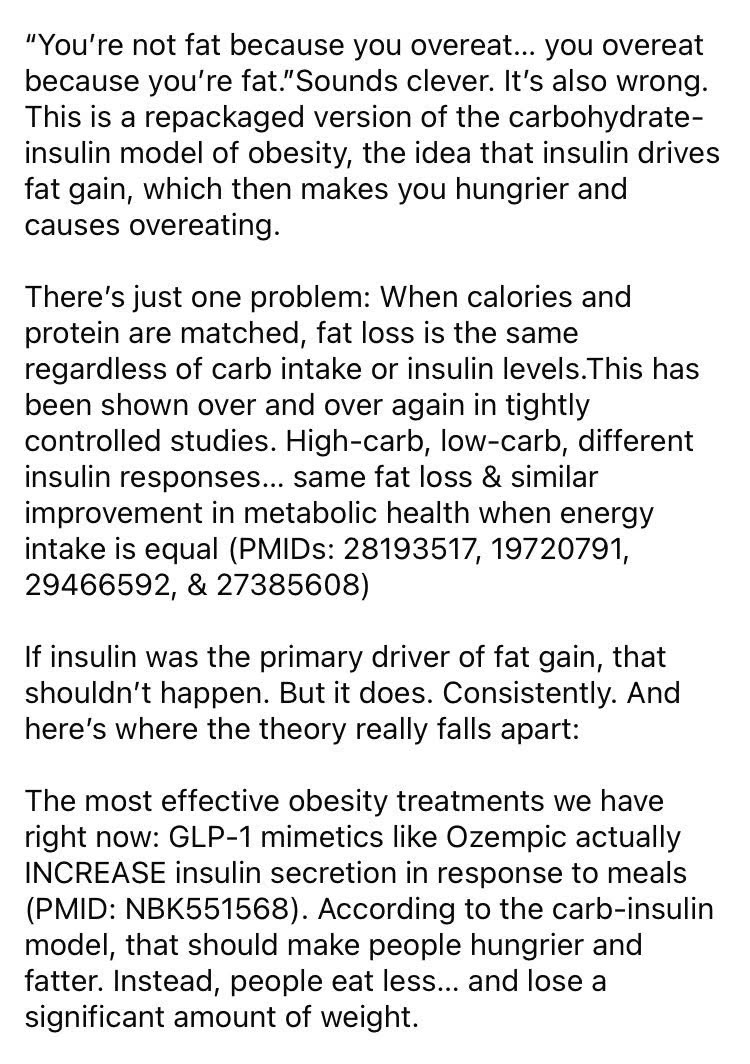
The most obvious evidence is that GLP1 drugs significantly RAISE insulin after meals.
That's right, they cause your insulin to go way UP after eating. That’s a major part of why they help control blood sugar in diabetics. The higher insulin drives the blood sugar lower after eating. They were specifically designed to raise insulin like this. GLP-1 is an incretin hormone whose primary physiological role is to stimulate the pancreas to release insulin in response to glucose.
Any yet they still cause massive weight loss.
Why? Because calories go down. Duh.
The weight loss from GLP-1 drugs is primarily driven by their effect on the brain (reducing appetite) and the gut (making you feel full longer), which leads to a spontaneous reduction in calorie intake. This reduction in calories causes weight loss in spite of the higher insulin levels caused by the drug.
The bottom line is that you will still lose weight if you’re in a big enough calorie deficit, regardless of your insulin levels. This basic fact is true for any kind of diet that you choose.
Reference for video clip and photo:
facebook.com/share/v/1C8XCMzHcF
#insulinHD #carbohydrateinsulinmodelHD #weightlossHD #obesityHD #influencersHD